Family Traditions Creates Unbreakable Bonds and Awesome Memories

20191207_163453-01

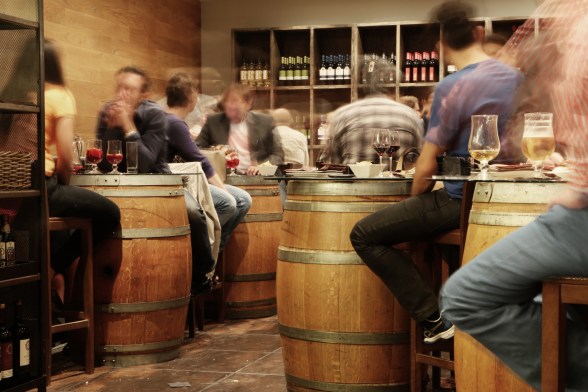
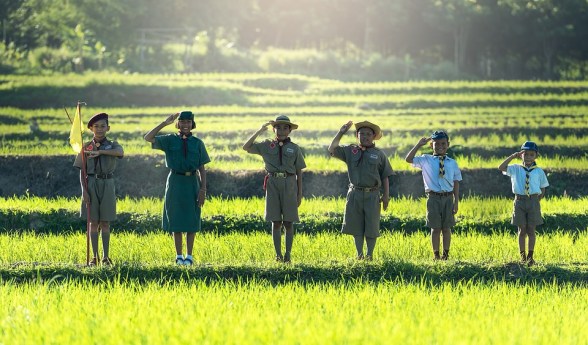
What do the Sunday night movie, playing Monopoly on holidays and eating dinner at the table have in common? They are the glue that bonds a family together.

According to https://www.childhelp.org/ family traditions are handed down from generation to generation and add to the rhythm and seasonality of life.

What are Family Traditions?

They are those things we tend to repeat doing when we are together, like the things mentioned above. Family traditions differ from family to family and are normally just simple things we do that we as a family love, like having rowdy conversations around the dinner table as the Italians and Greeks tend to have. Or it is taking that annual holiday to the same place every year. So many of my husband’s childhood memories derive from their seaside family holidays, so much so that we live in the town they had their holidays in! My family didn’t have seaside holidays, but we had a big mass of water nearby where we lived and we went camping there over the Christmas season when I was little. It was also my birthday this time of year and to me it felt as if I had my birthday every day during those holidays, as different family members arrived daily with gifts for me!

Family Traditions look Different and can Literally be Anything!

Times have changed and so have the activities we do. But we still participate in traditions – even though we don’t even think of them as ‘traditions’. Mom and the girls going to the mall on a Saturday morning, Dad playing cricket with the boys in the garden on Sunday afternoons, visiting the grandparents for Saturday braai or watching the rugby together, are all good examples of South African family traditions.

The Advantages of Family Traditions

Other than helping the family to bond, it also builds children’s confidence, because their parents are spending some real time with them. That makes them feel grounded and safe and help them to be more outgoing and courageous. You can read up more on the advantages of family traditions on your own.

Family Traditions in the Time of the Corona Virus

Yep, we are locked in and can’t even take our dogs for a walk in the streets, but that doesn’t mean that we can’t still do things together. We are after all, cooped up together like never, ever before in our lifetimes! So, this makes it a perfect time to bring back some old family traditions or establish new ones.

If you have stopped or never eaten together at a table as a family, start doing that – even if it is for only one meal a day. Here are a few pointers for this:

  • Ban cell phones from the table and keep a few conversation starters handy to get your family talking to each other again.
  • Research a few good conversation topics which are fitting for your family’s age.
  • Allow difference of opinion, but make sure to establish rules so that it is still done respectfully and things don’t get ugly. If we teach our children to have an opinion and speak their minds at home, educators don’t have to teach them what they want to teach them.
  • Start debates about different topics. Divide everyone present into two groups and let them debate two sides of a topic. When things get heated, change it around. It is fun to see everyone suddenly out of their comfort zones when having to defend the other side! And it normally ends fights immediately.

Play together, whether it is board games or games in the garden. And don’t stop when the lockdown is over.

Create something together, such as cooking, baking and braaiing, making clothes, building puzzles, building lego or whatever your family is into.

Try to teach your children something regularly during the lockdown, but keep doing it hereafter. Teach them to pray and care for others, braai, plant veggies, snoei trees, play chess, build something out of wood, do DIY chores in the house etc. Doing this on a regular basis will not only teach them skills, but give them confidence and the ability to do things for by themselves and for themselves.

Read together. Read bedtime stories to your children from day one. (Yes, they need to hear stories in their dads’ and moms’ voices from an early age.) When they are older (and now during lockdown) you can lie around reading for a few hours a day.

Start a thanksgiving tradition, either at the breakfast or dinner table or whenever you are all gathered together and bored during the lockdown. Think about those less privileged during this time and start a ‘Thank You’ jar where you can all contribute with things you are thankful written on a piece of paper and put into the jar. Open in up in a year’s time or so and read it aloud around the table while eating.

These are just a few examples. There are lots more. You know what your family love doing. Dust off a few old ones or start new traditions. Search the Internet for more ideas if you need to.

Keeping it Up

Our young adult son is still with us at home. We continue doing things together as a family on a regular basis, such as eating together every meal, even though he lives outside in the cottage. We go for picnics at the beach and going on Sunday exploring rides etc. My sister-in-law’s two adult children are having dinner with them every Sunday evening. Some dads and their adult sons have weekly squash appointments. You get the point.

So, when this lockdown is over or when the children are all grown up, don’t stop with the traditions. Many South African families are split up and live all over the world, but with the technology available these days, we can still be ‘together’. Make a family group call on a week night/morning (depending on time differences) and kuier together on Skype or WhatsApp video calls.

Do whatever it takes to keep your family traditions going, because they create awesome and precious memories for your children which they will carry over to their children.

© 2020 Fielies De Kock 

Awesomest wife. Finest mom. Hopefullest writer. Foreverest dreamer. Living in a coastal village in the Overberg, South Africa, with a husband and two dogs in a small heritage house, and an adult, recently-graduated, job-seeking son in the garden cottage. His CV is available on request. 🙂🙂🙂
What Happens Between “Enchanté” and “Auf Wiedersehen”

IMG_2146

A longish note to everyone we met during our almost four and a half years stay in Egypt.


When we Afrikaners meet someone for the first time, we like to greet them with the words “Bly te kenne”. These words literally translate to ‘may we keep knowing each other’.

At that point, the person you meet is just another stranger about whom you know nothing, except his or her name – if you manage to catch, pronounce and remember it! But as time goes by and you meet again and again you learn to pronounce their names correctly, meet their families – either in person or by hearing about them. You eventually learn about the person’s passions, talents, joys and heartbreaks. And then suddenly they are unfamiliar no more.

During our five summers in Cairo we met quite a few people, who by sharing similar experiences, challenges, difficulties and fun, had transformed from strangers into dear friends. Fortunately, living in an ever-changing international community for a while, there are plenty of opportunities to say “Bly te kenne” or “Nice to meet you” or “Enchanté”. Unfortunately during this temporary expat life, another phrase is being used way too often too, because coming and going is a given in this type of lifestyle.

Saying goodbye is never easy and when you have to do it that often, it really “sucks”, to quote our American friends. At first there are goodbyes to family and friends when you first leave to go live in a foreign country in a foreign culture between foreign people. And then there are all the in-between goodbyes when you go home on holiday and return – just to leave your loved ones behind again. And again.  And again. And again…

But then, all of a sudden the day arrives when you have to say goodbye to the foreigners – the strangers whom you met at a reception or a coffee morning or a welcoming party or in the street or at work, and who, in a short period of time, became friends. People who made your stay in a foreign place less foreign. Who helped turn uncomfortable into comfortable. Whose unknown faces had become so familiar and loved that you can’t imagine saying goodbye to them to probably never see them ever again! And that thought is just unthinkable!

So, for that purpose we have another wonderful phrase in Afrikaans and in some other languages with which we try to ease the pain of saying goodbye. We say “Tot weersiens”, which means ‘until we see each other’ – much like the Hebrew l’hitra’ot or the French a bientôt or the German ‘auf wiedesehen’.

If we say “Until we meet again”, we all know that – even if the goodbye part is inevitable for the now – we keep the hope afloat to meet again, because who knows? It just might happen! It already happened when we went on holiday to Greece and met up with old Cairo friends there and when some of our American friends visited us at home while on holiday! So, anything is possible!

Saying goodbye is too final. It means it’s over and done with. Finished. It shuts the door on hope. Goodbyes are no good. They are hope killers and killing hope is not good for one’s soul.

So, after this long account, I’ll come to the point. This note is not a hope killer. This is not our goodbye to you. This is just to say thanks to you for all the laughs and cries we shared. For the many, many, many glasses of wine we had together – and for lamenting together over all those almost-full glasses we lost to over-eager Egyptian waiters! And for all the caipirinhas (“por favor” wink-wink) and all the times we danced to C’est La Vie at functions we were supposed to and at functions we were not supposed to!

Thank you for caring for Deon when Michael and I were not here and making him feel less alone in Cairo. Thank you for helping him when he was dean. And thank you for always asking about ‘our Michael’ and conversing with him and treating him as part of our community and giving him the experience of a lifetime! Thank you for every “How are you?” and every smile and every hug and every kiss and every “I will miss you” towards the end.

We will miss every one of you – those to whom we have already said goodbye to four, three and two years ago and last year and this year, and you who we leave behind now. Every one of you and your families had touched our hearts in one way or another. From now on when we hear English in a foreign accent it will be your voices and your accents we hear it and then we will miss you even more. We will miss your smiles. We will miss dancing with you. We will miss laughing will you. We will miss everything about you.

We wish that you and your families will be blessed in whatever you do wherever you go. Our family’s prayer for you comes from the Bible:

God bless you and guard you.

God make His face shine upon you and show favour to you.

God lift up His face upon you and give you peace.


We will always remember you, because between “Enchanté” and “Auf wiedersehen” we have made too many memories together to forget each other.


Until we meet again, our friends.


With love from Deon, Fielies & Michael De Kock

June 2018 – Cairo, Egypt

IMG_6870

Egyptian Street Cat Chronicles – The Finale


Finale2.JPG

As we are ready to leave Egypt after almost four and a half years, I knew I had to eventually write the conclusion to our cat chronicles. I put it off for quite a while, because like with all goodbyes, this too is a bit of a sad one – a-circle-of-life kind of finale.

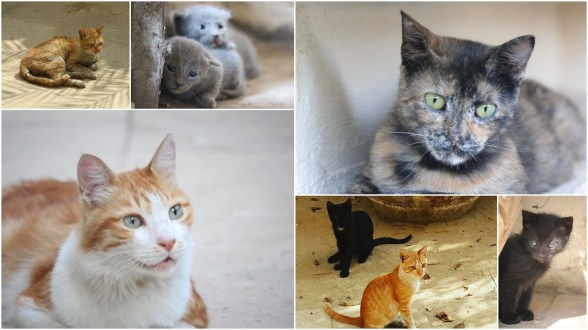
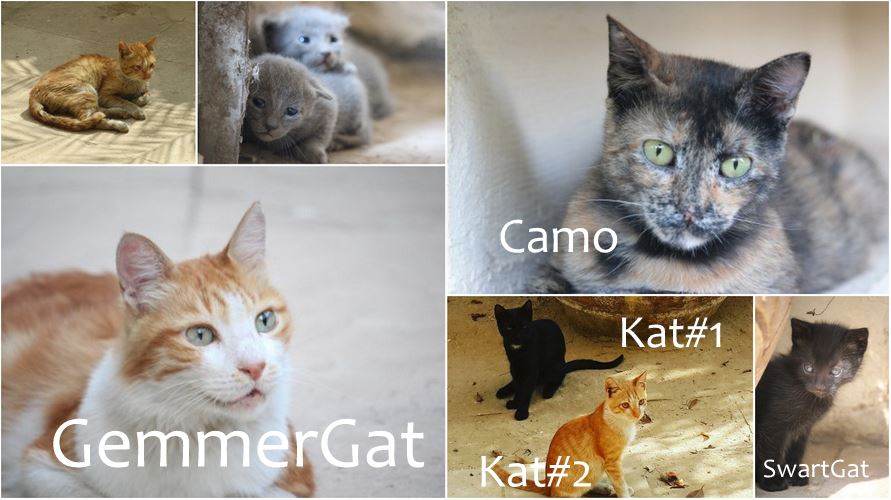
Cat#1 and Cat#2, Camo’s latest (and last so far) black and ginger offspring are still doing well. It was touch and go for a while for Cat#2, the slightly weaker of the two. The little ginger became ill and stopped eating. He was so weak and unwell that we thought he was at his end. But, alas, we fed him (and prayed a little also) and after two weeks we knew that he would make it for now. In the meantime he grew strong and still lives in our garden with his brother. Their mother, Camo, mainly lives downstairs in the parking garage, with her favourite place to relax on our car! I find the dust paw prints on the bonnet quite cute. 🙂

We are leaving soon and we hope that the new tenants will also find it in their hearts to feed them when they are here. They are not dependant on our food for survival as they are fed by people upstairs, the policemen on duty outside the building and the bowabs (doormen). So, they are sorted. And privileged! But. We are going to miss them. These two last ones were cute ones, especially the little ginger. I will miss his little face and his chutzpah when he hammers his head against the glass door in the mornings to get my attention – or to go around the corner to the other window to stare us down when we’re sitting on the couch. And I will miss laughing at him when my husband scares him with our soft toy Ikea dog, Ike!

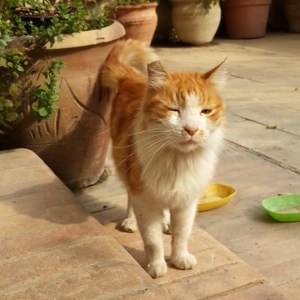
I wrote in my previous cat chronicles blog about ‘our’ beloved ginger building cat, GemmerGat who came back after an absence of nine months. We were very happy to have her back and quickly realised that she was tired and nearing her sell-by date. So, it came as no surprise when we noted one day that she had become quite weak. We fed her and chatted softly to her and told her to hang in there, but I think we knew that her time had come. So, three days after she became so weak, she wasn’t in our garden anymore. It was the beginning of a really hot period in the summer and we fathomed that she went downstairs to the parking garage to have her last lie down. Maybe she came home to find her rest. This time we are okay with it though. She came to greet and we’ve said our goodbyes.

And that, my friends, is the grand finale of our cat chronicles in Egypt. We will return home now and become dog people again. We can’t wait to have doggy companions again! It had been a long few years without pets. It had been only the second period in my life without pets and I missed having them around a lot. We hoped to see our beloved Maltese, Simmie, again when we went back, but he died on 6 December 2017.

So, this is it for our Egypt cat chronicles. Thank you, Egyptian building cats for entertaining us the way you did. And rest in peace, dear Gemmergat.

As if any of you cats were going to read my blog… 🙂


2018 ©  Fielies (Riëtte) De Kock

Awesomest wife. Finest mom. Hopefullest writer. Forever dreamer. Temporarily living in Cairo, Egypt.


Read my previous cat chronicles here:

Egyptian Street Cat Chronicles – Part 3 https://fieliesdekock.com/2018/03/25/egyptian-street-cat-chronicles-part-3/

Egyptian Street Cat Chronicles – Part 2 https://fieliesdekock.com/2017/04/30/egyptian-street-cat-chronicles-part-2/

Egyptian Street Cat Chronicles – Part 1 https://fieliesdekock.com/2017/04/30/egyptian-street-cat-chronicles-part-1/


Egyptian Street Cat Chronicles – Part 3

More Egypt Chronicles

GemmerGat

GemmerGat – Die kat kom weer!

IMG_2330

Cat#1 & Cat#2

And yet more cat stories.  Ja, wragtig!

So, I should probably give you an update on our cat family here in Cairo. The last time I wrote about them l was really sad about the ginger, Gemmergat, vanishing from our lives. Although we became used to him not being here, I kept wondering what had happened to him – especially after little Swartgat was hit by a car. Yep, we came back after travelling and was relieved and happy to see that the rest of the building fed the cats and that the cute little black cat survived. I was even starting to wonder what the procedure would be to take a cat back to South Africa. The very day after we arrived back, our son and I walked to the shops and was away for about an hour. When we came back, we saw the lifeless little body of ‘our’ black kitten lying in front of the church across the street from our home. He was hit by a car. So, that was the end of little SwartGat.

There was still no sign of ‘our’ ginger, so I was wondering if that was what had happened to GemmerGat too, but then I thought that Gemmergat was too smart a cat to be run over by a car. Did she die from injuries after a fight? Hm-hm, I thought, couldn’t be either, because although from the few fights l witnessed, I learned that that she didn’t like to fight, but she knew how to defend herself. So, I kept wondering.

In October or November last year, the serial mother of our neighbourhood, Camo, surprised us with yet another few bundles of joy. She always have three, it seems, but somehow only one or two make it upstairs to our garden. The other one stays downstairs in the underground parking garage or die or something. We still see one of her previous kittens – a beautiful light grey male – from time to time. He even visits our garden. This time the two kittens she brought upstairs for us to help feed, was a beautiful, strong black one – just like little SwartGat was – and another, much smaller ginger one. We didn’t even bothered with names anymore and they just became Cat#1 and Cat#2 .  We feed them and watch them grow and of course I take a lot of photos of them.

In December we went home to South Africa on holiday and when we came back, the most wonderful surprise awaited us, because in front of our door, as if she had never been away, GemmerGat was bathing in what Egypt has to offer as a winter sun! Never in my life would I had believed that I would be so ecstatic to see a stray cat!

Yep, it was just as in a well-known Afrikaans song’s words: Die kat kom weer (the Cat comes again)!

Read Part 4- The Finale

Read my previous cat chronicles here:

Egyptian Street Cat Chronicles – Part 2 https://fieliesdekock.com/2017/04/30/egyptian-street-cat-chronicles-part-2/

Egyptian Street Cat Chronicles – Part 1 https://fieliesdekock.com/2017/04/30/egyptian-street-cat-chronicles-part-1/

2018 ©  Fielies (Riëtte) De Kock

 Awesomest wife. Finest mom. Hopefullest writer. Forever dreamer. Temporarily living in Cairo, Egypt.

What I’ve learned from my Own NaNoWriMo Alternative – NaFFWriMo

IMG_6347-001

Please NaNoWriMo, don’t sue me for the spin-off. It was just my way of not doing nothing writing wise for a month.

I have no time in November – not this past November or any other as in our yearly routine it might just be the busiest time. For that reason I don’t even think of signing up for NaNoWriMo yearly, because although I might write my daily dose of 1333 words on the first day an maybe the second and even a third, I know that I will be disappointed down the line, because it will end. But, I still wanted to dedicate at least a bit of time to regular writing during the month of November just to feel part of something bigger, so I decided on my own personal alternative – National Flash Fiction Writing Month or NaFFWriMo. I decided to write a short story every day of the month. I wasn’t a 100% successful, as the last few days I got busy and I stopped a few short. Nevertheless, I have 26 stories more than I had on 31 October, so I’m at least a bit satisfied by my effort.

The Rules of the Game

At first my thinking was to write 100-word stories, but the first one was shorter and I felt that if I forced it to be longer it would lose its effect, so although I managed a few precise 100-word stories after that, I decided earlier on that I was not going to put any restrictions on myself other than that all the stories would probably be under 500 words.

Statistics

  • I wrote 26 stories in 30 days. That makes my ‘pass rate’ 86,666%.
  • My longest story is 324 words long.
  • My shortest story is 6 words short.
  • I actually wrote two stories which was precisely 100 words before any editing, (which makes me wonder if you can train your brain to write an exact amount of words on a regular basis?).
  • 11 stories is/eventually will be 100-word stories after editing.
  • A whopping 73% (19/26) of the stories was inspired by everyday events – either something that happened around me or by news events or articles in the media.

A few things I’ve learned during my NaFFWriMo

  • It’s not that easy to come up with something new every day.
  • Lots of ideas for fiction comes from everyday life non-fiction, be it one’s own experiences or things happening in the news. So, we just have to be alert to find ideas. Sometimes fact is stranger than fiction and we don’t even need to wish for a muse or to dream up the ideas ourselves. We live in a crazy world full of people doing weird, crazy, wonderful and terrible things. Use it to create your own fiction.
  • Restrictions inhibit creativity. That’s not really an earthmoving or new fact, I know. 100 words can be too much. 100 words can also be too little. Writing a 6-word story is better than writing no story at all.
  • Sometime less is really more. I wrote one particular story which wasn’t bad in 276 words, but it also works extremely effectively as 100-word one. I will keep both for future use. Don’t just discard the longer or shorter versions of your stories.
  • I had to discipline myself to come up with something every day. It was a good feeling to produce on demand, although it wasn’t always easy.
  • One idea is sometimes – most of the times – followed by another. So, if I had decided not to write anything on some days, I would not only have missed out on one story, but on two!
  • Ideas don’t keep ‘working hours’. Some ideas came at night, just before I went to sleep, so I made myself a WhatsApp writing group with both my phone and tablet and typed out the story or at least the idea quickly to store and work on later.
  • I was a little bit disappointed that I didn’t write 30 flash fiction stories in 30 days (or even more, because it sounds so easy, doesn’t it?), but our current lifestyle is hectic and I was still satisfied that I managed to get 26 stories down. At least I didn’t do nothing. 3430 words for the month isn’t close to a 50 000-word novel, but it is still more than I would have written if I just decided to let the month pass without any goals.

PS: And just for the record – I know that NaNoWriMo is an American invention, but I think the name should change to IntNoWriMo to include the rest of us. Just sayin’. J


©  Fielies (Riëtte) De Kock

Awesomest wife. Finest mom. Hopefullest Writer. Forever dreamer. Temporarily living in Cairo, Egypt.

The Lost Treasure of Storytelling

This story was written by a real human

My Musings #13/2017

I am from the lucky generation who still grew up without a TV. Well almost. TV arrived in our town in South Africa in 1976, when I was in Grade 2. Or it might even had been a year earlier. I can’t remember. My dad didn’t buy one immediately, “because they didn’t show the rugby”. Actually that was his way of saying that he didn’t have the money to buy one. Not that I held it against him. We never had money, but we always had food, shelter and clothes. And love. We, television-less children in our street had to gather at a house that had a TV every Tuesday at six to watch Haas Das se Nuuskas and Heidi. I had to wait until my oupa sold his TV second-hand to my dad years later, to have the pleasure of staying at home to watch it alone – which wasn’t as much fun as wandering down the street to my friend,Theunis’, house every Tuesday evening.

I only realised much later in life that not having a television set in the house was much more of a privilege than having one. As a small family we ate together at the kitchen table, where we talked about our days’ experiences and then we listened to the aandgodsdiens (a Bible message) and the ten minute story over the radio. And then we washed the dishes and we all retreated to our rooms, where I would read Bible and a story book before falling asleep.

Don’t get me wrong – I absolutely love technology to a point where I have to admit today that I am addicted to my smart phone. I struggle with it and hope that when our living arrangements change in a year or so, that I will be able to be less dependent on social media and will thus use my phone in a more constructive and balanced way. But for now, I have to live with the addiction, because when you live abroad, that piece of electronics is your life-line to family and friends back home.

One thing that technology killed in our day, is the treasure of storytelling. It’s no shock anymore that when you go to restaurants, you find big or small groups of people sitting together, conversing inwardly via their phones with other people than the ones they are physically with. The same thing happens when children visit each other. They ‘play’ with each other through phones and gaming equipment. Parents prop iPads and tablets into baby hands to keep them busy, instead of teaching them to play and use their imagination. We had become a strange lot indeed.

When we grew up we still knew boredom. We had no entertainment to speak of at home and very little at school. If we wanted to be entertained, we had to do it ourselves. I arrived late in our family, so I didn’t really had siblings to play with either. My dolls became my friends and all the trees in our garden had names, because I talked to them. I could sit for hours in my tree and watch people in the neighbourhood go by – without them spotting me. I loved it. I even packed rations to spend whole afternoons in my tree. I also made a ‘saddle’ for my tree trunk ‘horse’, because otherwise my bum would go numb. And I always had a kettie (slingshot) with me, because the Sering tree (I don’t believe the word I found in English for this tree’s name is the correct one) provided me with round, hard, green seeds as ammo. (As the only girl living in the street I learned to be prepared at all times.)

In that tree I dreamed up stories by the hundreds. My mother was the busy sort, so I don’t remember her ever telling or reading me a story. But there was a lot of storytelling around me – not as much as I wanted it to be, but nevertheless. I went to my single oom Mieg’s farm on some Tuesday nights with my grandparents, where my grandfather, grandmother and uncle played cards. Nothing fancy – just boring Rummy. But they played while drinking very, very strong coffee, which ou Betta, oom MIeg’s house keeper prepared before she left for the evening. I always drank the strong coffee with the adults and was always sorry afterwards when my stomach cramped so much that my mother had to give me medicine when I got home – and promised me that I will never go with Oupa and Ouma to oom Mieg’s again. Until the next time and my dad convinced her to let me go. I loved it, because I loved sitting there when they played cards – listening to the old people talking.

My brother, Willa, was the first one to read to me. He read me stories from children’s story books and passages from the Bible and he preached to me and my dolls after school in the sitting room. I loved listening to him and the stories he told me. I think I became a Believer because of him. He practiced so well on me, he actually became a pastor in real life.

My Grade One teacher, Juffrou Ieta (Mrs Boshoff), was another first of the great story tellers in my life. She had the most soothing voice and some out-of-this-world stories. She would let us lie down on the carpet in the classroom and tell us stories. And if some of us fell asleep, she let us. But I never fell asleep. Stories awed me too much to let my brain give itself over to sleep. Instead, it triggered my imagination and I would later play out the stories in my room with my dolls or in the garden with my trees and with the growing number of make-belief characters who eventually took permanent residence in my head.

In Standard 2 (Grade 4 nowadays), we had a teacher, Miss Paul, who told us a story once a week. We nagged the whole week long, but she never gave in. We had to wait for Fridays. Her stories sometimes scared us, but they were never dull. I think this prepared us for later watching series on TV – long before binge watching a series would become a trend.

Both my school history teachers – Hessie De Clerq, (who later became my sister-in-law) in primary school and my high school teacher, Attie Saunders, were good enough storytellers to get me interested in history and to this day I still love the subject and it had quite an impact in several of my life choices.

I started writing my own stories and in high school a few of my friends and I even had our own little ‘library box’ with self-written stories, which could be borrowed by others. I’m not verbally good at storytelling, so I am in awe by people who are natural, oral storytellers. But they had become very few. And if they still exist, there is no real place for them to practice their art in everyday life anymore, because story time is now watching-TV time or binge-watching-series time or being-glued-to-our-phones time.

Today, we live in an instant world, where entertainment is literally at the tip of our fingers – wherever and whenever we want it. We don’t have to go somewhere to a social gathering or wait until it is dark. We push a button wherever we are and literally have endless choices of entertainment. We actually have so many choices, that we can’t always make up our minds – and not just about entertainment, but about other things in life too.

I’m not against this way of doing. I do it too and I enjoy it, but I think that we have lost something very important with the way we are entertaining and being entertained in our day. We don’t need our imagination for anything anymore anymore, because all the imagining is being done for us now. That book that we should have read and the world in it we should have imagined, is now a movie and we don’t have to go through the trouble of imagining characters and worlds, because someone else have decided for us what it looks like. We just have to sit back and watch without any effort on our behalf. And then forget it again. Because tomorrow we will have some other choices and we will be bombarded with some more special effects and we’re getting so overly stimulated, that our brains doesn’t have any time to enjoy and process and remember the last thing we’ve watched before watching the next.

Our friend, Abri, is a good storyteller. He can entertain one in such a way by telling you about something happening to him, that it feels as if you have experienced it with him. He also tells his sons stories. One of the ‘series’ he tells them is about Buks, a farm dog. Buks is an awesome dog. He makes grand plans and fight scary lions and nothing ever gets the better of him. The stories are entertaining and get made up as Abri goes, which sometimes are very, very funny. When he goes away, he records a few stories, so that his sons can listen to them. They love it! And not only does it stimulate the boys’ imaginations, but it tightens the relationship between father and sons.

We still have a few storytellers around. They are mostly humorous and are limited to a few TV shows and yearly cultural festivals and people have to pay to hear them, but at least they still exist. Are there still people telling ghost stories for fun and for free around a camp fire like we did when we were children? I wonder…

God is a great storyteller. He created billions of characters throughout history and has ‘scripted’ their stories for them. I wonder how many of us live out our stories as He has originally plotted it out, or how much we deviated from His script for our lives to instead live our own, ‘better’ versions through the choices we make? Or how much living we are missing out on, because we spend our days on our phones? He also made sure that a lot of His stories got written down for us, so that we can learn from the lives of Adam and Enoch and Noah and Abraham and Isaac and Jacob and Esther and Lea and ultimately, Jesus, and that we can have a ‘compass’ to navigate our own stories by. Thankfully, even those are electronically available today…

I sometimes ponder on how much we miss out on because of the entertainment we choose thanks to our technologically advancing lives. I wonder how many unsaid words there are between people because we choose to live virtually with our eyes glued to a little electronic screen in our hands, instead of looking into someone’s eyes or look around in awe at the world and playing out the ‘scripts’ we have with our loved ones.

Unless we switch off that little device every now and then, I guess we will probably never know. How unfortunate our generation have become.

©  Fielies (Riëtte) De Kock

Awesomest wife. Finest mom. Hopefullest Writer. Forever dreamer. Temporarily living in Cairo, Egypt.

Ek bepeins dié week in Afrikaans

 Search results for blog

Foto’s: OFM News

My Weeklikse Bepeinsing #12/2017

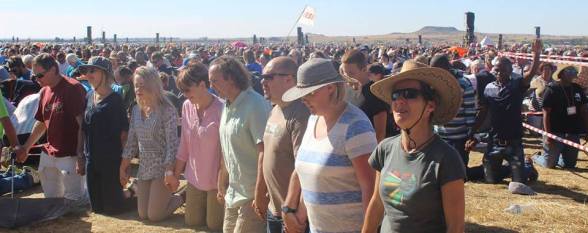
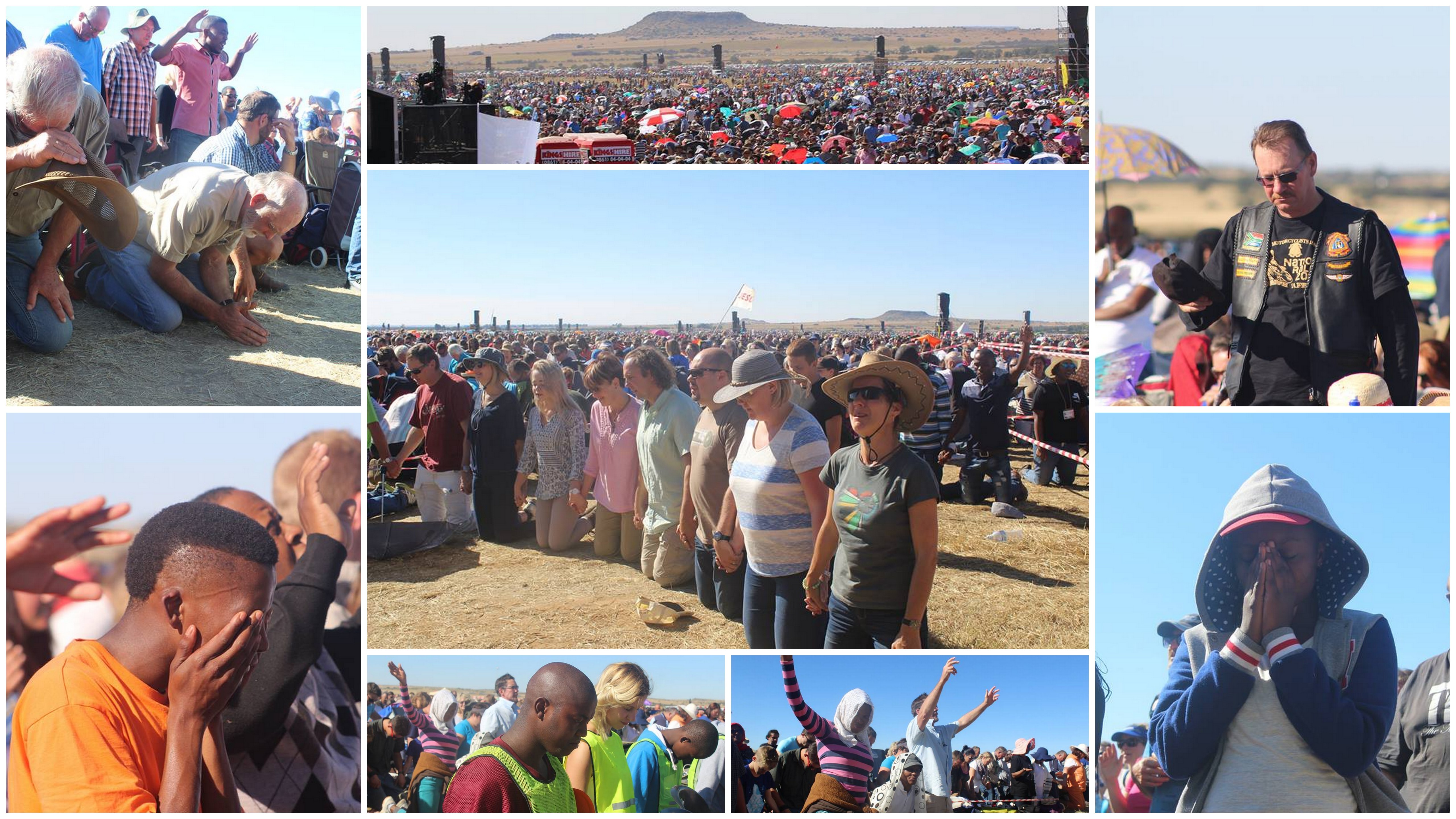
So, gister was die groot ‘It’s Time’ gebedsbyeenkoms in Bloemfontein en daar was ‘n mag der menigte Suid-Afrikaners wat gaan bid het vir verandering in Suid-Afrika. Hier is net drie Skrifte (van die baie) waaruit Vader ons uit die Bybel leer oor gebed.

…en (as) my volk, oor wie my Naam uitgeroep is, hulle verootmoedig en bid en my aangesig soek en hulle bekeer van hul verkeerde weë, dan sal Ék uit die hemel hoor en hulle sonde vergewe en hulle land genees. (2 Kronieke 7:14)

Waak dan en bid altyddeur, sodat julle waardig geag mag word om al hierdie dinge wat kom, te ontvlug en voor die Seun van die mens te staan. (Lukas 21:36)

…terwyl julle met alle gebed en smeking by elke geleentheid bid in die Gees, en juis daartoe waak met alle volharding en smeking vir al die heiliges… (Efesiërs 6:18)

***

So is ons land al vir baie lank al op die afdraende pad en toe hoor ‘n gewone, onvolmaakte  man (soos wat die Mosesse en Dawidde en Elias van die Bybel ook maar was) dat hy ‘n gebedsbyeenkoms moet hou waar mense van Suid-Afrika hulleself kan verootmoedig, Vader se wil vra en bid vir die omstandighede in die land. As ‘n mens die boonste Skrifte lees, sou jy dink dis heel  eenvoudig. Bid vir almal en oor alles en te alle tye is die basiese boodskap. Maar o, wee! Ons is mos (Suid-)Afrikaners en oornag was die land in rep en roer!

***

En so analiseer en kritiseer en oordeel dit te lekker vir ‘n klompie weke lank.  En dit gebeur toe gister:

Een groep gryp die geleentheid aan, ondersteun dit en gaan bid. Die wat nie Bloem toe kon of wou gaan nie, het op hulle eie gebid of byeenkomste gereël waar hulle saam met ander kon bid – selfs in die buiteland.

Sommiges het gewonder of hulle kerke darem vandag ook vol sou wees en ander het die inisiatief uitgekryt as “nie van Christus nie”, as ‘n “die mekka van satan” vanweë “die oorvloed vals profesieë” wat daar uitgespreek is en so meer. En die onvolmaakte man wat dit gereël het, was volgens baie onder andere “geldgierig”, “net agter getalle aan” en “die anti-chris”.

Dan was daar die natuurlike reaksie van die ateïs dat mense net gaan om goed te voel oor hulleself en dat niks gaan verander nie.

 ***

Ek reken in ons quick-fix wêreld sal baie die hele gebed-ding as ‘n flop sien as daar teen môre niks verander het nie. Ek wens ons kon almal saam met dieselfde energie saamstaan wat deur sommiges gebruik is om te kritiseer en verdeling te veroorsaak. Dink net! Maar ons is nog hierdie kant van perfektheid. En dis hoe dit is. As ons dit tog net kan onthou.

***

Gister se gebeure het my beide hoop gegee en hartseer gemaak, maar dis maar net nog ‘n teken dat ons in onvolmaaktheid leef. Deur Vader se genade is ek nie deur al dié dinge verwar nie, maar ek dink die optrede van baie Christene die afgelope tyd kon tot redelike verwarring by jong/nuwe gelowiges lei, wat ‘n jammerte is.

***

Die Skrif uit Openbaring het weer gister telkens by my opgekom. Leef ons reeds in dié tyd?

Wie onreg doen, laat hom nog meer onreg doen; en wie vuil is, laat hom nog vuiler word; en laat die regverdige nog regverdiger word, en laat die heilige nog heiliger word. (Openbaring  22:11)

***

As jy ‘n gelowige is, besluit maar self volgens die Skrif oor gister se gebeure. Te veel ‘geloof’ word in ons dae op opinie gebou.


©  Fielies (Riëtte) De Kock

Awesomest wife. Finest mom. Hopeful Writer. Forever dreamer. Temporarily living in Cairo, Egypt.

The Old Cataract Hotel in Aswan and Times Forever Gone

20170406_174046

My Weekly Musings #11/2017

As a lot of authors and would-be writers, I am fascinated by the writers from the past. I read up on them and read some of their works to try to learn from them. I have great respect for the way they wrote and how prolific they had been in a time before the technology we have today to make writing and publishing easier, was available. (Although I haven’t personally experienced this ‘easiness’ of getting published in the mainstream yet.)

I am a huge, huge, huge fan of Agatha Christie. She wrote wonderful stories that are still enticing today. I have read many of her books and watched more of her stories onscreen and just when I think that I’ve read or seen everything, something ‘new’ pops up. Here, where we are currently living in Egypt, bookstores stock her books and I indulge. She wrote so many stories, that one day if I manage to get through them all, I can just start over and read them again if I want, because they will be as good as new to me.

Another fascination of mine is Ernest Hemingway. (I’m currently contemplating naming our next dog Hemingway. Or Blue. Or something totally different.) I love his writing – some more that others, because let’s face it – in the times that he wrote, not too much happened in most works of fiction and it took a long time to happen.

Although a fan, I’m not blind to these old writers’ weaknesses. There was a lot of drinking and substance abuse involved in the lives of some of these authors and though I don’t condone it, I also don’t judge them. (Today it’s well known that writers and other artists are prone to mental illness and substance abuse.) And in Ernie and his friends’ case I suppose they were pretty much products of the war they survived.

So, even though Ernest and the Fitzgeralds and Gertrude Stein and the likes lived their lives as if there was no tomorrow, I can’t help to romanticise the period and circumstances they lived in just a little bit. Although conditions were still volatile during and after the war, things got simpler after that. There was class and style and ambience and boredom about the way they did their day by day routines.

A few weeks back while on a Nile Cruise, we visited the old Cataract Hotel in Aswan, Egypt, for the third time since we live here. Being there, walking through the big corridors, riding the old, slow wooden lift and sitting in the stylish library, makes one daydream about a time and innocence gone forever. In my mind I can see Aggie sitting in her suite, with her desk moved to in front of the open double doors, feeling the desert heat breezing into the room, stroking her cheeks and causing tiny drops of perspiration on her forehead underneath her neatly waved hair, while she is tapping along passionately on her typewriter – creating the circumstances for Hercule Poirot to solve the four murders in Death on the Nile.

In my mind’s eye, I can see Mister Hemingway standing alongside the chest of drawers, hammering the keys, thinking of rather having a cold beer down in the garden, whilst the current woman in his life is still in bed, nursing a hangover and moaning about him not attending to her immediate needs – to his utter dismay.

I can imagine the buzz in the dining room when the famous well-dressed Who’s Who whom chose to cavort in Egypt at the same time appears one by one or couple by couple in their evening best. They would look way different than our group of whom only some had bothered to follow the smart/casual dress code.

I hear Aggie and her hubby converse about the newest archaeological finding at a site nearby, contemplating from which dynasty it might originate. Over dessert, she wonders if she shouldn’t have stuck to only one murder in Death on the Nile, instead of the four, because “you know, Darling, I don’t want to contribute to the world becoming a more violent place”.

With war clouds still hanging over Europe, Winston Churchill decides that he has to come up with a strategy for the coming Armageddon.

And in another few years, Mrs. Fitz frowned upon her husband’s alcohol intake, wondering aloud if it was Ernie’s bad influence on him or the other way around, while she remarks how she can’t grasp why she came to feel so lightheaded so swiftly.

Fast forward to a time the world became enchanted by the people’s princes, who, while smiling her shy smile to the world, is crying within her heart over her broken dreams and recent divorce and wonders what the future will bring as she listens to her Arab lover’s plans for their next holiday together…

Sitting on the lawn, having coffee at sunset with a group of people from all over the world – some of whom we know and more that we don’t know – it is so easy to being translated into another era filled with well-clad creatives looking at the same sun setting where cataracts form down under in the river. Watching the falloukas with their majestic sails on Egypt’s Nile of the Bible passing by, I sat back and dreamed that one day my name will be mentioned as a famous writer who loved visiting the old Cataract Hotel and that a book of mine will sit there on the library shelf next to my fellow South African, Andre P. Brink’s book. Wink-wink.

20170406_184714

PS: Google the Cataract Hotel to read about its history and about the famous ones who frequented there. It is an interesting place and if your travels ever bring you to Egypt, make sure to put Aswan on your itinerary as a must-visit place. There is a lot to see, including the Aswan Dam/Lake Nasr, the Nubian Village, the botanical garden Lord Kitchener planted from trees soldiers brought from all over the world and the Philae Temple – the youngest building from old Egypt’s history. It is also a four-hour drive/50 minute flight to the temple at Abu Simbel.

Cataract Hotel

© Fielies (Riëtte) De Kock

Awesomest wife. Finest mom. Hopeful Writer. Forever dreamer. Temporarily living in Cairo, Egypt.

Uprooting

table-mountain-sunset-cape-town-night-lighting

My Weekly Musings # 9/2017

Recently, we have been visiting our friends who now live in New Zealand. They might or might not stay there forever. They live in an area to where a lot of Asians emigrate to. And a lot of South Africans also. (I think for the South Africans, the choice has to do with the weather, because the north island’s weather is much warmer than the south island’s.) They live in the Auckland area which looks quite a bit like a mix between the Western Cape and Mpumalanga. That might have something to do with it too. In recent decades a lot of South Africans have immigrated to especially countries such as Australia, New Zealand, the UK and Canada. Very few had returned to their ancestral countries of origin, which were mostly The Netherlands, France and Germany.

The reasons for South Africans emigrating is mostly the unacceptable crime wave which are causing people to look for safer places to calm their nerves and also because of work opportunities, due to many people being laid off after becoming BEE (Black Economic Empowerment) victims. It is not only white people who emigrate though. The world is full of young black South Africans making their mark elsewhere in the world too.

We South Africans had become used to ‘losing’ friends to emigration. It is a touch phenomenon to get used to, because parents have to let their children go, adult siblings get separated and, with young children and new-borns growing up in a foreign country, young South Africans become estranged with their families back home. It is indeed a challenging situation. But, thinking about it, I also realise that migrating is sort of a ‘natural’ thing throughout history. It was after all how we got to South Africa. Our ancestors from The Netherlands sought new trade opportunities and the Christian French Huguenots fled from religious persecution, just as some South Africans now leave the country’s shores in fear of their lives and/or looking for jobs.

And of course the uprooting of families is not unique to South Africa. South Africans are at least still doing it by choice (although I blame no one who emigrates due to the fact that they had been high jacked in their own drive-way three times, or whose parents were brutally murdered on a farm or in a city house or whose daughter were raped and murdered when she went for a jog.) Our TV screens are filled daily with displaced people who flee for their lives from places where the blood hungry murderous make it impossible for them to live. One of the drivers we use when we go to Jordan told us that he is Libyan. He spent a few years working in South Africa (nogal!) and then ended up in Jordan. His brother lived in a few other places and currently stays in Israel. Across from our house in Cairo is a small Catholic church. The congregation is made up of expats working here, Egyptians – I presume and Sudanese and various other refugees. The international working force of Egypt is from all over the world. We lived in a displaced world full of displaced people.

So back to my pondering this week after a very long start. While we were in New Zealand, we saw lots of Afrikaans speaking South Africans in the streets, malls and on the beaches. Within ten minutes’ drive there are three shops selling South African products. We had wonderful boerewors (sausages) and biltong (dried meat – like jerky, but better)! The South African numbers are so many there that Browns Bay is referred to as ‘De Bruynsbaai’. And all the time we were there, I tried imagining how it feels to uproot yourself – knowing that it is going to be forever – and go and live in a strange place, building a new life so totally different than the one you had, away from your family and your friends.

We are only temporary living abroad. We are now here in Egypt for three out of a four year period. It had been wonderful and crazy and difficult and frustrating and emotional and a lot of other things too. I really miss our pets, our country, our food, our language, our culture, our ways and especially our people. Whenever we go through passport control at OR Tambo, I want just want to hug and kiss the person behind the counter, but I know I would probably be arrested for it, so I refrain from doing it.

I tried to put myself in the shoes of someone deciding to emigrate to New Zealand – just because it was the country many South Africans choose and we were visiting it. It is a wonderful, first-world, effective, beautiful place with nice, warm, down-to-earth people. It is also a very, very, very expensive country where some of the products are just plainly over-priced. I think it must be difficult in the beginning especially. I wondered if you ever stop missing the rugby fights, the fact that there is a joke minutes after any bad thing happening, the Nando ads, the excellent and the poor Afrikaans songs, the biltong, the South coast beaches, the clean, unique smell of Cape sea air in your nostrils, the shenanigans of politicians (okay, not really that, because now the rest of the world had caught up with us too) or the smell of fresh beskuit and bread of your aunt’s house. I wondered.

We met a young South African girl our son’s age who worked at the supermarket we went to. She heard us speaking Afrikaans with each other and immediately started a conversation. While ringing up our things, she told us that she was living  there with her parents for twelve years now. I commented that she must be full blown Kiwi by now, seeing that she was so young when the moved and probably didn’t remember ‘home’.  Her smile vanished and in a soft voice she said:

“I dream of Cape Town all the time.”

We met with quite a few emigrants from different countries. They told us that the divorce rate under uprooters is quite high. Listening to them a few things came out for people to consider before they make the decision to emigrate. These are:

  • Don’t emigrate to run away from your personal problems. If your husband has a wandering eye, it will be going with him. If he is an alcoholic, he will still be one on the other side. If your wife has a money spending problem in South Africa, you’ll have bigger problems living in a country where the currency is ten times (yep!) stronger.
  • Sort all medical stuff out before you leave. A lot of medical issues can get your visa delayed or even cancelled.
  • Don’t lie about anything on applications.
  • Plan. Plan. For everything.
  • You need a lot of initial capital to move to and settle in another country. (Hundreds-of-thousands-a lot.)
  • Moving countries causes immense stress – for every member or the family. Don’t underestimate that factor. Prepare for it. Change is never easy. Uprooting is up-there on the stress list. This counts even for ‘short’ stays abroad like ours.

My hope is that we will always have the choice to live in South Africa. I love my country. I miss my beautiful country with all its ups and downs. I hate the violence and the corruption. I hate it to be scared at night. (I sleep like a baby in Egypt – and everywhere else we go.) So, I know I will have to face my fears again. I will worry about Michael driving alone at night. I also realise that he might be forced to seek greener international pastures and leave us behind.  I’m not blind for all the challenges. But I miss the good of South Africa. The good things as well as the good people. And for that I hope to stay.

We will just cling to our Protector and remember that ‘Elohim has not given us a spirit of cowardice, but of power and of love and of self-control’. I hope our faith and love and self-control will be enough in the end.

©  Fielies (Riëtte) De Kock

Awesomest wife. Finest mom. Hopeful Writer. Forever dreamer. Temporarily living in Cairo, Egypt.

Keeping One’s Word – a Trait Extinct

boy-1822553_960_720

My Weekly Musings #6/2017

This is not a post about the new American president or on how good or how bad he is, so you can keep on reading. In order to get to my point though, he has to be mentioned indirectly. As I was writing something else this morning, the TV news was on in the background. I must have had finger trouble, because it was another channel (it wasn’t FOX though) as the usual (BBC). There was a panel on video call discussing the subject that I won’t mention in this post only due to the fact that you might already suffer from fatigue on the topic.

I wasn’t focussing, so I wasn’t sure if the three men were supporting the above non-mentioned person, or if they were making tongue-in-the-cheek comments. All I knew was that my head bobbed up by the one man’s words.

“He is doing everything he promised.”

Now, I know about the jokes going around about that same sentence, but it wasn’t until this man said it on TV this morning that the penny dropped.

I suddenly realised that I was ‘participating’ in something that I really thought I wasn’t involved in. I was accepting lying as ‘normal’ behaviour. Oh, I realised it somehow, but I don’t think it had ever really sunk in, because I thought that I was above that.

We are so used to people making promises when they are running for office and when getting elected, they do the opposite. And we accept it without much resistance, because – well, we knew it would happen! I heard the above non-mentioned person also making promises, but thought by myself, “Meh, he won’t do it.” and “He can’t do that!” and “He won’t be allowed to do that!” Now he is starting to do everything he promised and the world (me very, very included) is shocked!

We got so used to people promising us the sun, the moon and the stars, but instead delivering garbage to our front doors that we have accepted it almost with thanksgiving! We have learned to pardon it. Even those under us who see ourselves as not ‘foolable’, have gotten so used to being fooled that we accept it as the norm. And in the world we live in these days, we are being fooled by almost everyone  we are suppose to trust – politicians, business people, religious leaders and of course every person working on the other side of  an enquiry who promises to call you back.

So, when suddenly someone comes along and keeps his promises – how far reaching the consequences might be – we are suddenly reminded that we are not used to living in a world where people keep their word anymore. And we are fooled when they do. (Like the media and the pole analysers were after the particular election that the non-mentioned person above won.)

Thankfully, we learn from the Word of God that ‘whoever guards His Word, truly the love of Elohim (God) has been perfected in him’ (1 John 2:5). And we also learn that there is One who will always keep His Word.

“I shall not profane My covenant, neither would I change what has gone out from My lips.”

(Psalm 89:34 from the Bible)


© 2017 Fielies (Riëtte) De Kock

Awesomest wife. Finest mom. Hopeful Writer. Forever dreamer. Temporarily living in Cairo, Egypt.

46 Is not an ‘Appropriate’ Age to Die

img_6323

My Weekly Musings #5

This was a difficult week to be away from home. Our friend died. She was only 46. She had health problems since long before the 14 years that we knew each other. She had more than 30 operations and had been in and out of hospital all the time. We knew that her body took strain that no human body can sustain on the long haul. But we never wanted to acknowledge it. We got used to her being in and out of hospital and life going on in between.

So last week she was in hospital again. On top of her ‘normal’ problems she was fighting a resistant bacterial infection for over a year. She was sent home after treatment with strong, long-term antibiotics. But on Monday morning when her husband woke up, she had left this world quietly next to him during the early hours of the morning.

We were of course, in shock. Still are.

We were still trying to come to terms with Adri’s death, when I got a message from home that my loving godfather went into a coma and not long after that, that he too went to heaven – on what would have been my father’s 90th birthday.

Although any death is always difficult, I’ve learned in life that loss feels different when people die at different ages. My dad died at age 73. That is an acceptable age to die in my books, although it doesn’t make it any easier that one’s father dies at an appropriate age when you stand next to his bed watching how the artificial life orchestrated by machines, leaves his body. Two years later I learned that 49 isn’t an acceptable age for someone to die, when my beloved ouboet (eldest brother) was taken from us in an instant.

We were expecting Oupa Koos’ death. Both he and Ouma Mienie, his wife, was/is very sick. And they were nearing 90. Still, when he died he didn’t only leave a person that would be missed dearly in my and his closer family’s lives. He left and took a whole part of my life with him. A whole part of my history was intertwined with his. Fortunately, as long as I stay mentally healthy, I will have those memories to cherish. He was one of the few left of their generation in our family. And now we are becoming that generation. That is life. What a sobering thought!

We didn’t expect Adri to die young. 46 is an inappropriate age to die. But then – life and death isn’t in our hands. It isn’t ours to give or to take. God gave Adri a wonderful life, in spite of her struggles and she leaves a testimony of His great glory behind through the many lives she touched. She sang like an angel on earth and I believe she is having a ball worshipping the Living God with the real angels now.

Until we see each other again, my friend. Sing your heart out.

And say hello so long to Baas Wynie and Ouboet Piet, Oupa Koos. Tell them they are in my thoughts. Every. Single. Day.


And he said, “Naked I came from my mother’s womb, and naked I return there. יהוה (the LORD) has given, and יהוה has taken away. Blessed be the Name of יהוה.”

(From the Bible – Job 1 verse 21)

© 2017 Fielies (Riëtte) De Kock

Awesomest wife. Finest mom. Hopeful Writer. Forever dreamer. Temporarily living in Cairo, Egypt.

Living outside of One’s Comfort Zone

camelbazaargetaway

Just before having to get out of the way

My Weekly Musings #4

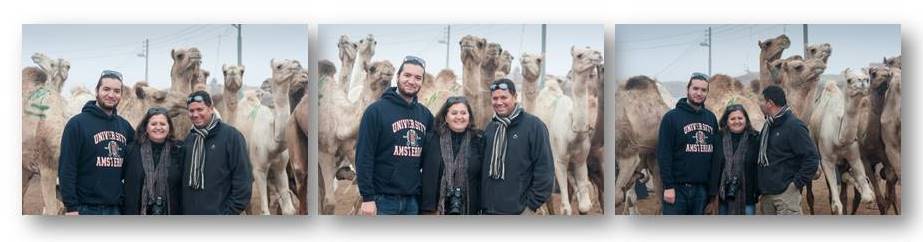
Last week, our American friends invited us to visit the camel bazaar outside Cairo (on the Giza/Sakkara road). We’ve been living here now for just short of three years and I have never been outside of my comfort zone so much in my life. It is literally a daily thing. It is good for me – especially for spiritual me. Not only does it teach me plenty about the world around me, the people of this country, their strange culture and their fanatic religion, but it also teaches me a lot about myself. Living in a culture where you do not understand the language and isn’t even able to read their alphabet or have the same traditions and customs or worship the same God, things can get quite uncomfortable.

It isn’t necessarily a bad thing being out of your comfort zone. It confronts one’s own beliefs, upbringing, culture, customs, world view and lifestyle when you are thrown into a world where nothing is familiar or make sense to you. Not only do you question the behaviour of the people around you, but you question your own. It is not a once off thing, but an ongoing everyday introspection. And not only do you learn to value what is ‘own’ to you, but you also learn to embrace and appreciate diversity. Very early on in our stay here, I have decided that I don’t understand much (not even a reasonable bit) of this culture, but that I am not even going to try to understand it. It makes life here a little bit easier and less complicated to observe rather than to label.

Back to the camel bazaar. I’m sure that this place wouldn’t even exist in a Western country. It’s a raw experience. Camels, by their hundreds, maybe even more, are brought together on a Friday morning to be sold I was told, mostly for meat. Men and (some very young) boys herd the animals – hopping along on three legs as one of the front legs is tied with rope to keep the animal from running away – towards the various ‘auction stations’ with long bamboo sticks. It isn’t a pretty picture to see. On the surface and in the viewpoint of a foreigner like me, it is a harsh place for a camel to be. And also for the people involved.

Upon arriving there, we were only four females in a sea of males – something that already pushes the discomfortometer into the red. The sticks hitting the camels’ bodies – be it on the humps, legs or head – is another difficulty to deal with. Furthermore, none of the camels looked like they had the potential for dinner I would want to see on my plate.

But I realised that it wasn’t my world. It wasn’t my place to judge. With that I don’t condone the behaviour of the people or the suffering of the animals. Sometimes in life things just are what they are – people making a living, surviving the only way they know how to the way they did for centuries – maybe even millennia. My disliking it, my discomfort and the fact that I might disapprove of their way of doing as a foreigner in their country, is not going to change that. I’m not going to alter a country’s culture, customs and actions which are way older than my own culture. What I should do is learn to appreciate it for what it is.

I realised that I would probably be out of my comfort zone many, many, many more times in the period we have left here in this interesting, phenomenal country. How I handle my discomfort is what is important. If I can’t change people’s behaviour or world view, I can at least work on my own. I can learn to value the diversity of this place and the other countries we are visiting, as well as that of my own country when we go back. Hopefully, when we are back in our own culture – which is just as diverse – I will be able to feel less uncomfortable in the mixture, while still staying true to my own upbringing and beliefs and being more tolerant towards people who are different from me.

In the end, when one sees the bigger picture from a forever-living-worldview, we are reminded that we who confess Him as our Saviour are one body in Messiah (Romans 12:5). One day we will be immersed into His culture and all the discomfort of worldly customs, poverty and illness will be something from the past.

PS: I spelled necessarily correct without using spell check or a dictionary.

© 2017 Fielies (Riëtte) De Kock

Awesomest wife. Finest mom. Hopeful Writer. Forever dreamer. Temporarily living in Cairo, Egypt.

High Above the Clouds / Hoog bo die wolke

English version

This will be recorded as one of my most beautiful memories ever. We are on an Egypt Air flight from Amsterdam to Cairo.

Deon and I always listen to Paul Wilbur’s ‘Shema’ together on shared earphones when they play the Islamic prayers on the small screen – something that is done before every flight. Normally I switch my phone off after this, because I want to keep it charged should I need to make a call after we have landed. But today I keep listening. The time between sitting on the tarmac and take off can be a bit boring sometimes.

It is a majestic feeling when a plane jets into the air with the forceful sounds of Verdi’s ‘Nabucco’ in your ears. Outside the lush green landscape of Amsterdam is left on the ground as the plane swoops through the thick clouds to glide above them. This is one of the most beautiful pictures my eyes ever had the privilege of seeing! The cotton wool-like clouds are bundled onto each other with no earth to see down below. The music is still playing while I hear my spirit whisper in my heart: “Thanks for beautiful things, Father!” and “Thanks for all the undeserved treats. Thanks for all the places we see that I’ve never thought I would see and thanks for seeing some more than once!”

And then I heard the Halleluja choir with ‘Ode to Joy’ and Susan Boyle sings ‘Then sings my soul’, while mine sings with. I ‘halleluYAH’ on with Leonard Cohen and Delaney en Bonnie’s ‘Never Ending Song of Live’ follows passionately. Then André Rieu’s orchestra played “Auld Lang Syne’ and I long to be with my family and I wonder what they are all doing on this spring Sunday afternoon in South Africa. While I’m still wondering Neil Diamond makes a ‘Beautiful Noise’ and on the note of ‘Hava Nagila’ I have to close the plane window a bit, because the son reflects quite sharply from the Alps down below.

My finger chooses Josh Grobin’s ‘Jesu, Joy of Man’s Desire’ almost automatically, because one always tends to feel closer to heaven so high up in the air.

In the aisle seat Michael sat cramped-in and reads his new book and in the middle, next to me Deon rests on his forehead against the front seat, trying to sleep. I trust on his cell phone today should we need to make calls on the other side. For now my phone’s battery will help Josh fly high above the clouds over Europe.

Afrikaans

Hierdie sal in my onthou opgeteken word as een van die mooiste memoeries ooit! Ons is op ‘n Egypt Air-vlug oppad terug van Amsterdam na Kaïro.

Ek en Deon luister altyd na die ‘Shema’ van Paul Wilbur oor gedeelde oorfone as hulle die Islamitese gebede op die klein skerm wys – iets wat voor elke vlug gedoen word. Normaalweg skakel ek my foon hierna af, omdat ek nie die battery wil pap maak nie vir ingeval ek dit nodig sou kry nadat ons geland het. Maar vandag hou ek aan luister. Die tyd tussen in die vliegtuig sit op die aanloopbaan en opstyg kan nogal vervelig wees.

Dis ‘n majestieuse gevoel as ‘n straler opstyg met Verdi se ‘Nabucco’ se klanke in jou ore. Buite het ons die lowergroen landskap van Amsterdam op die grond gelos en die vliegtuig het die dik wolke ingeswiep – na waar ons bokant hulle sweef. Dit is een van die mooiste, mooiste prentjies wat my oë ooit die voorreg gehad het om te sien! Die wolke is soos watte-berge op mekaar gestapel, met niks aarde onder ons te sien nie. Die musiek hou aan speel, terwyl ek my gees in my hart hoor fluister: “Dankie vir mooi dinge, Vader!” en “Dankie vir al die onverdiende voorregte. Dankie dat ons plekke kan sien wat ek nooit gedink het moontlik is nie en party wéér kan sien.”

En toe hoor ek die Halleluja-koor en ‘Ode to Joy’ en Susan Boyle sing ‘Then sings my soul’, terwyl myne saam sing. En ek ‘halleluYAH’ verder saam met Leonard Cohen. En Delaney en Bonnie se ‘Never Ending Song of Live kom tussen-in en toe ek weer hoor, speel André Rieu se orkes “Auld Lang Syne’ en ek verlang na my familie en wonder wat doen hulle op dié lente Sondagmiddag in Suid-Afrika. Terwyl ek nog wonder, maak Neil Diamond ‘n ‘Beautiful Noise’ en op die nota van ‘Hava Nagila’ moet ek eers die vliegtuigvenstertjie ‘n bietjie toetrek, want die sonnetjie skyn nogal skerp so hoop bo in die lug waar dit van die Alpe af reflekteer. My vinger kies so half outomaties Josh Grobin se ‘Jesu, Joy of Man’s Desire’, want ‘n mens voel mos maar altyd ‘n bietjie nader aan die hemel so hoog bo in die lug.

In die gangsitplek sit Michael ingeprop en lees sy nuwe boek en langs my in die middel, sit-lê Deon op sy voorkop teen die sitplek voor hom en probeer slaap. Ek vertrou maar vandag op sy selfoon, sou daar ‘n ‘vir ingeval’ anderkant die landing wees. Vir nou help my foon se battery eers vir Josh om hoog te vlieg bo die wolke bokant Europa.

© 2016 – I, Fielies (Riëtte) De Kock tries hard to be a Proverbs 31-woman – excellentest wife, finest mom, greatest lover and successful ‘wordpreneur’ all at the same time. I share my current living space in Cairo, Egypt, with my husband, young adult son, the building’s ginger cat, her friend and two kittens (so far) – and the space in my head with way too many ideas and multitudes of story characters to function normally .

On Having too Many Ideas and the Pure Evils of Multitasking

arrow_on_target_47720

Just keep reading. The advice part comes at the middle of the article…

Struggling to Focus

I really struggle to focus when it comes to my writing. To focus – not to concentrate. I can sit and do the same thing for hours. Unless I’m on my phone. Then I have the intention span of a two year-old and I can forget what picture I want to open only half a second after I’ve made the decision. I don’t have a search for the reason for my problem, because I know what the cause is. Ideas. I have too many of them. While I am busy researching links for  my Writing Club Facebook page, I think of a new short story that I want to write and then I think of a great idea for my next blog entry and while still busy with that I’m struggling with the plot problem of my decade-old novel.

Multitasking towards Scatter Brain Syndrome

Every weekend I think of what to do the next week and plan it in my head, but come Sunday (when the work week starts where we currently live) I sleep too late, spend too much time on my phone checking Facebook, play Words with Friends or find something interesting that I have to do Bible study on. So by 10:30 I realise that our bedroom needs tiding, the building cats want food, our son wants to sound his view points on his latest university essay with me and while I’m listening to him, my mind wanders to have yet another few writing ideas on another few projects.

Am I too scatter-brained or do I have too many ideas? I can’t always determine, but I know that whichever it is – or maybe it’s both – it makes me unproductive. Having ideas as a (would-be) writer can only be good, can it not? I rarely have had problems with writer’s block in my life. That must be a good thing, mustn’t it?  Having lots of ideas is good. But it doesn’t help if any of those ideas ever get finished. Oh, I have finished manuscripts in my cyber Dropbox drawer. It’s not if I can’t finish anything. I can sit down and work on a long project to finish it. It’s just that I can’t finish everything that I want to, because I don’t know what to work on and what to leave.

I do something and then I leave it and then I do something else and then I leave it when a new idea pops into my head. I know I have this problem. And I have tried to overcome it many times. I am currently in one of those phases. I have decided to finish my Writing Club business idea. I have started well. Then I got sick. And now, a week later, I am writing a blog while still editing a short story whilst I should be busy with that instead.

The problem I find with my writing – as also in other areas of life – is that I try to multitask, in spite of being a hater of multitasking. Because I multitask in life too. I start tiding the bedroom, and when putting away some stuff in the bathroom, I see that the toilet need urgent cleaning and when I go to the kitchenette to fetch the cleaning products, I wash the morning coffee mugs and then remembered that my son didn’t have breakfast yet and when I take his breakfast to the TV room where we normally have it together, we watch the breaking news and I quickly do some research on some of the facts the reporter gave and then I see some interesting article that I have to share to my Writing Club Facebook page and while on the computer I see that there are some messages from my family group on WhatsApp Web and then I get involved in a who-looked-more-like-whom baby pictures debate and when it cools down I see more interesting articles on writing and read a few, and get new ideas for blogging and then my husband called to hear if I have started doing research for our trip and then I get into the mood to finish my short story and I write for an hour. And when I finally come to my senses again, the bedroom is still untidy, the toilet is still not cleaned, the coffee mugs are dirty again after having breakfast though, the breakfast plates had to be cleaned, there is new breaking news on TV, the family had decided that the baby looks like herself, my Facebook page have more notifications, my short story is still not finished, I haven’t done the research for our upcoming trip and I realise that I haven’t thought about what we’ll have for dinner. Then I leave everything I’ve been busy with and rush to the kitchen…

That’s my life. It’s not perfect. I frustrate myself. Days and weeks and months and even years fly by and I’m not getting done what I want to get done. In a few years’ time I will probably look back and ask my husband and son: “What have I done with my time?!” And they will probably remind me to read this blog entry to answer myself.

Having many ideas is a good thing. For creative people it is a wonderful thing. But if you can’t channel those ideas into some productiveness, they will always be just… ideas. Ideas means nothing if they sit in your head. They have to be acted upon – just like dreams. Ideas also have a tendency to get ‘stolen’. If you don’t do something with an idea, someone else, who is more focussed will and before you know it, another opportunity will be lost.

A Few Tips

Multitasking must be killed. We must live in the moment and concentrate on the task at hand – one at a time. Here are a few ways to try to do it. Let’s try it!

Focus

With the Olympics on, I couldn’t help to recognise again the athletes’ commitment to their respective codes. The archer’s focus on the target is a good example of how we as writers or other artists or people of any other career should learn to focus on one thing at a time. The archer can only hit one target with one shot. If his focus is on anything other than only his target, he surely will miss. Focussing on one writing piece at a time will eventually means that one project will be finished. And if that one is finished a next one will get finished and a next and a next.

Do Something Productive with those too Many Ideas – Make a List

Write down all the writing projects ideas you have in your head. By getting them out of your head and onto paper, you can start focussing on getting them done. Keep this list close and update it as you get new ideas.

Then Make a ‘To Do’ list

Now make a ‘To Do’ list. Decide what it is you want to achieve with your writing. Be very, very honest with yourself and focus on your strong points. Identify the projects that will be the most probably to get published and/or bring in some money. Prioritise you list. Then start and finish the first priority project on your list.

Don’t Move on Before a Task isn’t Finished

Don’t move to number two on your list unless number one is finished. In the case of number one being writing your novel, you can do blogging or other smaller projects in between, but always finish the allotted daily writing time for your priority project first, before going on to doing the smaller ones.

Plan your day – Have a Routine

You know the saying, ‘Fail to plan, plan to fail.’

If that archer didn’t practice for hours every day, he wouldn’t have made his country’s Olympic team and he wouldn’t have been able to win the gold medal. If he failed to aim at his target, he would have failed to hit it. If you want to go on holiday in Greece, you need to plan to take leave, buy plane tickets and book accommodation. Otherwise you will remain where you are. If you don’t plan anything, you won’t get anything done. It is as simple as that.

‘Go to work’

My husband gets up at the same time every morning, showers, clothes himself, takes his bag and goes to work. And he remains there for eight hours of every five week days – working. For that he is rewarded with a salary at the end of every month. Input equals output.

Some writers have a day job and write for an hour or so every evening and some more over weekends. Well-known writers had got published for the first time this way – by writing only for a short time every day. Every day.

Some writers have the privilege of staying home and have more time than others to write. If you are one of those and still struggle to fill at least a few hours every day writing, you have to become more creative with managing your time and the way you work.

  • Identify your favourite writing place in your house/garden.
  • Decide on what part of the day your writing hours will be.
  • When the time arrives, literally pack your writing tools (laptop, notebooks etc.) in a bag and walk out of the house, through the garden (if you have one), back into the house and to your working place.
  • If possible, leave your phone ‘at home’ or switch to silent.
  • Stay at your working space for the time you have allocated.
  • If you have a whole study or office as working space, close the door after you have finished and open it again at the beginning of your writing period. This way you know that you can shut down and have time to do things with your family without feeling guilty, because you have already done your writing for the day.
  • Be jealous about your writing hours. Allow no disturbances, other than real Don’t make unnecessary appointments for those hours and say no to appointments that can be made for another time.

These tips may seem like common sense and they actually are, but we certainly tend to lose our common sense when we get distracted. Keeping to a regular routine and staying disciplined helps to divide between your living and working spaces and may help you to get into the right mind for doing more productive work.

Keep a writing log

I’ve started doing  this years ago, stopped and started again. I make a simple monthly spreadsheet and write down what writing related work I do every day, including reading. (I also keep a separate yearly reading list.) My columns include, Writing, Editing, Reading, Blogs and Other (like time spent updating my Facebook Writing Club page or journal writing). I blot out days that we travel and on which it isn’t possible to write, although some travels can offer wonderful writing time.

Keeping a writing log shows you how many hours per day you effectively spend on your writing projects and it serves as a motivational tool to better your productivity from month to month. It also helps with planning your writing schedule, because you can see how much time you need to spend on certain projects.

Take Stock Every Week, Month and Year

At the end of every week, month and year, evaluate your writing effort. Check your ‘To Do’ list and see what you have achieved. Go through your monthly writing logs and see where you can improve your productivity. Make changes and stay focussed – one task at a time.

Keep a Personal Journal

If you don’t keep a journal I have a question for you: Why on earth not?! Apart from being a therapeutic tool to write down your emotions, problems goals, dreams and feelings, your journal can be a treasure chest of ideas. Many of my journal entries have become blog entries. It also serves as a reminder of the dreams and goals you have and is a place to blow off some steam – as you are the only one who reads it.

You don’t have to write in your journal every day or even every week. Write when you want to, but keep writing, even if there are two-month gaps.

On days that you really can’t get other writing done (for whatever reason) – just journal. At least it will help you to stay in routine and not get rusty. I write in both languages I speak, depending on the reason, subject or mood I am in.

Learn more about journal writing at https://fieliesdekock.com/2014/03/17/article-on-writing-journal-writing/ 

Go forward one letter, word, sentence, paragraph, chapter, book at a time!

(OK, the bedroom is not going to tidy itself. Off I go…)


© 2016 – I, Fielies (Riëtte) De Kock tries hard to be a Proverbs 31-woman – excellentest wife, finest mom, greatest lover and successful ‘wordpreneur’ all at the same time. I share my current living space in Cairo, Egypt, with my husband, young-adult son, the building’s ginger cat, her friend and two kittens (so far) – and the space in my head with way too many ideas and multitudes of story characters to function as a normal human being.

Book Review :Me Before You – Jojo Moyes

httpsupload.wikimedia.orgwikipediaenthumbffdMe_Before_You_%28film%29.jpg220px-Me_Before_You_%28film%29

What it is about

Lou had just lost her job in a little restaurant, which she loved, and apply to become caretaker to a Will, an adventurer, who became a quadriplegic and had lost all interest in life after an accident which led to him living in an apartment at his unhappily married parents’ house. The movie of the book started showing in July 2016.

What I thought about it

It is a fairly good read, especially because it is a yet unexplored theme in fiction. Jojo Moyes writing is not recipe-like and filled with British wit, in spite of handling a difficult subject. (This reminds me a little bit of Cecelia Ahern’s style if you are, like me, a fan of her writing.)

After finishing the book I felt cheated though, because while Lou’s struggle with the enormity of Will’s decision was addressed, his moral/spiritual deeper struggle was not explored at all, therefore I found the book spiritually poor (as in the opposite of rich). Even people with no religious believes at all must have at least a few conflicting emotions and/or doubts with regard to such an important life decision as the one that Will had made.

Although the whole story was told from Lou’s point of view, the writer took the risk and trouble to switch from hers’ to giving the other characters at least a chapter each – a writing style that can cause chaos and would have worked better, had Will gotten his’ turn too. Yet the writer chose to ‘ignore’ his real thoughts and feelings in an almost robot-like manner. I found it more than a bit odd. If she tried to make a point through not doing it, I didn’t get it.

I still recommend the book because not much had been written about the subject in chick lit or any other fiction so far, but I think the writer really missed a great opportunity to give the reader insight into the immense struggle between life and death that must have been going on in Will’s mind. I will still watch the movie if I get the opportunity and I look forward to read ‘After You’ to see what happened to all the characters after this phase in their fictional lives. Lou is a likable character and it will be interesting to see what Moyes decided to do with her.

My rating of this book is a 4/5 because I like the humour and writing style.

Me Before You is available in most book shops as well as on the Internet as an ebook.


© 2016  – Fielies (Riëtte) De Kock

Those Big Small Things in between Facebook Status Updates

20150606_114239

More Egypt Chronicles

Life is speeding so fast that it can overtake us very easily, leaving us clinging onto whatever we can to survive. And when we are in survival mode, we tend to focus on just that – survival. Sometimes we need to get off the runaway train, stay on the ground and just enjoy the moments of experiences added together that is called ‘life’. So many of us live for our “one day” – that day or days near or farther in the future when all our dreams will be realised into the utopian existences we spend all our free time imagining.

But sometimes we need real life to give us a slap through the face or shower us with the proverbial bucket of ice water to slow us down from our busyness or even to bring us to a halt in order for us to stop and be alive within the actual moment we find ourselves in.

It can happen through the shock of sudden death, the scare of illness, being faced with dangerous situations or just recuperating from something less serious – but as disruptive.

Shock or trauma or failure can sometimes be good for us. It can help us clean our systems, re-organise our priorities and re-evaluate the impossible goals we set for ourselves into obtainable ones and making us pause for a while. Very few things in life can be so good to us than coming to a complete standstill. And I really mean to stop doing what you’re doing and to live in the moment, with no looking forward to the tomorrow that may never be born.e always dreamt of living abroad for a period of time. Due to circumstances that dream got lost for a while, but after some time it found its way back into becoming a possibility and our lives were frozen in their tracks. Everything we did or didn’t do, planned or didn’t plan and decided had to be weighed first against the probability of going away for a few years. It changes one’s whole focus, lookout and pretty much everything you do.

The realisation of a dream can be a horribly, scary affair and takes courage to pursue. (Read my previous blog on this at https://fieliesdekock.com/2015/11/10/the-process-of-realising-a-dream-can-be-a-nightmare/)

We only heard six months later that we were going to live abroad. In Egypt. I cried for a day and then my previous positive-self reappeared and I made a pro’s and con’s list and, surprise-surprise, the pro’s list convinced me – not that it was the longest! (How is it that when your prayers are being answered and you get what you ask for that you get confused?) But the crying subsided and the excitement and frightfulness kicked in. We had a lot to do – easier stuff and more difficult stuff. All the easier stuff had to do with the ‘whats’ in our lives. The more difficult ones had to do with the ‘whos’. My mother lived with us for 17 years and she had to be relocated. And we had to find houses for our four dogs. It wasn’t easy.

Fast forward…

…to living in Cairo, Egypt, for two years.

It takes time to settle into a new environment. And it took me one year an nine months to get so used to the new place to fall into a little bit of a rut – in spite of (or maybe because of) busyness.

Precisely one year and nine months after arriving here, I fell into a not-so-slightly ‘down’. (Don’t worry – it was caused by stupid pains, and although they remained, the depression flew out of the window after a few doctor’s visits. ((And I realised that my ‘depressions’ are always health related.)) And it is a fact that everything seems worse if you are far away from ‘home.’)

Now that the background history is told, I will get to the point. Since that day, three years and three months ago when we first heard that we may be moving, I have learnt to live in the moment. Because of the uncertainty of our situation, we stopped buying unnecessary things, didn’t make decisions with long-term consequences and just started taking every day as it came.

Due to the fact that we came to live in a country where the security situation can be volatile, our circumstances can change at any time and our stay can end unplanned and abruptly. So, I decided to keep living here the way we lived back home for those uncertain fifteen months before we left – in the moment. And I already decided to keep doing that when we get back home one day. But, as I am writing this – even that isn’t a certainty, because that is a tomorrow that is still to come. I pray though that it will happen for us all.

But back again (!) to the reason for this writing. During all these experiences the last few years, I have learnt to enjoy the ‘little’ things in life. Don’t get me wrong. With our current, temporary lifestyle come lots of privileges, which we enjoy and appreciate enormously! I mean, without this experience, my dream to see at least something of Europe would probably always have stayed only in the dream phase. We have cruised the Nile and we are scheduled to go again soon. We have snorkelled in the Red Sea (and fell in love with it)! On a French mountain I have played in the snow for the first time in my life! I attended my first (second, third and shortly my fourth) ball! I have stood in a chamber of Tutankamun in The Valley of the Kings outside Luxor containing the petite mummy of king Tut. Etcetera. Etcetera. Etcetera. These are memories I will cherish for as long as my mind allow me.

But as it is in life – privileges don’t come free or cheap. And in between these very wonderful experiences are those that don’t reach Facebook status. And they take up way more time than those very wonderful ones. They are the ones that can make or break us. The in-between times when the heat, dust, cultural differences, strange religion, terrible traffic, the thin, sick, hungry street dogs, the stray cats, the tummy bugs, the illiteracy (mine!), the overwhelming crowdedness, the ‘ununderstandable’ customs, the poverty, the dirtiness, the interestingness, the bland food, the overripe tomatoes and all the things you miss from home, make you wonder how on earth did you make it so far and how on earth will you make the rest of the time?

I remember back home when we had some challenges, we would go for a walk in the afternoons and with my hand in my husband’s and with our son and our dogs tagging along, I felt like the richest person alive! And this, I personally believe, is where the secret of happiness lies: to find blessings and joy and thankfulness in even the littlest things in mundane life.

I have listed just a few of these things that make me happy. Some of them are not so little at all.

  • Reading Bible and praying whenever I want to, because the Living God of the Bible is always everywhere.
  • Mild weather.
  • Walking to the shops.
  • Walking to the shops on my own legs.
  • Walking to the shops on my own legs in mild weather.
  • Having good Egyptian people in our lives.
  • Eating the last piece of biltong someone thoughtfully brought when visiting.
  • Sitting (in the still mild weather) in our garden, listening to the birds chirping without the competition of the air conditioner sounds (because the weather is still mild and the aircons are still off).
  • Aircons in summer!!!
  • Drinking rooibos tea with my husband and son on a Saturday morning outside in the garden (when the weather is mild) or in the TV room or swimming pool (in summer, when the weather is not so mild).
  • Sleeping through the night without fear of violent house-breaks.
  • Waking up in the morning. (What a privilege!)
  • Having an Afrikaans (my native language) speaking buurvrou (neighbour) in the building across ours!
  • Having even more friends from home nearby and being able to lunch with some of them every week!
  • Feeding at least two of the many hungry cats in this huge city.
  • Watching ‘our’ two cats doing all their cat-things in our garden on top of the parking garage.
  • Taking pictures. Lots and lots and lots of them.
  • Being thankful for every ‘big’ or ‘little’ thing that works out.
  • Being safe after there had been uncertainties.
  • Aircons droning out the muezzin calls.
  • Power coming back on after cuts. (These days they aren’t as frequent and as long as in during the first year. Something to be thankful for – especially in summer!)
  • Experiencing everything with my husband and son!
  • Kissing my husband good night.
  • Kissing my son good night. (That’s probably not something he would like people to read on the Internet ((but he likes it – I can tell)).)
  • Seeing my husband happy because he can watch South African rugby and cricket matches on the satellite TV channels.
  • Paging through the teabags at my Japanese friend’s dinner to find a rooibos tea bag!
  • Having lots of friends from around the world to hang out with, visit new places with and to learn from.
  • Being able to buy the medicine I need and don’t get from home.
  • Being healthy (I hope).
  • Coming home to a haven of safety and tranquility.
  • Having a good landlady.
  • …the list can go on…

These are just a few things and when writing them down, I realise that they are not so little. They are pretty big and important. They are the glue that holds life together. To be in awe when seeing the Eiffel Tower for the first time or feeling small against the largest of the Giza pyramids is splendid, but one can survive life without it. Of course travelling enriches our lives and I am a big supporter thereof (even if it is just exploring outside of you immediate comfort zone) and I wouldn’t have wanted to miss out on these experiences! But it really is the ‘small’ things that we can’t live without, which makes the mundane extraordinary – which is the difference between letting life get away from you and living in the moment. It is the ‘small’ things in life which brings sustainable happiness.

© 2016 – I, Fielies (Riëtte) De Kock is trying hard to be an awesomest wife and greatest lover, finest mom and to write something all at the same time. I share my current living space in Cairo, Egypt with my husband, young-adult son, the building’s two cats and the space in my head with way too many ideas and multitudes of story characters to function as a normal human being.

The Woman who made me Fall in Love with Afrikaans Words only to Realise that she was Actually Writing in English and was an American

Helen

I remember my pre-school growing up years in two phases – a phase where we lived on two farms, although I actually only remember the second farm. Of the first I only have two memories – one where I received my soft toy monkey and namesake, Fielies, as a Christmas gift around my third birthday (yes, I actually remember getting the present and opening it) and the other where my sister, twelve years older than me, ignored my mother’s instructions and gave me Coke-Cola in a baby bottle, even though I wasn’t supposed to having Coke or be drinking bottle anymore.

Of the second farm I have many happy memories, much of them involving my brother, father and grandfather.

The second phase was living in the neighbouring town. Here my memories contain mostly our house, my brother who was nine years older than me and in high school in the next town during the week – and my grandfather’s shop.

My grandfather sold stationary, fireworks and also gifts and gift cards in his shop. My grandfather and grandmother taught me to read and write numbers and I helped them put handwritten prices on the products in the shop. This made me feel very smart. But what didn’t make me feel smart was that although I could write numbers, I couldn’t read letters. The gift card display cupboard filled with Helen Steiner Rice cards made me realised that. The cards were different than the other cards in the sense that they didn’t only have words inside the cards, but also on the outsides.

I was fascinated by these little symbols that, when put together with other sets of letter combinations, formed words. I was even more amazed by the fact that so many different words could be formed by using those letters. And with that, if you know how, one could make sentences using all kinds of different words. And these sentences became the keys to creating other worlds. Worlds full of stories.

To overcome my frustration I sometimes asked my grandmother or grandfather to read me some of the cards instead of a storybook. I didn’t understand much, because the words confronted emotions and life experience I could yet identify with. But what I did get, was the wonderful rhythm of the rhyme that made those words sound as beautiful as a symphony in my ears. I could just listen and listen. As soon as I learned to read in school, I used Helen’s cards to practice my reading.

Then one day a new order from the big city arrived which got mixed up somewhere and the shop got someone else’s order and to my shock and wonder I found out that Helen was speaking English too! I could now practice my English reading too. It paid its dividends, because my English spelling became very good and my vocabulary grew beyond my second language reading book’s arsenal. I won’t comment on my speaking ability though because in our town no one spoke English. There were Afrikaans, Tswana, Portuguese and Lebanese people living there, but somehow no one spoke English!

Only many years later I learned to my surprise that Helen Steiner Rice (I thought the name was a bit foreign) wasn’t a nice Afrikaans speaking boere antie (Afrikaner/farmer aunty), but actually a very nice American woman who started writing greeting cards when she took over a greeting card company and she realised the need for cards with feel good messages.

Although Helen was dubbed ‘Ambassador of Sunshine’ at the Gibson Art Company in Cincinnati, she didn’t only know the sunny side of life. Her father died when she was young and instead of pursuing her dreams, she helped her family survive. She married a young business man who lost everything in the 1929 New York stock market crash and was left widowed at age 32 after he took his own life due to depression related illness. But she became a successful business woman and ran the greeting card company for forty years, while keep writing her beautiful poems and unknowingly taught a little Afrikaans girl how to read, first in Afrikaans and then in English. And then to write. First in Afrikaans and then in English.

Thank you, Mrs. Helen Steiner Rice, for unlocking the world of words for me.

HSR 10 Commandments

PS: You can read the story of Helen Steiner Rice here.

PPS: I found out today that either Google doesn’t know everything or that I don’t know how to get the information I need out of Google. I tried to find out who was responsible for the translation of Helen’s poems into Afrikaans, but I couldn’t. I also tried to find out into how many languages her work is translated into. I’m still searching. If you have more information on this, please comment.

images

© 2016  – I, Fielies (Riëtte) De Kock tries hard to be a Proverbs 31-woman – excellentest wife, finest mom, greatest lover and successful ‘wordpreneur’ all at the same time. I share my current living space in Cairo, Egypt with my husband, young-adult son, the building’s ginger cat – and the space in my head with way too many ideas and multitudes of story characters to function as a normal human being.

The Curious Occurrence of People’s Comings and Goings on Earth

http://www.picsflavor.com/quotes/hemingway-quotes-that-make-you-happy/

I am sometimes, actually all the time, a bit flabbergasted by the fact that people, well-known or not, live an extraordinary life – for the good or the bad – and then one day, as if they were mere mortals from the onset, are no more.

I’m busy reading John Baxter’s book, The Most Beautiful Walk in the World. It’s a collection of stories, anecdotes, quotes and by-the-way facts about the streets, corners, buildings, passages, cafes, gardens, restaurants, fashions and people of Paris – from the past to the now. By the way he frequently quote and referred to Ernest Hemingway, one can’t help to think that he must be at least a little bit obsessed with the larger than life (in more than one way) American writer.

I read a book the way I take a walk on the beach or go about my daily chores. I start out with a goal to go somewhere but stop to take a picture of a see-through crab or a washed up piece of wood or I want to clean the toilet, but instead open the cupboard and see paint waiting to change something’s colour.

Although I am not diagnosed with some attention deficit disorder that comes with a long abbreviation, I get distracted easily. It’s not that the books I read are boring (I take care not to waste time reading what I really, really dislike), but because the writer triggers my curious bone, which leads me to visit my good know-it-all friend, Google, to make sure that what I read is true or to learn more than the author was willing or allowed to mention. Maybe it’s because I love knowing as much as I can or maybe it is because I question e-v-e-r-y-t-h-i-n-g or maybe it’s just because I’m a naturally curious female person. Whatever the reason, my Google friend is always more than willing to help and a visit there is never a short, focussed or a goal driven one. I turn off at every interesting link, follow even the faintest paths from there and end up at a totally different place than I intended to. But that’s a point for another day’s ramblings.

Slide1

Today I visited Google to read up again on Hemingway’s life. And what a life it was! It was busy, full of intrigue, drama, trauma, tragedy, excitement, love, strife, journeying, disappointments, successes and conflict. Relationships were formed and broken often. Some mended after time – others never.

Ernest not only survived World War II, but also a few other wars as a journalist as well as car crashes, two airplane accidents, and life threatening illnesses. It is so sadly ironic that in spite of cheating all these potential killers, in the end he took his own life.

John Baxter lives and walks where Hemingway and Sylvia Beach of the original Shakespeare and Company bookshops, Gertrude Stein, Salvador Dali and Scot and Zelda Fitzgerald lived and ate and created and partied.

When we visited Paris and London and Jerusalem and Amsterdam and walking the streets of Cairo and braving a sand storm at El Alamein in the Egyptian desert, I can’t help to be in awe to think that in a strange way my life somehow ‘connects’ with those people’s lives who lived decades and centuries and millenniums ago. I remembered looking at the Eiffel tower in total amazement knowing that Ernest did too. And so did a lot of other famous and less famous persons from the past and present.

I looked at the centuries old buildings in London and I realised I walk where Shakespeare dreamt up his plays, where Dickens wrote his prose and Churchill maybe had sleepless nights over the nightmare that was the Second World War.

Presentation1

In Anne Frank’s hiding place in Amsterdam, I read a young girl’s letters and I could identify with her passion and her dream to become a writer. Anne’s dreams died young, but her spirit lives on, still touching the hearts of people like me when I walk where she walked and try to imagine what it was really like to live indoors and quiet for months to be safe from people who want to kill you just because of the race you were born into.

In the Valley of the Kings the mummified remains of young king Tut is displayed for whoever is brave enough to take on the desert heat. How is it possible that he and I can be in the same room with thousands of years stretching between our births?

My eyes gazed over the hills surrounding Jerusalem and I know that just over two thousand years ago, Yeshua (Jesus’ name in Hebrew) entered the city triumphantly on a donkey as it had been prophesied hundreds of years before and cried over the sins of His people.

When my brother died too young I felt so many conflicting emotions. The feelings of sadness and heartbreak were normal, but for a while I questioned the reason for his existence. Why was he born if he was going to die ‘before his time?’, I argued with God. But of course it wasn’t true. He lived a full life, even though it was shortened. And through him God created more life. Life that still goes on and will go on. Just two months ago our family welcomed his second granddaughter into this world. Somehow he will remain here with us, because his DNA lives in those who came from him and his memory lives in us who loved him.

The memory of all those who lived before us are still alive. Their deeds and the legacy they left are still with us – good or bad. People today still have scars caused by Hitler, Stalin, Hussein and the likes. But others were healed because of a Mother Theresa and the Florence Nightingale who chose life instead of hate and death. Einstein, Bell, Edison and Pasteur and many more from the past slaved away so that the future would be easier, safer and healthier for us. And we still listen to the genius collections of notes composed by the Bach, Mozart, Vivaldi and Beethoven.

Thanks to the many, many graves at El Alamein and other graveyards all over the world, our world didn’t tumble down because of the doings of power hungry dictators. Their bodies are decomposed under the hard, dry, desert soil or in the unharbouring (yes, I like making up words) waters of the world’s oceans, but their sacrifices and legacies outlived them. Some had famous names like Roosevelt, Montgomery, Smuts and Mountbatten, but some were just simple men – sons, brothers and fathers, like my great uncle, Kosie Coetzer.

People live different lives, but we all leave something behind when we ‘leave’. Big or small. Good or bad. Pure or evil. Our lives are entwined with one another. The past is still with us and will always be. We are the future’s past. I wonder what we will leave behind for those coming after us. What will I leave? I hope it will be something worthwhile.

© 2015 – I, Fielies (Riëtte) De Kock tries hard to be a Proverbs 31-woman – excellentest wife, finest mom, greatest lover and successful ‘wordpreneur’ all at the same time. I share my current living space in Cairo, Egypt with my husband, young-adult son, the building’s ginger cat – and the space in my head with way too many ideas and multitudes of story characters to function as a normal human being.

Why the Pursuit of ‘Happiness’ as a Goal is a Futile Chase

Pondering on life: Are all quotes quotable?

So many 'happy' quotes -  some about real joy and some about fake 'happiness'?  Think before you quote. Test before you believe.

So many ‘happy’ quotes – some about real joy and some about fake ‘happiness’?
Think before you quote. Test before you believe.

It is absolutely okay to be happy. I know a lot of happy people. I am happy. Not all-the-time- screaming-from-the-rooftop-happy, but happy within myself and especially happy within our little family unit. When things didn’t go so well in life, I found myself still feeling happy most of the time, because I have Someone to believe in and people around who loved me, and therefore I always had/have hope. And when it is going really well, I still have ‘down’ days. But overall – in my heart – I know I am ‘happy’. I think that is pretty average for most people.

Let’s get the Boring Definitions Over

According to Wikipedia, happiness is a mental or emotional state of well-being. http://en.wikipedia.org/wiki/Happiness)

Dictionary.com describes happiness as the quality or state of being happy, good fortune, pleasure, contentment, joy. And the opposite it states, is misery. (http://dictionary.reference.com/browse/happiness?s=t)

Preaching the ‘Gospel’ of Happiness

Social media pages are filled with quotes on everything under the sun, but the one theme that probably frequents more than others, is ‘happiness’. Happiness – it seems – is more sought after than most other wants or needs.

There is nothing wrong with being happy or wanting to be happy. I think that happiness is a very basic want and something all (I hope) people want to be – for the right reasons. But sometimes I read quotes coming along and I wonder about the driving force behind it. The quotes about success and ambition and happiness are by far the ones making me think more than the ones on love, caring etc. do.

I sometimes read a quote and I can’t help to think that modern man had become its own little god. Some of these quotes are all about ‘me’. “Think positive thoughts and get what you want from life”, “Do what makes you happy”, “Avoid people who makes you unhappy”, “Nice won’t get you anywhere”.

And then there are the advertisements. Being rich, being thin, buying the newest phone, tablet or TV, clothes, toys for your children, going on this or that new diet, taking this or that newly developed supplement etc. etc. etc. will make you… you guessed it – happy!

This way of searching for selfish happiness is all about me, me, me and feeds the little god modern-us created within ourselves.

With all the ‘happiness’ that is preached to us via the happiness ‘evangelists’s’ quotes and ads and movies, I am really surprised that the world is in such a state of unruliness, chaos, poverty, violence and… UNhappiness.

‘Case Study’#1

I know a person who is unhappy all the time. I know her for a very long time and this had always been the case. No one she is with or had been with or anything one can do for her could cause her to be in a constant state of happiness or contentment. (Or maybe she is happy, but has an unhappy way of showing it. One must always be optimistic!) Of course she had tragedy in her life, but she also had love and privileges and favour. I think about her well-being – or absence there-of – a lot and wonder if she would ever find something to make her happy. I wonder if she will ever find joy within herself. Sadly, only if some miracle happens very soon, I don’t think she will ever become so happy that she would influence other people’s lives only positively. A few years back I had a conversation with some people close to her and for the first time I really realised how many people get influenced on person’s actions and behaviour – positively or negatively. Although I always suspected that she had quite a damaging influence on their lives, I never thought it to be that destructive. That night, I made a decision again to try to only be a positive influence on the lives of people I have relationships with. This is a daily challenge.

It is impossible for me to ignore this person or cut her out of my life, so those quotes to “Ignore negative people” or to “Surround yourself with people who make you happy”, is not always a practical option. Of course it is better to be around only nice, ‘happy’ and positive people. Of course we sometimes have to make the difficult decision to cut a relationship with a person who really derail our lives or behave improperly towards us, but sometimes we just can’t. Because sometimes, those ‘unhappy’ or negative person is a spouse or a child or a parent or a sibling or a friend who needs a joyful, ‘happy’, positive person (like you and me, of course) in their lives. Or is a spouse or a child or a parent or a sibling or a friend who have a serious psychological illness and needs us to be there for them. To cut my ‘unhappy’ persons out of my life, would be selfish and in the end self-destructive. Because who will be there for me in my unhappy moments if my all-the-time positive, ‘happy’ spouse, child, parent, sibling or friend had also decided to cut me out..?

Just cutting people out, would mean that we care only about ourselves and conforming to the world around us where everything is about me and me alone and what I can get from every relationship and situation I am in. There will be no caring, no reaching out to people who needs us.

“Case Study’ #2

We currently live in Egypt. There is a well-known place close to our suburb in Cairo, called Mokattam. There is a place is called ‘Garbage City’. In there, live people who, for generations, gathers this large city’s garbage, sorts it and recycles it. When driving through there as a Westerner, you see sites that you would never have believed if you didn’t see it with your own eyes. When you dare to open your window, flies swarm into your vehicle and you’re greeted by the very distinct smell of rotten everything. I have seen the thinnest cow there that I’ve ever seen in my life! Yet, I observed something that both surprised and shocked me. I saw men, women and children working in the streets and inside open doored houses, hands halfway into garbage, sorting, working, talking, laughing. I saw children walking home from school, clean and neatly dressed. And I saw something in their eyes that I didn’t expect to see there. ‘Happiness’. What a very uncharacteristic place to find such a thing! But that was exactly what I saw – big, joyful eyes sparkling with light.

At first I thought that I was mistaken, so I didn’t say anything about this observation to anyone. Then as time went on and I have been in conversations about the place, people made the same remarks.

So, how is it possible that you can have two sorts of persons – one who has a relatively easy life and is never happy and the other who has a to-the-eye miserable life and seems ‘happy’? That is one of life’s great mysteries. Maybe it is because happiness isn’t a goal or a destination on its own, but a state of mind that one must find in oneself. Maybe happiness isn’t something to chase after and try to hunt down, to dream about, to ‘find’. Maybe happiness is in all of us, just waiting to be found. Or not.

‘Case Study’ #3

I don’t know Sir Richard Branson in person, but I read some of his books. I admire him for a few reasons. One, is that he is dyslexic and that I have learned to regard persons with dyslexia very highly, because most of the time, they are very clever people. I had quite a few of them in my Writing Clubs in the past and they are sharp and creative and think outside the box. Sir Richard can’t spell and didn’t finish school and yet he had written and published books. My spelling, on the other hand, is above average, I finished school and have a degree and yet I haven’t fulfilled my dream of publishing a book!

Back to the point of being happy. Branson claims in his books that you must just follow your passions in life and “success will follow”. He left school and started a magazine with very little resources. That was the first of his eight billion-dollar businesses (in different sectors). Success indeed followed his passionate efforts.

I haven’t published books yet (okay I have a self-published one on Kindle) and I haven’t made my billions yet. I don’t know if I will ever make billions, and I’m okay with that. But I really, really hope to get my books published. So, somehow, I believe what he says. The Bible teaches us “to do what our hands find to do” and to be “content with what we have”. That doesn’t mean that we can’t work harder and strive for better. But I believe that even though Sir Richard isn’t a Bible believer, he is following this advice.

Take More Pics and Less Selfies

I really believe what “if we do what our hand find to do”, means to use our God-given talents, passions and character traits to fulfil our purpose in this life, and when we do that will find ‘happiness’. And if we use those given passions, talents and character traits to help others, we won’t have to look for happiness, because it will come looking for us.

So, maybe ‘happiness’ isn’t something that we should even worry about or aspire to, but just live our lives to the best of our abilities, do what we can with what we have, reach out to others, give what we can give and don’t be so goal driven to feed our little inner-god.

Perhaps, if we take more pictures of the beautiful creation around us and of other people and less duckface selfies – to use contemporary social media generation language – we may see that we are surrounded by ‘happiness’.

© 2015 – I, Fielies (Riëtte) De Kock tries hard to be a Proverbs 31-woman – excellentest wife, finest mom, greatest lover and successful ‘wordpreneur’ all at the same time. I temporarily share my living space in Cairo, Egypt with my husband, young-adult son, the building’s ginger cat – and the space in my head with way too many ideas and multitudes of story characters to live as a normal functioning human being.

My children’s book, Yeovangya, is available at http://www.amazon.co.uk/Yeovangya-Riette-De-Kock-ebook/dp/B008CP2RQ0