Egyptian Street Cat Chronicles Part 2

Egypt Chronicles 2/2017

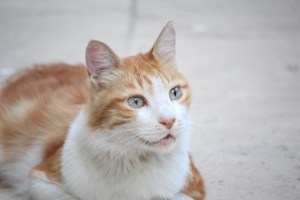
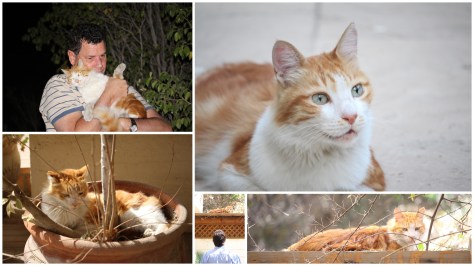
It was quite something to experience our ginger building cat’s transformation from that shy, scared, in-survival-mode creature to an animal that would lovingly come and rub her back against your leg and even allow my husband to pick her up and hold her. It took a long time, but she learned to trust us and to feel save around us. The more we learned about her, we realised that she was a reluctant, but fierce fighter with a soft heart. We named her. Sort of. That’s even more dangerous than to start feeding them! We called her GemmerGat (in English literally Ginger Butt). She became happy and quite relaxed when she realised that she could rule our yard.

So, on a not-so-cold winter January day in Cairo, GemmerGat brought a camouflage coloured kitten (which we saw since that December in the flower pots in front of the building) into our yard to be fed. We weren’t very impressed, but we couldn’t refuse GemmerGat’s generosity to reach out to the little street cat and thought that maybe it was her way of ‘paying it forward’.

The kitten wasn’t very pretty and yet it was. We called her Camo. We soon realised that she doesn’t have the same likable personality as GemmerGat. In fact, i think that she’s a bit off mentally. She was only eight months old when our son, Michael, heard some faint crying sounds outside his window one afternoon and found Camo with three little ones! We were terrified! We didn’t want more cats in our yard!

Camo was a terrible mother! She slapped her babies through their little faces if they wanted to eat and bit them. We came to like her even less. We were away on a trip and when we came back the two kittens that were left (the third vanished earlier) were gone too. I am ashamed to say that we were relieved. So we kept feeding GemmerGat and Camo and kept chasing away the male cats. A few times we thought Camo looked pregnant again, but fortunately no more kittens appeared. Then one day, two months ago, Michael heard a noise outside again and there, from behind the big bag of charcoal, the two pairs of little blue eyes of Camo’s latest offspring peeked at us.

We weren’t happy with another addition to our yard, but as it goes with baby animals – they steal your heart. This time around though, Camo is a model mommy! Instead of slapping and biting her baby (she brought up only one to be fed), I was the one who got clapped when feeding her! Talk about haughtiness! (I don’t like that cat!) But she looks well after her baby, feeds him well and even shows affection. So, I have to commend her for that. She got so protective that she started scaring away GemmerGat – to our dismay! What a rotten attitude! GemmerGat brought her to our yard to be fed and she chased her away! I am so angry at her! And I’m even more disappointed in GemmerGat to let her do that without even fighting for her territory! We saw GemmerGat in the vicinity for a while, but then she disappeared. I’m still trying to come to terms with my feelings about that.

I can’t believe I miss an animal that doesn’t even belong to us! It’s just a building cat after all! I’ve even cried a bit over her. OK, I was actually crying over a situation friends of ours are having, and then I thought about GemmerGat and then I found that I had one more reason to cry and I let go! Now, I’m just really worried about her and quite sad too, that she just abandoned us like that.

Maybe she is still around and just eating elsewhere, because we are not the only ones feeding them. The bowabs (doormen), policemen and other tenants also put out food. But what worries me is that while we still saw her in front of the building before, we haven’t seen her for weeks now. And that worries me more than I am willing to admit.

In the meanwhile, we have grown quite fond of Camo’s black baby, SwartGat (literally Black Butt). He is lovable and playful and thinks our garden is his home.

I can’t believe I’m writing about cats! Again!

I can’t believe that I miss a bloody street cat!

Read Part 3

Cats

©  Fielies (Riëtte) De Kock

Awesomest wife. Finest mom. Hopeful Writer. Forever dreamer. Temporarily living in Cairo, Egypt.

Egyptian Street Cat Chronicles Part 1

IMG_7869

GemmerGat (GingerButt)

Egypt Chronicles 1/2017

One phenomenon everyone living in or visiting Egypt are guaranteed to encounter is the presence of street animals, be it dogs, cats or other animals – like horses, donkeys and camels, which are used for work and/or entertainment.

Although the work animals are looked after by their owners, most of the time they look a bit different than the well-nourished farm animals one would be used to seeing in your native country. For various reasons I won’t elaborate much further on the subject of Egypt’s work animals.

One has to learn soon that you can’t rescue every street creature you come across. In fact, you have to learn to become a bit thick-skinned in your approach to these animals – something that is very difficult for an animal lover. And there are phases to this process.

In the beginning you feel terrible for the dogs running in packs, looking for food. You feel worse when you see that almost every female bears the ‘Baywatch’ look as our son calls it – with their milk giving ‘tools’ swinging around their undernourished bodies when they run through the streets looking for something to eat and drink. What makes it even worse, is when you stumble upon a thin, dirty litter of puppies or kittens stowed away somewhere where the mom though it to be safe.

The terribleness develop into a depression of sorts when it seems that all you see are stray animals looking for food and you realise that you can’t do enough to help.

Eventually you hear about angel people – some expats, some veterinarians – who try to at least sterilise some of the dogs and cats at own cost.

The next phase is when you walk in the street in the summer heat and you get that familiar smell in your nostrils and then see the decomposing evidence and you think: Ah, thankfully you don’t have to suffer anymore.

The next phase is the most dangerous one. On a hot day when all the different smells of human sweat hangs in the air, mixed with the smell of blood freshly washed off the pavement after a Ramadan slaughter, you find yourself standing in a little shop in Road 9, checking out the cheapest available cat food. Because by now, a very nice looking black-and-white had started following your neighbours’ son back from the gym, your friend down the street had picked up an almost dead kitten and nursed it back to life and when you get home from a function one night, a ginger living in your building had shyly followed you to your front door and after you have checked each other out a few times, you have fetched a bowl of milk one night and rapport had been established.

And after a few more weeks, the once scared, shy, in-survival-mode cat, greets you at the building door and show you to your front door as if it is the bowab (doorman) and cheekily sits and waits for her treat. And when you open the door a few nights later, she only slightly rubs against your leg before pushing past you, and runs perkily ahead, through the house to the other door. And before you know it, you fill an empty butter container with the cheap cat food from that little shop in Road 9. And when you go to the ‘plastic’shop’ the next time, the butter containers get replaced by plastic bowls. And almost without you realising it, you have become a street cat carer.

You shush the male cats away from your garden because they spray and it stinks and they fight with ‘your’ ginger. You know this because you hear the unearthly cries in the middle of the night and you see the ginger fluff rolling past your bedroom window in the slight breeze in the mornings. And you feel surprisingly relieved when you open the blinds and ‘your’ ginger sits there – battle scarred, but alive.

I never thought that I would become one of those crazy persons filling the Internet with writings about cats.

I’m a dog person, after all.

Read Part 2

Cats1

©  Fielies (Riëtte) De Kock

Awesomest wife. Finest mom. Hopeful Writer. Forever dreamer. Temporarily living in Cairo, Egypt.

Ek bepeins dié week in Afrikaans

 Search results for blog

Foto’s: OFM News

My Weeklikse Bepeinsing #12/2017

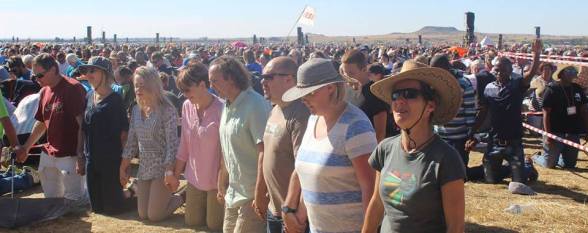
So, gister was die groot ‘It’s Time’ gebedsbyeenkoms in Bloemfontein en daar was ‘n mag der menigte Suid-Afrikaners wat gaan bid het vir verandering in Suid-Afrika. Hier is net drie Skrifte (van die baie) waaruit Vader ons uit die Bybel leer oor gebed.

…en (as) my volk, oor wie my Naam uitgeroep is, hulle verootmoedig en bid en my aangesig soek en hulle bekeer van hul verkeerde weë, dan sal Ék uit die hemel hoor en hulle sonde vergewe en hulle land genees. (2 Kronieke 7:14)

Waak dan en bid altyddeur, sodat julle waardig geag mag word om al hierdie dinge wat kom, te ontvlug en voor die Seun van die mens te staan. (Lukas 21:36)

…terwyl julle met alle gebed en smeking by elke geleentheid bid in die Gees, en juis daartoe waak met alle volharding en smeking vir al die heiliges… (Efesiërs 6:18)

***

So is ons land al vir baie lank al op die afdraende pad en toe hoor ‘n gewone, onvolmaakte  man (soos wat die Mosesse en Dawidde en Elias van die Bybel ook maar was) dat hy ‘n gebedsbyeenkoms moet hou waar mense van Suid-Afrika hulleself kan verootmoedig, Vader se wil vra en bid vir die omstandighede in die land. As ‘n mens die boonste Skrifte lees, sou jy dink dis heel  eenvoudig. Bid vir almal en oor alles en te alle tye is die basiese boodskap. Maar o, wee! Ons is mos (Suid-)Afrikaners en oornag was die land in rep en roer!

***

En so analiseer en kritiseer en oordeel dit te lekker vir ‘n klompie weke lank.  En dit gebeur toe gister:

Een groep gryp die geleentheid aan, ondersteun dit en gaan bid. Die wat nie Bloem toe kon of wou gaan nie, het op hulle eie gebid of byeenkomste gereël waar hulle saam met ander kon bid – selfs in die buiteland.

Sommiges het gewonder of hulle kerke darem vandag ook vol sou wees en ander het die inisiatief uitgekryt as “nie van Christus nie”, as ‘n “die mekka van satan” vanweë “die oorvloed vals profesieë” wat daar uitgespreek is en so meer. En die onvolmaakte man wat dit gereël het, was volgens baie onder andere “geldgierig”, “net agter getalle aan” en “die anti-chris”.

Dan was daar die natuurlike reaksie van die ateïs dat mense net gaan om goed te voel oor hulleself en dat niks gaan verander nie.

 ***

Ek reken in ons quick-fix wêreld sal baie die hele gebed-ding as ‘n flop sien as daar teen môre niks verander het nie. Ek wens ons kon almal saam met dieselfde energie saamstaan wat deur sommiges gebruik is om te kritiseer en verdeling te veroorsaak. Dink net! Maar ons is nog hierdie kant van perfektheid. En dis hoe dit is. As ons dit tog net kan onthou.

***

Gister se gebeure het my beide hoop gegee en hartseer gemaak, maar dis maar net nog ‘n teken dat ons in onvolmaaktheid leef. Deur Vader se genade is ek nie deur al dié dinge verwar nie, maar ek dink die optrede van baie Christene die afgelope tyd kon tot redelike verwarring by jong/nuwe gelowiges lei, wat ‘n jammerte is.

***

Die Skrif uit Openbaring het weer gister telkens by my opgekom. Leef ons reeds in dié tyd?

Wie onreg doen, laat hom nog meer onreg doen; en wie vuil is, laat hom nog vuiler word; en laat die regverdige nog regverdiger word, en laat die heilige nog heiliger word. (Openbaring  22:11)

***

As jy ‘n gelowige is, besluit maar self volgens die Skrif oor gister se gebeure. Te veel ‘geloof’ word in ons dae op opinie gebou.


©  Fielies (Riëtte) De Kock

Awesomest wife. Finest mom. Hopeful Writer. Forever dreamer. Temporarily living in Cairo, Egypt.

The Old Cataract Hotel in Aswan and Times Forever Gone

20170406_174046

My Weekly Musings #11/2017

As a lot of authors and would-be writers, I am fascinated by the writers from the past. I read up on them and read some of their works to try to learn from them. I have great respect for the way they wrote and how prolific they had been in a time before the technology we have today to make writing and publishing easier, was available. (Although I haven’t personally experienced this ‘easiness’ of getting published in the mainstream yet.)

I am a huge, huge, huge fan of Agatha Christie. She wrote wonderful stories that are still enticing today. I have read many of her books and watched more of her stories onscreen and just when I think that I’ve read or seen everything, something ‘new’ pops up. Here, where we are currently living in Egypt, bookstores stock her books and I indulge. She wrote so many stories, that one day if I manage to get through them all, I can just start over and read them again if I want, because they will be as good as new to me.

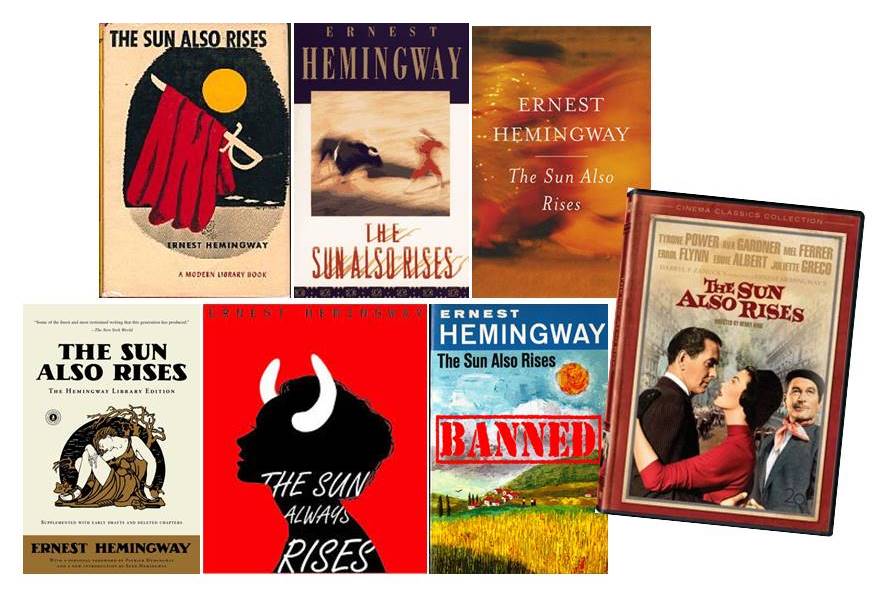
Another fascination of mine is Ernest Hemingway. (I’m currently contemplating naming our next dog Hemingway. Or Blue. Or something totally different.) I love his writing – some more that others, because let’s face it – in the times that he wrote, not too much happened in most works of fiction and it took a long time to happen.

Although a fan, I’m not blind to these old writers’ weaknesses. There was a lot of drinking and substance abuse involved in the lives of some of these authors and though I don’t condone it, I also don’t judge them. (Today it’s well known that writers and other artists are prone to mental illness and substance abuse.) And in Ernie and his friends’ case I suppose they were pretty much products of the war they survived.

So, even though Ernest and the Fitzgeralds and Gertrude Stein and the likes lived their lives as if there was no tomorrow, I can’t help to romanticise the period and circumstances they lived in just a little bit. Although conditions were still volatile during and after the war, things got simpler after that. There was class and style and ambience and boredom about the way they did their day by day routines.

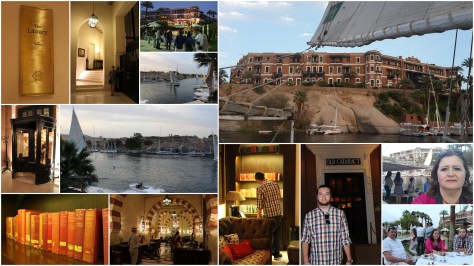
A few weeks back while on a Nile Cruise, we visited the old Cataract Hotel in Aswan, Egypt, for the third time since we live here. Being there, walking through the big corridors, riding the old, slow wooden lift and sitting in the stylish library, makes one daydream about a time and innocence gone forever. In my mind I can see Aggie sitting in her suite, with her desk moved to in front of the open double doors, feeling the desert heat breezing into the room, stroking her cheeks and causing tiny drops of perspiration on her forehead underneath her neatly waved hair, while she is tapping along passionately on her typewriter – creating the circumstances for Hercule Poirot to solve the four murders in Death on the Nile.

In my mind’s eye, I can see Mister Hemingway standing alongside the chest of drawers, hammering the keys, thinking of rather having a cold beer down in the garden, whilst the current woman in his life is still in bed, nursing a hangover and moaning about him not attending to her immediate needs – to his utter dismay.

I can imagine the buzz in the dining room when the famous well-dressed Who’s Who whom chose to cavort in Egypt at the same time appears one by one or couple by couple in their evening best. They would look way different than our group of whom only some had bothered to follow the smart/casual dress code.

I hear Aggie and her hubby converse about the newest archaeological finding at a site nearby, contemplating from which dynasty it might originate. Over dessert, she wonders if she shouldn’t have stuck to only one murder in Death on the Nile, instead of the four, because “you know, Darling, I don’t want to contribute to the world becoming a more violent place”.

With war clouds still hanging over Europe, Winston Churchill decides that he has to come up with a strategy for the coming Armageddon.

And in another few years, Mrs. Fitz frowned upon her husband’s alcohol intake, wondering aloud if it was Ernie’s bad influence on him or the other way around, while she remarks how she can’t grasp why she came to feel so lightheaded so swiftly.

Fast forward to a time the world became enchanted by the people’s princes, who, while smiling her shy smile to the world, is crying within her heart over her broken dreams and recent divorce and wonders what the future will bring as she listens to her Arab lover’s plans for their next holiday together…

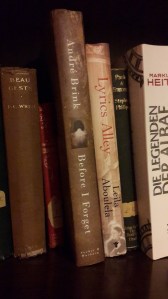
Sitting on the lawn, having coffee at sunset with a group of people from all over the world – some of whom we know and more that we don’t know – it is so easy to being translated into another era filled with well-clad creatives looking at the same sun setting where cataracts form down under in the river. Watching the falloukas with their majestic sails on Egypt’s Nile of the Bible passing by, I sat back and dreamed that one day my name will be mentioned as a famous writer who loved visiting the old Cataract Hotel and that a book of mine will sit there on the library shelf next to my fellow South African, Andre P. Brink’s book. Wink-wink.

20170406_184714

PS: Google the Cataract Hotel to read about its history and about the famous ones who frequented there. It is an interesting place and if your travels ever bring you to Egypt, make sure to put Aswan on your itinerary as a must-visit place. There is a lot to see, including the Aswan Dam/Lake Nasr, the Nubian Village, the botanical garden Lord Kitchener planted from trees soldiers brought from all over the world and the Philae Temple – the youngest building from old Egypt’s history. It is also a four-hour drive/50 minute flight to the temple at Abu Simbel.

Cataract Hotel

© Fielies (Riëtte) De Kock

Awesomest wife. Finest mom. Hopeful Writer. Forever dreamer. Temporarily living in Cairo, Egypt.

Daydreaming

ERXXBAHYV4 - Copy

My Weekly Musings #10/2010


I had a Writing Club for Children for years before we moved to Egypt. A few of you reading here had children attending, or may even have attended yourself. (I hope at least some of my old students read my blog.) I enjoyed it immensely and plan to revive the clubs when we are back home. Not only did I enjoy teaching writing to the children who were in my groups, but I enjoyed learning from them.

One of a series of workshops we did in in The Writing Club, was journal writing. These workshops were preceded by a lesson on daydreaming. My first two writing clubbers were home schoolers* who grew up on a smallholding and whose mom raised them to question things and gave them playtime. They made the lesson fun and easy and it became my favourite workshop of all.

With the next generation of clubbers it was a different ball game. They were only a bit younger than my first club members, but these days behaviour can change very quickly. The main difference between the two groups was that technology became more advanced and more easily available – and was quickly becoming popular toys for children rather than only work tools for adults.

I found this workshop to become more of a challenge every year. My first group simply listened to what I taught them and followed my guidelines to go home and spend some time deliberately doing nothing, while daydreaming a bit. But with the next groups, l suddenly found myself looking into pairs of eyes looking at me in confusion and perplexity. I got reactions like “How do you daydream?” and “l don’t have time to do nothing, because I have too many schoolwork and activities.” It saddened me that these words came out of the mouths of ten and eleven year olds.

Initially, when these children from the second ‘wave’ started writing stories, l could identify their story lines from the movies they watched. They couldn’t dream up their own stories. Thankfully that changed with time, practice and skill development.

I was shocked at these little person’s reaction, because as a child, daydreaming came as second nature (or in my case – first nature) to me (and all of my friends), but of course times and circumstances have changed and I can’t help to feel a bit sorry for our privileged children today. It is not all their fault. Technology is fantastic. I love it. I love gadgets and apps. And I have to admit that I too am addicted to my phone. Even if I try to spend less time using it and more time doing ‘real life’ stuff, I struggle to get out of my virtual reality. Because these days, one’s whole life is in your phone. My books are on there and so is a lot of my entertainment. And there’s a camera and some memories and – because we live abroad – my family and friends are in there too. It is difficult not to lose oneself in the virtual world. And with that, l realised that I struggle to be creative if it is not on an electronic device. My hands had become impractical. My imagination had become useless as a pencil with a broken point. Maybe that is why I reverted to writing weekly blogs instead of finishing my novel.

I sometimes wonder if people still daydream? Through daydreaming we learn a lot about ourselves. When I look around and see young people (and older ones) hovering over phones, worsening their bad posture, I can’t help wondering if this wonderful technology we have, will not do more bad than good. If one reads statuses and comments on social media, you have to wonder where common sense had gone. The more knowledge we have available, the less knowledgably we seem to get.

I sat behind a family at a wedding in The Netherlands last year. The seven or so year old boy was glued to a phone, playing a game during the service, his neck eerily bent in a very unnatural way. I could imagine him at 19, walking like an old man. While waiting at an optometrist’s room in New Zealand a few weeks ago, a boy younger than two years was playing games on an iPad, so engrossed in the little device that he almost fell off the chair he was sitting on. Whenever one sits in a restaurant, you see people having coffee with one another, while in conversation with other people elsewhere through their phones. What is the point of going out with someone if you are conversing with someone else the whole time?

We are certainly living in a strange world that is getting stranger every day. It is a world where the real makes room for the virtual increasingly. It is becoming a place where I can testify first-hand how I am becoming less and less social, while spending more and more time ‘engaging with’ a little device that doesn’t love me, can’t talk to me or listen to my feeling and cannot hug me. And it quite scares me, because even if I try, I fall back into the bad habit of spending hours per day on it every time. I keep telling myself it will be better when we are back home again and closer to everyone and everything we miss. I really hope so. In the meantime, I will try my best to spend less time in the virtual and more in the real. I miss my daydreaming and my creativity. I want my hands to become usable again.

Do you still daydream? Do you take time to just sit and do nothing? Or are you also a victim of your busy schedule and the little thing in your hand that keeps you awake at night and can’t hug you back? Tell me if you feel you want to. And in the meantime, read a book printed on real paper, plant a herb (and don’t forget to water it regularly), talk to your spouse while having a glass of something special over a home-cooked candlelight dinner, look in your child’s eyes when he or she talks to you and go lie on the grass somewhere and stare at the clouds and dream…

* In case you thought that those first home schoolers were idlers: They moved to England with their parents for a while. The boy joined the British Air Force teen cadets. They moved back to South Africa, went to public schools and the girl went to work and travel abroad and is now back and studying in Stellenbosch. The boy had become an engineer, got married and builds and flies those little drones (or quad copters I presume they are called.) The little sister who later joined the club with our son, was a good daydreamer too and is finishing her public school education this year.

You can like and/or follow The Writing Club/Die Skryfklub on Facebook at https://www.facebook.com/thewritingclubdieskryfklub/

8dbfdfd1dbd3b06c7cef0d0de4998b0e

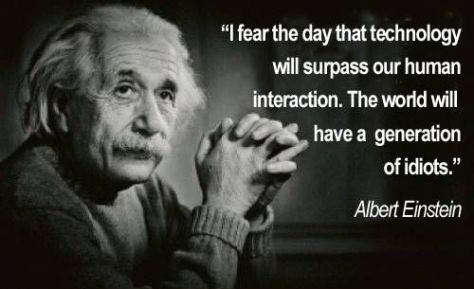
I’m not sure if it really was his words, but if it was, he was a true prophet 😉

©  Fielies (Riëtte) De Kock

Awesomest wife. Finest mom. Hopeful Writer. Forever dreamer. Temporarily living in Cairo, Egypt.


My children’s’ book, Yeovangya – a Princess’ Quest for True Love, and short stories are available at https://www.amazon.com/s/ref=nb_sb_noss?url=node%3D154606011&field-keywords=riette+de+kock&rh=n%3A154606011%2Ck%3Ariette+de+kock

Uprooting

table-mountain-sunset-cape-town-night-lighting

My Weekly Musings # 9/2017

Recently, we have been visiting our friends who now live in New Zealand. They might or might not stay there forever. They live in an area to where a lot of Asians emigrate to. And a lot of South Africans also. (I think for the South Africans, the choice has to do with the weather, because the north island’s weather is much warmer than the south island’s.) They live in the Auckland area which looks quite a bit like a mix between the Western Cape and Mpumalanga. That might have something to do with it too. In recent decades a lot of South Africans have immigrated to especially countries such as Australia, New Zealand, the UK and Canada. Very few had returned to their ancestral countries of origin, which were mostly The Netherlands, France and Germany.

The reasons for South Africans emigrating is mostly the unacceptable crime wave which are causing people to look for safer places to calm their nerves and also because of work opportunities, due to many people being laid off after becoming BEE (Black Economic Empowerment) victims. It is not only white people who emigrate though. The world is full of young black South Africans making their mark elsewhere in the world too.

We South Africans had become used to ‘losing’ friends to emigration. It is a touch phenomenon to get used to, because parents have to let their children go, adult siblings get separated and, with young children and new-borns growing up in a foreign country, young South Africans become estranged with their families back home. It is indeed a challenging situation. But, thinking about it, I also realise that migrating is sort of a ‘natural’ thing throughout history. It was after all how we got to South Africa. Our ancestors from The Netherlands sought new trade opportunities and the Christian French Huguenots fled from religious persecution, just as some South Africans now leave the country’s shores in fear of their lives and/or looking for jobs.

And of course the uprooting of families is not unique to South Africa. South Africans are at least still doing it by choice (although I blame no one who emigrates due to the fact that they had been high jacked in their own drive-way three times, or whose parents were brutally murdered on a farm or in a city house or whose daughter were raped and murdered when she went for a jog.) Our TV screens are filled daily with displaced people who flee for their lives from places where the blood hungry murderous make it impossible for them to live. One of the drivers we use when we go to Jordan told us that he is Libyan. He spent a few years working in South Africa (nogal!) and then ended up in Jordan. His brother lived in a few other places and currently stays in Israel. Across from our house in Cairo is a small Catholic church. The congregation is made up of expats working here, Egyptians – I presume and Sudanese and various other refugees. The international working force of Egypt is from all over the world. We lived in a displaced world full of displaced people.

So back to my pondering this week after a very long start. While we were in New Zealand, we saw lots of Afrikaans speaking South Africans in the streets, malls and on the beaches. Within ten minutes’ drive there are three shops selling South African products. We had wonderful boerewors (sausages) and biltong (dried meat – like jerky, but better)! The South African numbers are so many there that Browns Bay is referred to as ‘De Bruynsbaai’. And all the time we were there, I tried imagining how it feels to uproot yourself – knowing that it is going to be forever – and go and live in a strange place, building a new life so totally different than the one you had, away from your family and your friends.

We are only temporary living abroad. We are now here in Egypt for three out of a four year period. It had been wonderful and crazy and difficult and frustrating and emotional and a lot of other things too. I really miss our pets, our country, our food, our language, our culture, our ways and especially our people. Whenever we go through passport control at OR Tambo, I want just want to hug and kiss the person behind the counter, but I know I would probably be arrested for it, so I refrain from doing it.

I tried to put myself in the shoes of someone deciding to emigrate to New Zealand – just because it was the country many South Africans choose and we were visiting it. It is a wonderful, first-world, effective, beautiful place with nice, warm, down-to-earth people. It is also a very, very, very expensive country where some of the products are just plainly over-priced. I think it must be difficult in the beginning especially. I wondered if you ever stop missing the rugby fights, the fact that there is a joke minutes after any bad thing happening, the Nando ads, the excellent and the poor Afrikaans songs, the biltong, the South coast beaches, the clean, unique smell of Cape sea air in your nostrils, the shenanigans of politicians (okay, not really that, because now the rest of the world had caught up with us too) or the smell of fresh beskuit and bread of your aunt’s house. I wondered.

We met a young South African girl our son’s age who worked at the supermarket we went to. She heard us speaking Afrikaans with each other and immediately started a conversation. While ringing up our things, she told us that she was living  there with her parents for twelve years now. I commented that she must be full blown Kiwi by now, seeing that she was so young when the moved and probably didn’t remember ‘home’.  Her smile vanished and in a soft voice she said:

“I dream of Cape Town all the time.”

We met with quite a few emigrants from different countries. They told us that the divorce rate under uprooters is quite high. Listening to them a few things came out for people to consider before they make the decision to emigrate. These are:

  • Don’t emigrate to run away from your personal problems. If your husband has a wandering eye, it will be going with him. If he is an alcoholic, he will still be one on the other side. If your wife has a money spending problem in South Africa, you’ll have bigger problems living in a country where the currency is ten times (yep!) stronger.
  • Sort all medical stuff out before you leave. A lot of medical issues can get your visa delayed or even cancelled.
  • Don’t lie about anything on applications.
  • Plan. Plan. For everything.
  • You need a lot of initial capital to move to and settle in another country. (Hundreds-of-thousands-a lot.)
  • Moving countries causes immense stress – for every member or the family. Don’t underestimate that factor. Prepare for it. Change is never easy. Uprooting is up-there on the stress list. This counts even for ‘short’ stays abroad like ours.

My hope is that we will always have the choice to live in South Africa. I love my country. I miss my beautiful country with all its ups and downs. I hate the violence and the corruption. I hate it to be scared at night. (I sleep like a baby in Egypt – and everywhere else we go.) So, I know I will have to face my fears again. I will worry about Michael driving alone at night. I also realise that he might be forced to seek greener international pastures and leave us behind.  I’m not blind for all the challenges. But I miss the good of South Africa. The good things as well as the good people. And for that I hope to stay.

We will just cling to our Protector and remember that ‘Elohim has not given us a spirit of cowardice, but of power and of love and of self-control’. I hope our faith and love and self-control will be enough in the end.

©  Fielies (Riëtte) De Kock

Awesomest wife. Finest mom. Hopeful Writer. Forever dreamer. Temporarily living in Cairo, Egypt.

Keeping my Mouth Shut

screenshots_2017-03-01-03-50-19

My Weekly Musings # 8/2017

I have so much to muse about. About so many things. But I can’t muse about them out loud. The reasons preventing me to say whatever I want to say is always one or more of the following:
It’s not diplomatic.
It’s not politically correct.
Or it’s insensitive towards religion/s.
It’s not in line with popular opinion.
Or in line with liberal belief.
Or with conservative belief.
It’s hate speech.
It’s offensive.
It’s racist.
Or sexist.
Or not gender sensitive enough.
And always too Biblically literal.
And too old fashioned. (Ah, and there were simpler times, weren’t there?!)

Anyway, my father taught me that actions always have consequences and that you don’t utter words if you are not prepared to have them testify against you in the black and white of ink on paper. A wise man he was indeed. I lived my life by those words. And it didn’t only teach me a lot – it saved my butt many times. I even treated love letters I wrote during my younger years according to that principle. (Of course when I write to the beloved I throw all caution to the wind – just because I can.)

But I’ve learned over the years that living by a rule like that not only saves one embarrassment, it also builds you up. It makes you think before you speak your mind. Because even if I have an opinion about everything under the sun, it doesn’t mean that the world needs to hear it. That also doesn’t mean that I may never air an opinion, because that would just make me spineless. But there is a time and a place for everything under the sun, and sometimes it is time to keep quiet.
Fortunately, there is One Who is always listening and to Whom I can talk about the undiplomatic, politically incorrect, unreligious, unpopular, unliberal, unconservative, offensive, racist, sexist, gender insensitive, too Bibilcal and old fashioned stuff all I want. It’s called prayer. And it is private. And it can be done any time, anywhere. Nobody has to shout at me to do it. I’m not restricted to a time or a place. I can do it anywhere, all day long, without anyone realising. There is also no paper trail so that this post-modern society can accuse me. I’m only left with the relief and the knowing that He has it all in Hand.

The defiled one destroys his neighbour with his mouth,
but the righteous is delivered by knowledge.
(Proverbs 9 verse 11 – From the Bible)

© Fielies (Riëtte) De Kock
Awesomest wife. Finest mom. Hopeful Writer. Forever dreamer. Temporarily living in Cairo, Egypt.

Friendship

img-20170220-wa0032

My Weekly Musings #7/2017

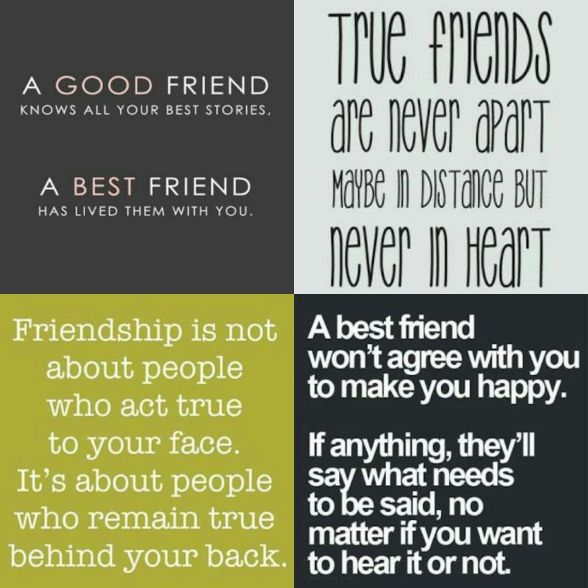
There is something as precious and beautiful as gold and very often as rare. It is free and yet it costs much. It starts with the utterance of a single word and yet is not to be found in every easily spoken one. And like gold, the real thing only becomes better when tested. Other than family, it might just be the most important thing us humans are being blessed with while we live our earthly lives.
Friendship doesn’t always come easy. Not all friendships last. Not everyone calling themselves ‘friend’ is one. Sometimes friendship comes from strangers or people we don’t consider friends. Some friends betray, let down, lie, don’t keep their word, walk away, fade, can’t stand the heat or just don’t care enough. They hurt you, but when the hurt subsides, one realises that it happened for the better.
There are friendships though, that last. They are formed between people who never stop caring and never will – no matter what happens or how difficult circumstances become. Because real friends never quit on each other. They always make time. They walk the extra mile. Sometimes friendship takes hard work, perseverance, forgiveness and being forgiven. It takes unconditional love, keeping secrets and speaking harsh words if it means helping and not contributing to a path that leads to destruction.
This week we are visiting friends who we haven’t seen in a few years and who (literally) live on the other side of the world. We have made many wonderful memories together in the past and we have shared quite a bit of heartbreak too. And it is when the conversation just continue as if we saw each other the previous day, and you still laugh at each others’ silly jokes and have made a new worth-to-remember memory within the first few days together, that one realises how blessed and fortunate and lucky you are to have real friends. And to be called someone’s friend. And that’s how they say you get real friends – by becoming one.

Thank You, for giving us friends.

Ointment and perfume gladden the heart. So one’s counsel is sweet to his friend.
(Proverbs 27:9)

©  Fielies (Riëtte) De Kock
Awesomest wife. Finest mom. Hopeful Writer. Forever dreamer. Temporarily living in Cairo, Egypt.

Keeping One’s Word – a Trait Extinct

boy-1822553_960_720

My Weekly Musings #6/2017

This is not a post about the new American president or on how good or how bad he is, so you can keep on reading. In order to get to my point though, he has to be mentioned indirectly. As I was writing something else this morning, the TV news was on in the background. I must have had finger trouble, because it was another channel (it wasn’t FOX though) as the usual (BBC). There was a panel on video call discussing the subject that I won’t mention in this post only due to the fact that you might already suffer from fatigue on the topic.

I wasn’t focussing, so I wasn’t sure if the three men were supporting the above non-mentioned person, or if they were making tongue-in-the-cheek comments. All I knew was that my head bobbed up by the one man’s words.

“He is doing everything he promised.”

Now, I know about the jokes going around about that same sentence, but it wasn’t until this man said it on TV this morning that the penny dropped.

I suddenly realised that I was ‘participating’ in something that I really thought I wasn’t involved in. I was accepting lying as ‘normal’ behaviour. Oh, I realised it somehow, but I don’t think it had ever really sunk in, because I thought that I was above that.

We are so used to people making promises when they are running for office and when getting elected, they do the opposite. And we accept it without much resistance, because – well, we knew it would happen! I heard the above non-mentioned person also making promises, but thought by myself, “Meh, he won’t do it.” and “He can’t do that!” and “He won’t be allowed to do that!” Now he is starting to do everything he promised and the world (me very, very included) is shocked!

We got so used to people promising us the sun, the moon and the stars, but instead delivering garbage to our front doors that we have accepted it almost with thanksgiving! We have learned to pardon it. Even those under us who see ourselves as not ‘foolable’, have gotten so used to being fooled that we accept it as the norm. And in the world we live in these days, we are being fooled by almost everyone  we are suppose to trust – politicians, business people, religious leaders and of course every person working on the other side of  an enquiry who promises to call you back.

So, when suddenly someone comes along and keeps his promises – how far reaching the consequences might be – we are suddenly reminded that we are not used to living in a world where people keep their word anymore. And we are fooled when they do. (Like the media and the pole analysers were after the particular election that the non-mentioned person above won.)

Thankfully, we learn from the Word of God that ‘whoever guards His Word, truly the love of Elohim (God) has been perfected in him’ (1 John 2:5). And we also learn that there is One who will always keep His Word.

“I shall not profane My covenant, neither would I change what has gone out from My lips.”

(Psalm 89:34 from the Bible)


© 2017 Fielies (Riëtte) De Kock

Awesomest wife. Finest mom. Hopeful Writer. Forever dreamer. Temporarily living in Cairo, Egypt.

46 Is not an ‘Appropriate’ Age to Die

img_6323

My Weekly Musings #5

This was a difficult week to be away from home. Our friend died. She was only 46. She had health problems since long before the 14 years that we knew each other. She had more than 30 operations and had been in and out of hospital all the time. We knew that her body took strain that no human body can sustain on the long haul. But we never wanted to acknowledge it. We got used to her being in and out of hospital and life going on in between.

So last week she was in hospital again. On top of her ‘normal’ problems she was fighting a resistant bacterial infection for over a year. She was sent home after treatment with strong, long-term antibiotics. But on Monday morning when her husband woke up, she had left this world quietly next to him during the early hours of the morning.

We were of course, in shock. Still are.

We were still trying to come to terms with Adri’s death, when I got a message from home that my loving godfather went into a coma and not long after that, that he too went to heaven – on what would have been my father’s 90th birthday.

Although any death is always difficult, I’ve learned in life that loss feels different when people die at different ages. My dad died at age 73. That is an acceptable age to die in my books, although it doesn’t make it any easier that one’s father dies at an appropriate age when you stand next to his bed watching how the artificial life orchestrated by machines, leaves his body. Two years later I learned that 49 isn’t an acceptable age for someone to die, when my beloved ouboet (eldest brother) was taken from us in an instant.

We were expecting Oupa Koos’ death. Both he and Ouma Mienie, his wife, was/is very sick. And they were nearing 90. Still, when he died he didn’t only leave a person that would be missed dearly in my and his closer family’s lives. He left and took a whole part of my life with him. A whole part of my history was intertwined with his. Fortunately, as long as I stay mentally healthy, I will have those memories to cherish. He was one of the few left of their generation in our family. And now we are becoming that generation. That is life. What a sobering thought!

We didn’t expect Adri to die young. 46 is an inappropriate age to die. But then – life and death isn’t in our hands. It isn’t ours to give or to take. God gave Adri a wonderful life, in spite of her struggles and she leaves a testimony of His great glory behind through the many lives she touched. She sang like an angel on earth and I believe she is having a ball worshipping the Living God with the real angels now.

Until we see each other again, my friend. Sing your heart out.

And say hello so long to Baas Wynie and Ouboet Piet, Oupa Koos. Tell them they are in my thoughts. Every. Single. Day.


And he said, “Naked I came from my mother’s womb, and naked I return there. יהוה (the LORD) has given, and יהוה has taken away. Blessed be the Name of יהוה.”

(From the Bible – Job 1 verse 21)

© 2017 Fielies (Riëtte) De Kock

Awesomest wife. Finest mom. Hopeful Writer. Forever dreamer. Temporarily living in Cairo, Egypt.

Living outside of One’s Comfort Zone

camelbazaargetaway

Just before having to get out of the way

My Weekly Musings #4

Last week, our American friends invited us to visit the camel bazaar outside Cairo (on the Giza/Sakkara road). We’ve been living here now for just short of three years and I have never been outside of my comfort zone so much in my life. It is literally a daily thing. It is good for me – especially for spiritual me. Not only does it teach me plenty about the world around me, the people of this country, their strange culture and their fanatic religion, but it also teaches me a lot about myself. Living in a culture where you do not understand the language and isn’t even able to read their alphabet or have the same traditions and customs or worship the same God, things can get quite uncomfortable.

It isn’t necessarily a bad thing being out of your comfort zone. It confronts one’s own beliefs, upbringing, culture, customs, world view and lifestyle when you are thrown into a world where nothing is familiar or make sense to you. Not only do you question the behaviour of the people around you, but you question your own. It is not a once off thing, but an ongoing everyday introspection. And not only do you learn to value what is ‘own’ to you, but you also learn to embrace and appreciate diversity. Very early on in our stay here, I have decided that I don’t understand much (not even a reasonable bit) of this culture, but that I am not even going to try to understand it. It makes life here a little bit easier and less complicated to observe rather than to label.

Back to the camel bazaar. I’m sure that this place wouldn’t even exist in a Western country. It’s a raw experience. Camels, by their hundreds, maybe even more, are brought together on a Friday morning to be sold I was told, mostly for meat. Men and (some very young) boys herd the animals – hopping along on three legs as one of the front legs is tied with rope to keep the animal from running away – towards the various ‘auction stations’ with long bamboo sticks. It isn’t a pretty picture to see. On the surface and in the viewpoint of a foreigner like me, it is a harsh place for a camel to be. And also for the people involved.

Upon arriving there, we were only four females in a sea of males – something that already pushes the discomfortometer into the red. The sticks hitting the camels’ bodies – be it on the humps, legs or head – is another difficulty to deal with. Furthermore, none of the camels looked like they had the potential for dinner I would want to see on my plate.

But I realised that it wasn’t my world. It wasn’t my place to judge. With that I don’t condone the behaviour of the people or the suffering of the animals. Sometimes in life things just are what they are – people making a living, surviving the only way they know how to the way they did for centuries – maybe even millennia. My disliking it, my discomfort and the fact that I might disapprove of their way of doing as a foreigner in their country, is not going to change that. I’m not going to alter a country’s culture, customs and actions which are way older than my own culture. What I should do is learn to appreciate it for what it is.

I realised that I would probably be out of my comfort zone many, many, many more times in the period we have left here in this interesting, phenomenal country. How I handle my discomfort is what is important. If I can’t change people’s behaviour or world view, I can at least work on my own. I can learn to value the diversity of this place and the other countries we are visiting, as well as that of my own country when we go back. Hopefully, when we are back in our own culture – which is just as diverse – I will be able to feel less uncomfortable in the mixture, while still staying true to my own upbringing and beliefs and being more tolerant towards people who are different from me.

In the end, when one sees the bigger picture from a forever-living-worldview, we are reminded that we who confess Him as our Saviour are one body in Messiah (Romans 12:5). One day we will be immersed into His culture and all the discomfort of worldly customs, poverty and illness will be something from the past.

PS: I spelled necessarily correct without using spell check or a dictionary.

© 2017 Fielies (Riëtte) De Kock

Awesomest wife. Finest mom. Hopeful Writer. Forever dreamer. Temporarily living in Cairo, Egypt.

The Hole-in-the-wallet, Laborious, Frustrating Process of Acquiring a Travel Visa

My Weekly  Musings #3/2017

20170123_153820

We are planning a visit to friends in New Zealand next month and with that, we are trying to obtain travel visas – something that wasn’t necessary for South African citizens only two or three months ago. But thanks to people abusing the system or hypocritical red tape or whatever, the New Zealand government now finds it necessary for us to get that little hated stamp in our passports. (And now the South African government reciprocated by implementing visas for Kiwis to visit SA! It makes no economic sense.) We are currently residing in Egypt and to get a visa, one’s passport has to travel to Dubai for this privilege! As if that is not uncomfortable enough, the costs are enormous! Not only is there the fee for the sought after stamp or little paper glued into your passport, but there are handling fees for the passports to get there and more separate handling fees for them to get back. And apart from the cost, the effort is just silly. After all the documents they’ve required were attached, they requested some more documents after receiving the passports.

There are many reasons governments give for requiring visas. Some might be legitimate, but I sometimes wonder if the visa process doesn’t just keep the good guys out. Because when there is an attack somewhere in the world and everybody is surprised by a person on a terrorist watch list carrying out the attack, l really question the system. Obviously, he loopholed the visa requirements. How can they get into a country so seemingly easy and us good guys have to carry out time consuming efforts and pay the financial penalties? As if travel tickets aren’t expensive enough.

We’ve received our passports back yesterday. There are no visa stamps or stickers in. Instead, they informed us that the visas are electronically issued against our passport numbers. We will get an email to confirm that.  An email! All that effort for an email! Where is my visa stamp?! I hope it works, because when we arrive in New Zealand after two flights of four and sixteen hours respectively, and they don’t allow us into their little country, I will leave a piece of my mind there!

Thankfully, after our patience being tested going through the process, I’m reminded of a place where we won’t need visas to go to one day. All we need is to confess the Truth. It is that simple. Or that Complicated. The choice is ours.

“To you it has been granted to know the mysteries of the kingdom of God.” (From the Bible – Luke 8 verse 10)

© 2017 Fielies (Riëtte) De Kock

Awesomest wife. Finest mom. Hopeful Writer. Forever dreamer. Temporarily living in Cairo, Egypt.

The Myth of Free Speech

My Weekly  Musings #2/2017

clock-439147_960_720

“All animals are equal, but some animals are more equal than others.”

― George Orwell, Animal Farm

A lot of things happening in the past months and recent years made me think real hard lately. Life had changed in almost every way in the past decade, thanks to technology and other developments – some for the better and some for the worse. Our world had become used to terrorist attacks in the form of shootings, knife attacks, sexual assaults, cars and trucks ramming into people, people getting beheaded etc. This last year we saw laws, policies and governments change – strange changes that are still very difficult to believe or to get used to. I’m starting to think that maybe it is a totally natural thing that is happening. In history we had build-ups like these which led to the tower of Babel, the Flood, the Crusades, the First World War and WW2. Talk is that we might already be in the middle of a Third World War of sorts.

When a bucket gets too full of water, it overflows – naturally. There is a saying: Give a person enough rope and he hangs himself. Bucket overflowing or too much rope? It’s the same thing. Balance always needs to be restored somehow. The Western world is playing with its very, very long rope and so is the anti-Western world. And as individuals, agreeing or not agreeing with current directions, we are all steered into, hanged along and sacrificed in the process as collateral damage.

We live in a world where our words, our Twitter feeds, our Facebook statuses, our email (only normal people, not presidential candidates apparently) could get us fired – not only for big things like threatening state security or threatening people or libelling or acknowledging theft (except if you find yourself in certain positions in certain governments) or something immoral like that, but also for being moral. For having values and principles. For believing in the God of the Bible and the Word of God. And for having the audacity to have opinions about religious or any other fundamentalism, abortion, marriage, parenthood, crime, gender issues, sins and the likes. Defend unborn babies, marriage between a man and a woman and stand up for your rights if you are not a person of colour and whatever you say is branded as ‘hate speech’ – no matter if and how sympathetic you are towards these issues in general.

There is no room in the world anymore for a person to speak freely without being branded or bearing far reaching consequences. We are being told what opinions to have, what to think and what causes to support. Would anyone in the Golden Globe audience have had the courage to disagree with the actress’ speech the other night? Probably not, because she was speaking on behalf of the ‘trend’ right now and no-one with a reputation to uphold can afford to think differently? There was a time when, even if they were wrong, people could speak their minds in the democratic West.

We are navigated into believing that it is our right and even our privilege to live perversely. Consequences for our actions and responsibility for our choices aren’t relevant anymore. Sin had become a non-mentionable word. And where does God fit in? Well, He just doesn’t, does He? Modern man – oops, sorry! – Modern, genderless, colourless, faithless person is its own god now. All that matters are ‘it’, ‘itself’ and ‘its’ inner-god, and happiness is its ultimate goal and religion. Its behaviour, lusts and needs are to be practiced to ultimate satisfaction. Anything goes in our little ‘self-god’ world. And the little gods are not bothered for one moment that they are ignoring their Maker’s Instruction Manual. It is like a person trying to use a refrigerator as a washing machine. The plug will fit into the wall socket and the power will go on, but the water put in will freeze as the clothes stay dirty. Eventually, the person would have to reassess and use the appliances for the purposes they were manufactured for.

Life is like that too. Nature has to go its way and imbalances have to be addressed. If man doesn’t do it, God does. And His way is never the easiest way for man.

Be blessed and stay strong, because we are living prophesy.

The LORD hath made all things for himself: yea, even the wicked for the day of evil. (Proverbs 16:4)

© 2017 Fielies (Riëtte) De Kock

Awesomest wife. Finest mom. Hopeful Writer. Forever dreamer. Temporarily living in Cairo, Egypt.

I wasn’t Planning on Writing Anything Newyeary

My Weekly  Musings #1/2017

rtss

It’s that time of year that everyone who writes, writes about having New Year’s resolutions or about breaking them or about their goals for the new year. This year was no different and those who believe they cannot write or are too lazy to write something themselves, sent their friends funny/silly/nice/beautiful/religious/rude/crude messages and poems written by some funny/silly/nice/beautiful/religious/rude/crude writers to wish them a good/blessed/prosperous/whatever 2017, because apparently 2016 had been the worst year in the history of the world according to social media users or liberal American voters or both. Of course it had been a bad year for some individually, but I was just wondering if every one of the WWI and WWII years for example, might not have been worse in general? Anyway, who am I to differ with the social media experts?

I didn’t want to continue on the topic of this most plastic, man-made phase of the year, but hey, while I’m on it… Today’s date is just a date. Dates maybe rule our work lives, but they don’t define our character. Yes, we do remember the things – good and awful – happening to us by the Gregorian date that we use, but to wish a ‘year would die because it had been the most awful of them all’? Really? Is that what life had become for modern us? A date on a man-made calendar with absolutely no guarantee that the next da(y)te on the almanac bring only prosperity/happiness/blessings.

I’d hope that we can rather thank our Maker for every new day, no matter the ‘date’, because He says that He makes every day new and every day His mercy and loving-kindness is anew (Lamentations 3:22,23). Of course we will remember the awful past (even that terrible, dreadful 2016), but eventually we will also remember the beauty and the joy and the memories it brought us. Bad memories have the tendency to be overshadowed by good ones in due time. I don’t say this lightly, because some of us had real hard times and others had horrific things happening to them in 2016.

Let’s be thankful for another day, whatever the date may be, because how evil 2016 might have been, there had been good times and 2017 hasn’t shown its true colours yet. Let’s be grateful for waking up this morning and being alive for just one more moment, maybe even one whole day. I know it sounds like such a cliché, but in the end all we have is now. Enjoy it to the fullest.

Be blessed.

(Blog entry/ies vaguely related to this topic: https://fieliesdekock.com/2014/01/08/my-favourite-days/)


© 2017 Fielies (Riëtte) De Kock

Awesomest wife. Finest mom. Hopeful Writer. Forever dreamer. Temporarily living in Cairo, Egypt.

On Doing Something Really Well

dart-1645037_960_720

At my Cairo Hair Salon

As always I am tempted to read on my phone to kill the time, but I decide against it. I‘m trying to be more in the moment and to enjoy the ‘now’. So, I sit and watch as Issam, one of my hair dressers at a Lebanese salon in Cairo, is creating art in my hair for the night’s ball. He is working focussed and with precision, but most of all, with confidence. This is what he does, one can clearly see. His hands are moving easily – combing, straightening, curling, calling for pins from his young helper with two other trainees standing behind, looking on eagerly. One day they will be the Issams of the salon, doing the women’s hair for their balls.

The salon is functioning like a little ‘factory’. On arrival, one is greeted by one or more women at the reception, who might be the actual receptionist or one of the beauty consultants (I know they have a smarter title, but I can’t remember it now) who also operate from the premises. But from there on it is a manly affair. First, your hair will be washed and your scalp massaged by one of the eager young apprentices. They all look still fresh out of school – as if they had just made the trip from their home country. This is the part I always enjoy most – the head massaging. I sit back, close my eyes and relax. Very in the moment.

After this the young one leads you to your chair, clothe you in a white coat – not made of plastic, but of fabric – offers you something to drink, and vanishes to get the drink. Then one of the specialists arrives to do the cutting. My haircutting specialist is Charlie. When I first met him he had long hair, a few tattoos and a bit of a boepie (although he is a thinnish man), but he now fashions short hair, a slimmer waist and has a new tattoo of an ECG image in his neck. I like coming to this salon and I like Charlie, because the whole setup reminds me of my childhood. We lived in the small town of Delareyville where oom Peter Diab, also Lebanese, was our hairdresser. He later moved to the neighbour town, Sannieshof, where he bought the wholesaler, but he kept on doing hair, so when I went to high school there, I still got my hair cut by him. These are fond memories. I wonder what had become of the Diab family and all the other Lebanese families I grew up with?

After the cut, Charlie goes on to his next customer and the blow drying expert takes over. Most of the time the same or another washer will come to assist, holding hair, handing over brushes, plugging in the straightener or just standing, watching. Within an hour of arriving, one leaves the salon again. Hair serviced. They run a smooth operation here.

On Being an Expert

I am what people call a bit of “a Jack of all trades and master of nothing”. I can write a little. I can draw and paint a little. I can do mosaic and pewter and decoupage a little. I can do a little crocheting, knitting and needlework. I can make things and build things (like when my husband returned home from work one afternoon and my son, the gardener and I built a braai). I can teach someone to use a computer. I can take photographs and I can make slide shows and short movies with them. I can garden. When my health still allowed it, I could play volleyball, tennis, squash, golf and almost anything else with a ball.  I cycled, ran half marathons, hiked in the mountains and walked (only if I couldn’t do something faster). On top of these things I continually learn to do or make something new. But, my frustration in life, is that I’m not an expert at anything. I really want to be an expert at writing, but that’s another story for another day.

I always look at people who do something really, really well and I wonder how it feels. How does it feel to be a heart surgeon who can remove a piece of someone’s 3mm-in-diameter aorta and replace it with something man-made, pull the even smaller veins through and make it work again? At least I know how it feels to have that done to me and I’m humbled by the precision of someone else’s expertise. How does it feel to be a violinist in a classical orchestra, playing a masterpiece to perfection? How does it feel to be a steno typist in court, recording what is said by everyone with absolute precision and at the speed of real speech day by day?

These people are really professionals. They do this one thing so perfect that they are in demand in their specific field. They are good at it, because they do what they do for hours and hours almost every day of their life. They are not like me scrambling around the house, doing a bit of writing, then fixing trousers, then decide to make a bag, then try to paint something and then get the urge to make ‘art pictures’ on my camera and then get bored. And at the end of the day, none of those things I made are masterpieces. They might look nice or be useful, or they might be a flop, but they definitely aren’t perfect or even really good. I quite enjoy doing so many different things, because I get bored easily – except when I’m writing. I can do that for hours every day. I just wish I did. Maybe I would have been a better writer then and maybe I would be able to write a masterpiece.

I’m not belittling my efforts at all. I like being able to do so many things – even if I don’t do it all that well. It’s just that I really, really admire that excellent Grade 1 teacher who teaches children to read and write within two months from starting school, or the Djokovich or Federer or Murray who can hit a tennis ball precisely where they want to or the neighbour who’s cake is always a success. I think it must be an awesome feeling to do something so good that you know it will almost never fail, that it would almost always be hugely successful. Because later on, even if you do what you do slightly ‘worse’ your good reputation will pull you through. (Not that it works so well for our country’s rugby players.) Because even if the latest John Grisham novel wasn’t as good as all his previous ones, you will keep reading them, because you know that the next one will be on par again. Excellence breeds excellence. I read another version of the saying “Practice makes perfect” somewhere. It goes something like “Practice until you know you can’t fail anymore”.  I want to do just one thing that well!

It is not only heart surgeons and tennis players who impress me though. People doing everyday jobs, like making burgers or sewing socks or putting products in their packaging amazes me. There are a few of these video clips doing the rounds on the net. I always watch them in astonishment, taking off the proverbial hat to them virtually by liking or sharing the clips. (Some of the footage is duplicated in the clips and the resolution isn’t always good, but I’m sure you will be impressed too.) https://youtu.be/vZK5mzj62Pk, https://youtu.be/494dUevcqJM, https://youtu.be/RsnTNCKMaR4, https://youtu.be/wo7qvyqQ_xE

And if you are one of those people who have the ability to do something perfectly well – enjoy it. I salute you!

© 2016  – I, Fielies (also Riëtte) De Kock is trying hard to be an awesomest wife and greatest lover, finest mom and to write some masterpiece – all at the same time. I share my current living space in Cairo, Egypt with my husband, young-adult son, the building’s two cats and the space in my head with more ideas and story characters than I can handle.

In Favour of the Roads Well Travelled

one-mans-house

Travel articles and blogs about ‘the road less travelled’ are in abundance. People, I included, love reading about strange, foreign, exotic and off the beaten track paths – places where only the most daring dares to go and where the rest of us probably will never set foot. I reckon that’s why we love it so much – reading about far-off places and dreaming impossible dreams, knowing that we will probably never make it there and instead, we admire those adventurers who do.

Few writers today still bother to write about the roads well-travelled other than in travelling guides or  advertisements, because what self-respecting-do-things-differently-adventure-seeking person these days would find the London Tower Bridge or the Eiffel Tower or the Wailing Wall exotic enough to read about and dream about to visit. Travel articles must be all about exploring the unknown, the almost never-visited before, to be attractive enough to publish.

Travelling had become fairly easy in the past three decades. We live in a global enclave, which makes almost every place on earth accessible within a day or at most – two. So why bother with the ‘mundane’ travel destinations if you can be the first Western person to be seen in some remote jungle village of some South American tribe, living without any modern conveniences? Or sail to the most southern uninhabited island on earth or go to a quiet corner of the Antarctic to witness the consequences of global warming first-hand? It’s just more exciting! It’s exhilarating! It sells travel magazines. It generates more traffic to blogs and online mags.

But as someone who had only travelled a little bit and will probably always be limited to visiting only a few of the many, many, many places I dream about, I believe that there are still words left to be written about the roads well-travelled. Because if your opportunities and resources for travelling are limited, one tends to want to see first-hand those most ‘common’ sites you always see in movies and on TV.

Naturally your walk in the Bog Nature Trial in the Soomaa National Park in Estonia would make grand dinner conversation. Of course you would first have to show your guests on a map where Estonia is! Or imagine telling you bird watching friends about you seeing one of the last Great Indian Bustard nests in India? And obviously, you can’t go wrong with showing off your photos taken from Uhuru and Kibo peaks on Mount Kilimanjaro, because even if it had become a bit of fashionable trip to do these days, you can still get away with it under the ‘adventurous’ label. You will after all be only one of about 22 500 people in the world who did it this year – in comparison to the millions who have travelled to London to see old Buckingham Palace! Yawn…

But for the person who will only travel once or a handful of times in his or her lifetime, due to reasons such as limited resources or health restrictions that keep them from hunting great adventures such as walking the swamps of the Amazon, intruding on the habitat of petrifying Anacondas – visiting the Taj Mahal in India or the great pyramids of Giza in Egypt or the Garden Tomb in Israel, will still be more than awesome! It will also be the fulfilment of a lifelong dream – just as the Amazon-thing is to the extreme adventurer.

For us, the travellers with limitations, the mere site of the Sea of Galilee where Jesus walked, is absolutely breath taking! And to have a photo that you have taken yourself of the Eiffel on your own camera’s memory card, is a dream come true! Because you may have climbed a hill on precisely the right day of the year to harvest one of the world’s rarest truffles in the French countryside, but imagine your friends’ faces when you arrive back home and they ask you about the Eiffel and your answer is “No, I haven’t seen the Eiffel, but I did harvest the world’s most exotic mushroom!” Except if you are a foodie and all your friends are too, it will be an absolutely outrageous answer!

Us normal people of limited resources are satisfied to see the Eiffel and Wailing Wall or the Tower Bridge or the Big Ben or the Colosseum or maybe even the beautiful blue roofs of Mykonos and Santorini (instead of a less visited Greek islands with rarer stones to see). We are quite okay with it if we can only visit one of those magnificent places we see in movies and on TV programs in our lifetime. And when we watch a movie or TV again and we recognise one of those places and know that we had been there and that our feet walked where so many others have walked before – the fortunate and the unfortunate, the famous and the not-famous, the conqueror and the loser, the adventurer and the… us – we will feel thankful and privileged. Just because we were given the opportunity to see it with our own eyes.

There is still much to be said about the roads well-travelled, and very few of us will be able to travel all those roads, so if you get the opportunity – take it! And think of it this way: Even if you will never have the ability to visit any of these well-known or less-known places, you might live in a place on someone’s bucket list.

Explore your own surroundings. Visit that ‘boring’ battle field again that you had to visit on a school field trip. Go to that monument, read up on the beginnings of your town or city, because chances are that you are living near a place that someone else dreams about visiting. Go today. Pay it a visit. Take a picture (or a selfie if you can’t convince anyone to go with you on your ‘adventure’) and put it on your social media feed. And know that your feet have walked where other feet had fought or made history or had new beginnings. Because even though we sometimes don’t realise it: One man’s home  can be just another man’s dream destination.

20161009_131230-001

Our family at one of those ‘boring’ well-travelled places – The beautiful island of Mykonos in Greece.

© 2016  – I, Fielies (also Riëtte) De Kock is trying hard to be an awesomest wife and greatest lover, finest mom and to write something all at the same time. I share my current living space in Cairo, Egypt with my husband, young-adult son, the building’s two cats and the space in my head with way too many ideas and multitudes of story characters to function normally.

High Above the Clouds / Hoog bo die wolke

English version

This will be recorded as one of my most beautiful memories ever. We are on an Egypt Air flight from Amsterdam to Cairo.

Deon and I always listen to Paul Wilbur’s ‘Shema’ together on shared earphones when they play the Islamic prayers on the small screen – something that is done before every flight. Normally I switch my phone off after this, because I want to keep it charged should I need to make a call after we have landed. But today I keep listening. The time between sitting on the tarmac and take off can be a bit boring sometimes.

It is a majestic feeling when a plane jets into the air with the forceful sounds of Verdi’s ‘Nabucco’ in your ears. Outside the lush green landscape of Amsterdam is left on the ground as the plane swoops through the thick clouds to glide above them. This is one of the most beautiful pictures my eyes ever had the privilege of seeing! The cotton wool-like clouds are bundled onto each other with no earth to see down below. The music is still playing while I hear my spirit whisper in my heart: “Thanks for beautiful things, Father!” and “Thanks for all the undeserved treats. Thanks for all the places we see that I’ve never thought I would see and thanks for seeing some more than once!”

And then I heard the Halleluja choir with ‘Ode to Joy’ and Susan Boyle sings ‘Then sings my soul’, while mine sings with. I ‘halleluYAH’ on with Leonard Cohen and Delaney en Bonnie’s ‘Never Ending Song of Live’ follows passionately. Then André Rieu’s orchestra played “Auld Lang Syne’ and I long to be with my family and I wonder what they are all doing on this spring Sunday afternoon in South Africa. While I’m still wondering Neil Diamond makes a ‘Beautiful Noise’ and on the note of ‘Hava Nagila’ I have to close the plane window a bit, because the son reflects quite sharply from the Alps down below.

My finger chooses Josh Grobin’s ‘Jesu, Joy of Man’s Desire’ almost automatically, because one always tends to feel closer to heaven so high up in the air.

In the aisle seat Michael sat cramped-in and reads his new book and in the middle, next to me Deon rests on his forehead against the front seat, trying to sleep. I trust on his cell phone today should we need to make calls on the other side. For now my phone’s battery will help Josh fly high above the clouds over Europe.

Afrikaans

Hierdie sal in my onthou opgeteken word as een van die mooiste memoeries ooit! Ons is op ‘n Egypt Air-vlug oppad terug van Amsterdam na Kaïro.

Ek en Deon luister altyd na die ‘Shema’ van Paul Wilbur oor gedeelde oorfone as hulle die Islamitese gebede op die klein skerm wys – iets wat voor elke vlug gedoen word. Normaalweg skakel ek my foon hierna af, omdat ek nie die battery wil pap maak nie vir ingeval ek dit nodig sou kry nadat ons geland het. Maar vandag hou ek aan luister. Die tyd tussen in die vliegtuig sit op die aanloopbaan en opstyg kan nogal vervelig wees.

Dis ‘n majestieuse gevoel as ‘n straler opstyg met Verdi se ‘Nabucco’ se klanke in jou ore. Buite het ons die lowergroen landskap van Amsterdam op die grond gelos en die vliegtuig het die dik wolke ingeswiep – na waar ons bokant hulle sweef. Dit is een van die mooiste, mooiste prentjies wat my oë ooit die voorreg gehad het om te sien! Die wolke is soos watte-berge op mekaar gestapel, met niks aarde onder ons te sien nie. Die musiek hou aan speel, terwyl ek my gees in my hart hoor fluister: “Dankie vir mooi dinge, Vader!” en “Dankie vir al die onverdiende voorregte. Dankie dat ons plekke kan sien wat ek nooit gedink het moontlik is nie en party wéér kan sien.”

En toe hoor ek die Halleluja-koor en ‘Ode to Joy’ en Susan Boyle sing ‘Then sings my soul’, terwyl myne saam sing. En ek ‘halleluYAH’ verder saam met Leonard Cohen. En Delaney en Bonnie se ‘Never Ending Song of Live kom tussen-in en toe ek weer hoor, speel André Rieu se orkes “Auld Lang Syne’ en ek verlang na my familie en wonder wat doen hulle op dié lente Sondagmiddag in Suid-Afrika. Terwyl ek nog wonder, maak Neil Diamond ‘n ‘Beautiful Noise’ en op die nota van ‘Hava Nagila’ moet ek eers die vliegtuigvenstertjie ‘n bietjie toetrek, want die sonnetjie skyn nogal skerp so hoop bo in die lug waar dit van die Alpe af reflekteer. My vinger kies so half outomaties Josh Grobin se ‘Jesu, Joy of Man’s Desire’, want ‘n mens voel mos maar altyd ‘n bietjie nader aan die hemel so hoog bo in die lug.

In die gangsitplek sit Michael ingeprop en lees sy nuwe boek en langs my in die middel, sit-lê Deon op sy voorkop teen die sitplek voor hom en probeer slaap. Ek vertrou maar vandag op sy selfoon, sou daar ‘n ‘vir ingeval’ anderkant die landing wees. Vir nou help my foon se battery eers vir Josh om hoog te vlieg bo die wolke bokant Europa.

© 2016 – I, Fielies (Riëtte) De Kock tries hard to be a Proverbs 31-woman – excellentest wife, finest mom, greatest lover and successful ‘wordpreneur’ all at the same time. I share my current living space in Cairo, Egypt, with my husband, young adult son, the building’s ginger cat, her friend and two kittens (so far) – and the space in my head with way too many ideas and multitudes of story characters to function normally .

Who is like God? 

Michael20i            

(This article appeared in the Today magazine of June 2007)

We were married for five years when our son, Michael, was born. Deon and I both led physically active lives when we met and the last thing on our minds was health problems. After our wedding we kept ourselves busy by playing golf, running 10km and 21,1km road races, cycling, playing tennis and squash and hiking occasionally. A year after our marriage, we thought it time to start with a family.

When I still wasn’t pregnant after a few months, we were advised not to be over eager. We tried to be patient, but after a year, we were wondering if something was wrong. The first doctor I saw was very rude and impatient. He didn’t seem to care much about me and even asked me if we knew ‘how to do it’! I was so furious and embarrassed – especially after overhearing him swear during a telephone conversation with a woman who had a miscarriage – that I left. After another few months I went back and saw another doctor. At first, no one could find anything wrong with me, so they decided to test my husband too. After that I was put on fertility drugs.

We kept praying, but nothing happened. We experienced all the emotions accompanying the process a couple goes through when struggling to have children. We were married for quite a few years by then and friends and family kept asking about our plans for having a family. We haven’t told anyone about our problems and decided to share it only with our church cell group. We started praying together about the matter.

In the meantime, we were becoming disillusioned and discouraged. I only kept going to the doctors for my husband’s sake. I was so worn out by the ordeal that I decided to stop the whole process. My husband supported the decision.

After eight months, a friend of mine convinced me to go to her father-in-law, who was a well-known gynaecologist in our city. We decided to give it one more try.  I was both surprised and shocked by his approach. My urine was tested only once before in the three and a half years I went to the other doctors at the military hospital. Never in that time did one of them listened to my heart. This doctor did both before he even started his examination. Within seconds he found that I had a heart murmur. He comforted me with the fact that although about three out of every hundred people have them, most don’t mean that something is wrong. Because mine was quite audible he sent me to a cardiologist.

With the help of ultra sound sonar it was found that I had a leaking heart valve due to having rheumatic fever as a child. It was shocking news, because I always considered myself a very healthy person. I almost never got sick since I had the fever when I was nine years old, so I haven’t make many visits to a general practitioner’s consulting room and therefore didn’t have anyone listen to my heart in ages.

The gynaecologist and cardiologist advised us to have artificial insemination and getting pregnant before having heart surgery. We went along with the plan, but after it wasn’t successful the first time, further examinations showed that the heart operation was first priority. It was quite a bit to chew on. We were faced with the possibility of never having children, because afterwards, being on anti-blood clotting medication, it would be difficult to become pregnant.

A month later I was in theatre, after enjoying a luxury boat cruise the week before! After eight weeks I went for follow-up examinations – first to the cardiologist and then to the gynaecologist. The cardiologist was impressed with my quick recovery. It was the trip to the gynaecologist, though, that changed our lives.

My husband normally accompanied me on these visits to the gynaecologist, but because he was occupied with work and the consultation seemingly being only a routine visit, I went alone. I changed into the pink gown and made myself comfortable on the bed, while the doctor and I chatted about the operation. I told him how wonderful I felt and I remembered him laughing about something I said. The next moment he opened the gown and his face straightened. Without even touching me, I heard him say:

“You’re pregnant.” He went to his next-door office and shouted: “Don’t get excited. It means problems.”

I was twenty weeks and three days pregnant already. There were no signs of pregnancy yet, except the absence of my monthly period, which wasn’t out of the ordinary for me, as it was my body’s normal reaction for up to five months after having anaesthetics.

The head of cardiology at the hospital advised us to abort our baby. He gave us a long list of what could have gone wrong with the foetus and gave us five days to make a decision. That day I fell in love with my husband forever. He rose to his feet and told the good doctor in no uncertain terms that we have no right to say ‘no thanks’ to what God has decided to give to us.

On 6 September 1996, we named our son, Michael, which means ‘who is like God?’ in Hebrew, to remind us constantly of God’s love, grace and faithfulness.

Michael was born without any of the abnormalities we were warned about. He survived the anaesthetics, the cooling down of my body during the heart operation, three days without food, because of a mistake by the hospital personnel, and the antibiotics and medication afterwards. I didn’t have to take the anti-blood clotting medication for nine days after the operation. It gave the foetus just enough time to develop fully before I had to start taking it. I had another heart operation in 2005 and I needed to start taking the medication the very next day after the procedure!

Michael is ten years old now. He is not just a survivor. He is a loving, sensitive and wonderful child. He is a little family man, a car fanatic, an amateur inventor, a cartoon and movie lover and a world traveller. Just by calling his name, we are reminded daily of the Creator’s hand in our lives. We know that our son wasn’t meant to become just another abortion statistic, but someone who is already making a difference in the world. And someone with whose life God has a purpose.

© 2007 Riëtte De Kock


The content of this article may not be used for any other purposes without the written consent of the writer.

Fielies/Riëtte de Kock is trying hard to be a Proverbs 31-woman, great lover, best mom, entrepreneur and successful freelance writer all at the same time! She lives in Pretoria with her husband, son, mother and four dogs.

On Having too Many Ideas and the Pure Evils of Multitasking

arrow_on_target_47720

Just keep reading. The advice part comes at the middle of the article…

Struggling to Focus

I really struggle to focus when it comes to my writing. To focus – not to concentrate. I can sit and do the same thing for hours. Unless I’m on my phone. Then I have the intention span of a two year-old and I can forget what picture I want to open only half a second after I’ve made the decision. I don’t have a search for the reason for my problem, because I know what the cause is. Ideas. I have too many of them. While I am busy researching links for  my Writing Club Facebook page, I think of a new short story that I want to write and then I think of a great idea for my next blog entry and while still busy with that I’m struggling with the plot problem of my decade-old novel.

Multitasking towards Scatter Brain Syndrome

Every weekend I think of what to do the next week and plan it in my head, but come Sunday (when the work week starts where we currently live) I sleep too late, spend too much time on my phone checking Facebook, play Words with Friends or find something interesting that I have to do Bible study on. So by 10:30 I realise that our bedroom needs tiding, the building cats want food, our son wants to sound his view points on his latest university essay with me and while I’m listening to him, my mind wanders to have yet another few writing ideas on another few projects.

Am I too scatter-brained or do I have too many ideas? I can’t always determine, but I know that whichever it is – or maybe it’s both – it makes me unproductive. Having ideas as a (would-be) writer can only be good, can it not? I rarely have had problems with writer’s block in my life. That must be a good thing, mustn’t it?  Having lots of ideas is good. But it doesn’t help if any of those ideas ever get finished. Oh, I have finished manuscripts in my cyber Dropbox drawer. It’s not if I can’t finish anything. I can sit down and work on a long project to finish it. It’s just that I can’t finish everything that I want to, because I don’t know what to work on and what to leave.

I do something and then I leave it and then I do something else and then I leave it when a new idea pops into my head. I know I have this problem. And I have tried to overcome it many times. I am currently in one of those phases. I have decided to finish my Writing Club business idea. I have started well. Then I got sick. And now, a week later, I am writing a blog while still editing a short story whilst I should be busy with that instead.

The problem I find with my writing – as also in other areas of life – is that I try to multitask, in spite of being a hater of multitasking. Because I multitask in life too. I start tiding the bedroom, and when putting away some stuff in the bathroom, I see that the toilet need urgent cleaning and when I go to the kitchenette to fetch the cleaning products, I wash the morning coffee mugs and then remembered that my son didn’t have breakfast yet and when I take his breakfast to the TV room where we normally have it together, we watch the breaking news and I quickly do some research on some of the facts the reporter gave and then I see some interesting article that I have to share to my Writing Club Facebook page and while on the computer I see that there are some messages from my family group on WhatsApp Web and then I get involved in a who-looked-more-like-whom baby pictures debate and when it cools down I see more interesting articles on writing and read a few, and get new ideas for blogging and then my husband called to hear if I have started doing research for our trip and then I get into the mood to finish my short story and I write for an hour. And when I finally come to my senses again, the bedroom is still untidy, the toilet is still not cleaned, the coffee mugs are dirty again after having breakfast though, the breakfast plates had to be cleaned, there is new breaking news on TV, the family had decided that the baby looks like herself, my Facebook page have more notifications, my short story is still not finished, I haven’t done the research for our upcoming trip and I realise that I haven’t thought about what we’ll have for dinner. Then I leave everything I’ve been busy with and rush to the kitchen…

That’s my life. It’s not perfect. I frustrate myself. Days and weeks and months and even years fly by and I’m not getting done what I want to get done. In a few years’ time I will probably look back and ask my husband and son: “What have I done with my time?!” And they will probably remind me to read this blog entry to answer myself.

Having many ideas is a good thing. For creative people it is a wonderful thing. But if you can’t channel those ideas into some productiveness, they will always be just… ideas. Ideas means nothing if they sit in your head. They have to be acted upon – just like dreams. Ideas also have a tendency to get ‘stolen’. If you don’t do something with an idea, someone else, who is more focussed will and before you know it, another opportunity will be lost.

A Few Tips

Multitasking must be killed. We must live in the moment and concentrate on the task at hand – one at a time. Here are a few ways to try to do it. Let’s try it!

Focus

With the Olympics on, I couldn’t help to recognise again the athletes’ commitment to their respective codes. The archer’s focus on the target is a good example of how we as writers or other artists or people of any other career should learn to focus on one thing at a time. The archer can only hit one target with one shot. If his focus is on anything other than only his target, he surely will miss. Focussing on one writing piece at a time will eventually means that one project will be finished. And if that one is finished a next one will get finished and a next and a next.

Do Something Productive with those too Many Ideas – Make a List

Write down all the writing projects ideas you have in your head. By getting them out of your head and onto paper, you can start focussing on getting them done. Keep this list close and update it as you get new ideas.

Then Make a ‘To Do’ list

Now make a ‘To Do’ list. Decide what it is you want to achieve with your writing. Be very, very honest with yourself and focus on your strong points. Identify the projects that will be the most probably to get published and/or bring in some money. Prioritise you list. Then start and finish the first priority project on your list.

Don’t Move on Before a Task isn’t Finished

Don’t move to number two on your list unless number one is finished. In the case of number one being writing your novel, you can do blogging or other smaller projects in between, but always finish the allotted daily writing time for your priority project first, before going on to doing the smaller ones.

Plan your day – Have a Routine

You know the saying, ‘Fail to plan, plan to fail.’

If that archer didn’t practice for hours every day, he wouldn’t have made his country’s Olympic team and he wouldn’t have been able to win the gold medal. If he failed to aim at his target, he would have failed to hit it. If you want to go on holiday in Greece, you need to plan to take leave, buy plane tickets and book accommodation. Otherwise you will remain where you are. If you don’t plan anything, you won’t get anything done. It is as simple as that.

‘Go to work’

My husband gets up at the same time every morning, showers, clothes himself, takes his bag and goes to work. And he remains there for eight hours of every five week days – working. For that he is rewarded with a salary at the end of every month. Input equals output.

Some writers have a day job and write for an hour or so every evening and some more over weekends. Well-known writers had got published for the first time this way – by writing only for a short time every day. Every day.

Some writers have the privilege of staying home and have more time than others to write. If you are one of those and still struggle to fill at least a few hours every day writing, you have to become more creative with managing your time and the way you work.

  • Identify your favourite writing place in your house/garden.
  • Decide on what part of the day your writing hours will be.
  • When the time arrives, literally pack your writing tools (laptop, notebooks etc.) in a bag and walk out of the house, through the garden (if you have one), back into the house and to your working place.
  • If possible, leave your phone ‘at home’ or switch to silent.
  • Stay at your working space for the time you have allocated.
  • If you have a whole study or office as working space, close the door after you have finished and open it again at the beginning of your writing period. This way you know that you can shut down and have time to do things with your family without feeling guilty, because you have already done your writing for the day.
  • Be jealous about your writing hours. Allow no disturbances, other than real Don’t make unnecessary appointments for those hours and say no to appointments that can be made for another time.

These tips may seem like common sense and they actually are, but we certainly tend to lose our common sense when we get distracted. Keeping to a regular routine and staying disciplined helps to divide between your living and working spaces and may help you to get into the right mind for doing more productive work.

Keep a writing log

I’ve started doing  this years ago, stopped and started again. I make a simple monthly spreadsheet and write down what writing related work I do every day, including reading. (I also keep a separate yearly reading list.) My columns include, Writing, Editing, Reading, Blogs and Other (like time spent updating my Facebook Writing Club page or journal writing). I blot out days that we travel and on which it isn’t possible to write, although some travels can offer wonderful writing time.

Keeping a writing log shows you how many hours per day you effectively spend on your writing projects and it serves as a motivational tool to better your productivity from month to month. It also helps with planning your writing schedule, because you can see how much time you need to spend on certain projects.

Take Stock Every Week, Month and Year

At the end of every week, month and year, evaluate your writing effort. Check your ‘To Do’ list and see what you have achieved. Go through your monthly writing logs and see where you can improve your productivity. Make changes and stay focussed – one task at a time.

Keep a Personal Journal

If you don’t keep a journal I have a question for you: Why on earth not?! Apart from being a therapeutic tool to write down your emotions, problems goals, dreams and feelings, your journal can be a treasure chest of ideas. Many of my journal entries have become blog entries. It also serves as a reminder of the dreams and goals you have and is a place to blow off some steam – as you are the only one who reads it.

You don’t have to write in your journal every day or even every week. Write when you want to, but keep writing, even if there are two-month gaps.

On days that you really can’t get other writing done (for whatever reason) – just journal. At least it will help you to stay in routine and not get rusty. I write in both languages I speak, depending on the reason, subject or mood I am in.

Learn more about journal writing at https://fieliesdekock.com/2014/03/17/article-on-writing-journal-writing/ 

Go forward one letter, word, sentence, paragraph, chapter, book at a time!

(OK, the bedroom is not going to tidy itself. Off I go…)


© 2016 – I, Fielies (Riëtte) De Kock tries hard to be a Proverbs 31-woman – excellentest wife, finest mom, greatest lover and successful ‘wordpreneur’ all at the same time. I share my current living space in Cairo, Egypt, with my husband, young-adult son, the building’s ginger cat, her friend and two kittens (so far) – and the space in my head with way too many ideas and multitudes of story characters to function as a normal human being.
Book Review – Fiesta: The Sun Also Rises, by Ernest Hemingway

1

Just a few of the many reprint covers. On the right is the movie poster (1957)

What it is about

A group of disillusioned American expatriate writers live a dissolute, hedonistic lifestyle in 1920’s France and Spain. (http://www.imdb.com/title/tt0051028/)

Or in short – it is about a group of lazy people doing nothing much (my words).


What I thought about it

I am a fan of Ernest Hemingway’s writing. I need to say that before you read my review of The Sun Also Rises. There, the disclaimer is out of the way. J

I wonder (I should say doubt) if this book would have been published today – in spite of the fact that it was seen as some sort of phenomenon it its day. It was even banned for a while!

I love reading old books, learning about how life had been lived a century ago and studying the difference between the writing styles of authors old authors new.

Although I find the writing styles of authors from previous eras excruciatingly slow-paced and more than quite a bit boring, I also find it relaxing and more personal to read, as authors from the past sometimes addressed the reader directly (“So, you see, dear reader…”). I must admit that this way of writing is very outdated and will not appeal to most readers today.

Nowadays books are written more cold-blooded and recipe-like to publishers’ prescribed likings. Not that that is all bad. I’m sure we are spared a lot of rubbish by this funnel built into the industry. Today, if a book is not attention-grabbing and fast-paced enough from page one, there is no hope for being published. And this is where I will get to the point with regard to The Sun Also Rises.

Nothing actually happens in this book other than everyday events. It reads more like a travelogue from someone’s journal than like a work of fiction. I didn’t fall in love with a single character in the story. As a matter of fact, I didn’t even liked anyone of them. They were all a bunch of good-for-nothing drunks (I don’t judging – I’m just stating the obvious) who spend their lives eating and drinking, fluttering from one café or bar to another to another to another…

The main character is a lifeless, soulless, spineless man who dances to the music of his so-called friends’ lives. During the whole 200+ pages of the book absolutely no character development occurs. They all stay the life wasting, parasite-like beings they were in the first few chapters. There is no sign of soul searching, introspection, no real crisis that lead to change in behaviour or climatic chaos that has to be resolved as all good writing tips teach aspiring authors that there must be.

What are to find, are continuous accounts of every little unimportant happenings (because they can’t be called ‘events’) – description upon description of everyday activities, like knocking on a door and receiving no answer, sleeping or lack thereof and more eating and drinking and of course a lot of bull fight watching. And dialogue about the mundane.

I realise that my review of this book sounds very negative up to this stage and it is, but there are also positives. What I like about reading these old books in general is that they don’t convey a modern writer’s imagination and research of what life way back when was like, but that the portrayal of the period is real. The way people dressed and talked and behaved is authentic – it is not subject to how the author imagined it to be. Even though people were also confronted with difficult issues, world wars, epidemics and other things, life was definitely living at a slower pace and I think it may have been less complicated that it is today. There wasn’t that much to do. Work was just enough for one person for one day. There were no computers to cause overloading. Cell phones were not even dreamt of, so people still actually interacted with real people without continuous being interruption.

Authors then wrote what readers could identify with and readers read what was given to them. (Although I think that most people in the past were hard working humans and stories like this about drunken writers might have served as a form of escapism.) Like any other industry, the publishing industry evolved, but in spite of the boredom, the lengthy descriptions and the sometimes weird usage of words and language, I am fascinated by old books, just as I was absolutely fascinated by this boring book. I can’t explain it. I just was. Maybe I kept thinking that something will eventually happen. I don’t know. Or maybe it was just the never-ending teeming dialogue that is so far-fetched in today’s context, but it kept me intrigued.

I am also perplexed by the writing process of Mr. Hemingway, specifically with regards to this book, because I can’t figure out how on earth such a book could have been planned as there is no structure to the story. No real beginning. No real middle. No real end.  The Sun Also Rises is basically just a narrative of a few months out of a few people’s lives, nothing more. Yet, it fascinated me that one can write such a boring story and actually finishes it and gets it published. But, time and circumstances were different.

One thing that keeps bothering me while reading Hemingway, and I have read a few of his books now, is the fact that one always read in writing tips that he wrote such short sentences. I am not sure that everyone who quotes that tip has actually read Hemingway, because I find his work a fine balance between short, long, very long and everything in between sentences. I love his writing style.

Anyway, I don’t know if anyone still reads old authors and if anyone will profit from reading this review, but I enjoyed writing it. And that’s enough for me. I would though, encourage you, if you haven’t before, to read some old books – even if it is just to get a good giggle from the way people reacted and dialogued then or were expected to behave. Yes, the pace is painstakingly slow and the writing is very detailed, but one learns a lot about the development of writing and about how people used to live. Try a few of the classics. I propose that you read some of those shortened classic series’, because otherwise you may lose your way halfway, especially with a very long-and-not-much-happening book like Anna Carenina. Try Little Women, Sense and Sensibility, A Tale of Two Cities etc. Most classics are in the public domain, which means that you can download the ebooks for free. One of my favourite old authors to read is Agatha Christie. Her mysteries are still captivating reading, even if it was written almost a century ago. And there are lots of them to read!

My rating of this book would have been 1/5 (for actually finish writing it) if it was by any other writer, but just because it was written by Ernie, I’ll give it a 2.5/5.


The Sun Also Rises is available in some book shops as well as on the Internet as an ebook. It was also made into a movie and was released in 1957.


© 2016  – Fielies (Riëtte) De Kock