How to stay on the Write Track During Lean Writing Times

Warning: This is a long read.

(Replace ‘Writing’ with your Craft – the Principle Stays the Same)

Written by a human 😉

We, as writers (or any creatives), make a point of learning as much about our craft as we can. And, probably, our greatest challenge is to have a regular writing routine – a schedule to help us to get all our wonderful words onto paper and try to get it published, so that we can entertain people, and in the whole endeavour aim to earn a few bucks. And in doing so realising our dreams. Of course, we have a lot of other challenges, but building a habit of writing regularly is probably the one thing writers struggle with the most, because we are not just creatives – we are normal humans too, with normal human stuff to be done – which can absorb all of our writing time.

I too read and watch a lot of videos about successful writers’ routines to see what and how they do it. And yes, I even saved up some hard-earned money to subscribed to Master Class for a year – which cost A LOT in South African currency.

I’m often jealous of successful authors’ discipline and their productive writing schedules. One writer whose prolificness is really mind boggling to me, is Alexander McCall Smith, who, by the way, is one of my favourite authors – and who I recently had the privilege and pleasure to meet in person in my own little village! I love his beautiful prose and have read a lot of his books so far. He has written more than 100 novels already and publishes four to five books per year in four different series. That’s quite a bit of writing, yes!

During my life so far, I too struggled to have a good writing routine. Most of my writing when I was younger, happened on a Sunday afternoon while most people in the household took a nap. (I’m not a day sleeper.) Since, I had only been partially successful in establishing writing routines of my own – during different phases of my life. And this is what I found influenced my writing routine most in my life – life phases.

This piece is not about identifying or making excuses about not having time. We all have reasons and excuses – lots of them – of which some are very valid and some not that much.

Apprentices in Life

We learn most things in life from watching others. Wannabe writers tend to read about or listen to successful writers’ writing routines and try to imitate them. (There are lots of videos on YouTube about writers trying out the writing routines of Stephen King, Neil Gaiman, etc., in which they then tell what they have learned while trying it.) And although it is important to learn from and imitate the successful best, it’s unfair to compare ourselves to authors who do it professionally for decades already. Some authors write for more than eight hours a day – in different sessions during the day. They do it, because that is what they do for a life. It’s their full-time job.

Unfortunately, for most of us, still living in WannaBeAnAuthorville, hoping to be on the bus to IamASuccessfulAuthor City – still have to steer ourselves through normal family and work life, while trying to achieve our writing dreams.

And this is where the subject of life phases comes in.

Life Phases are Real – Very Real

I started writing before I could even form letters. (Read about it here.) . I toddler-scribbled in a notebook and imagined that I was writing stories. I would even read them to my dolls, all lined up on the couch for story time. My biggest frustration when I was four and five years old, was that I couldn’t write real words yet. In South Africa we only go to ‘big school’ at age six and in my day, in the small town I grew up in, pre-school wasn’t a thing yet.

Eventually the school phase came, and I learned to write and read, and I could finally start to write stories. In primary school, story writing was limited to writing essays in school about ‘My Holiday’ or ‘My Family’. In high school though, we had great language teachers who gave us a bit more challenging subjects to write about. I loved essay writing and even wrote four friends’ essays for them on a regular basis. Unfortunately, I wasn’t much of an entrepreneur, so I didn’t charge them for suddenly getting A’s – as I should have had! But the reward when getting the marks back was payment enough at that stage.

A New Phase – A Life Dream Started

Staying in a high school dormitory, we sometimes had time on our hands, and I started writing stories with friends in exercise books. We were about 15 years old then. The stories were sweeter than honey and drippier than sugar cones, but it didn’t matter because it taught us to start and finish longer pieces of writing. We later had a whole carton box filled with our ‘books’ and it became a small ‘library’, which some of the other girls borrowed to read. Unfortunately, at the end of our high school years we thought our stories too immature (which they of course were) to keep, and discarded of them – which was a pity, because they would have been really cute souvenirs of the humble beginnings of a few wannabe authors. I don’t have intimate contact with my high school ‘author colleagues’ anymore, so I don’t know if any of them still writes, but for a short while in our teens, we were a little society of writers, which felt fanciful. I went on to write and I sell articles and have a few self-published ebooks on Amazon Kindle (link here) but so far that’s it. (The rejection letters gotten from the real publishing industry is the subject of a another piece of writing on another day.)

With that life phase over, I meandered on to studies and work and married life – as most people do. For writers, this phase can be both friendly and enemy-like.

Life Phases – A Writer’s Friend or Enemy?

Life phases are facts of life. Everybody goes through them – no matter what your path is or what life choices you make.

On a friendly note, life phases gift us with experiences, thus, they give us something to write about – something to fall back on when we craft our protagonists and antagonists and side-kicks for the novels we hope will make it big one day. They add depth to our article and blog writing, because without experiencing life, a writer won’t be able to ‘move’ his or her readers. Because only when we really feel as we write, we can make others feel too.

The same argument applies for helping others through our writing. Writing about grief must come from a place of experience, otherwise it would be empty and unbelieving. Writing about falling in love, without ever having being in love, will probably not result in believable writing. Writers need the experience of life phases to be reliable witnesses.

So, life phases help us build the knowledge we need to become trustworthy wordsmiths. No matter how unbelievable one’s fiction ideas might be, if written from conviction, the account becomes authentic.

On the opposite side, life phases keep us very busy and often distract us from writing as regular and as much as we want to. During our student years, we might have time for writing during off times, but our priorities might be focused on totally different goals. And once married and having children and juggling a job in between, we rarely have the time to spend on writing.

Throughout my life, I time and again tried to fight to find regular writing times, while managing the business of life. Oftentimes, I succeeded to an extent and became quite productive – which I enjoyed while it lasted – only to move into a next life phase and having to start all over again!

This happened to me repeatedly and every time one must start from the beginning. And starting over, means getting used to new circumstances and finding time within these changed circumstances and environment to carve out a writing routine of sorts.

Life phases Are not Set in Stone

About a decade ago, I ran a writing club for children, and I wrote regularly myself too. I had quite a rhythm and a routine, all while having a full-time homeschooling teenage son and an ageing parent in the house. I was looking forward to when our son would be finished with school, so that I could fully concentrate on ‘my writing career’. Finally, there was a life phase holding the promise of that!

New Unplanned Life Phases Can Arrive Unexpectedly

One afternoon, my then still-soldier husband came home and announced that we are relocating to another country for his last few years of service. And just like that, we were kicked into another (and unexpected) life phase while managing our son’s final school year ‘on this side’. I had to stop in my tracks again. The writing club had to end and of course, my personal writing ambitions was suddenly limited to journaling, blogging and WhatsApp messaging friends and family. Only after arriving and adapting on the other side, could I eventually get my time organised again. Or a bit at least.

I kept working on my novel, wrote short stories and fell in love with flash fiction (Drabbles – 100-word stories – to be precise). I tried a few things writing-wise, but nothing much successful happened. I started looking forward again to our next life phase, when my husband would be retired, and we would have more time to ourselves. And oh my, did I have plans! Finally, I would have that dreamt-about-plenty of time to just write.

Life phases Are not Set in Stone – Take Two

As it goes with moving from one life phase to another, this new phase took surprisingly much effort to adjust to. Because all those wonderful things one dream of, isn’t all you get. With retirement comes changes. Lots of it! You’re suddenly not working, you feel useless and one wakes up in the dark morning hours with questions such as “What now?” And “Who am I now?” And “What is my purpose now?” And “Do I have any purpose anymore? And eventually, “Am I not to old now to make it in writing? And eventually, “Do I even want to write anymore?”

To suddenly have time on one’s hands is a bit like coming into money unexpectedly and not knowing what to do with all of it. And then you start wasting it, because you have so much of it and you don’t appreciate it enough. Your days become unconstructed, unplanned, unroutined. And they merge into one another without you knowing what you have done the previous one or what you are going to do with the next.

And after many heart-to-heart talks between irritated, unsure spouses, a blessing in disguise happens – Covid. The useless-feeling husband, stripped of crises to handle, suddenly have some crisis to handle and some leading to do and snaps back into becoming his old self again.  And slowly the dream life phase turns into a dream again.

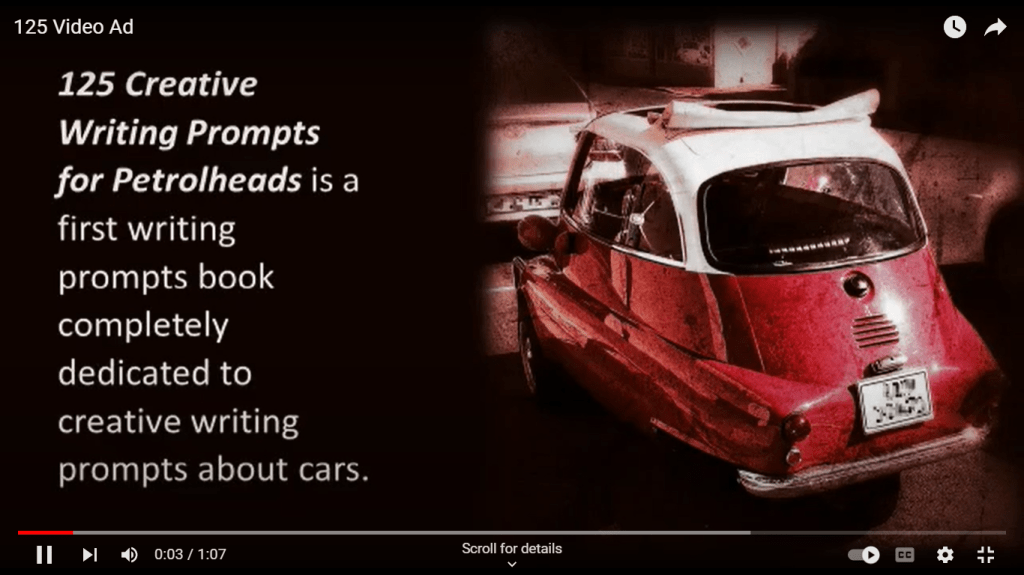
So, COVID brought a bit of order for us, where I know it brought chaos and/or disorder and/or grief to many others. As everyone else, we baked and cooked and planted. And like every other writer, I wrote. I wrote blogs with tips on how to survive the tough lockdown. And sent out a series of writing prompts and did a lot of other writers’ prompts myself. Our son and I even co-authored a writing prompts book for petrolheads (link), which we started on a plane somewhere over the Alps years earlier. And slowly I got to a place where I wrote more and more. I even started selling articles again and thought I finally had something going.

Surprise, Surprise – Another Unexpected Life Phase!

And just when I thought that I had a routine figured out, our current dream life phase changed. Again. Opportunity came knocking and we answered and like many people do after retirement, we suddenly found ourselves working again – and just to keep it incredibly complicated, this work took us to another country. Again. Only for three and a half months, they said. We stayed six. And six in the second half of the following year also. So, in practical terms, my writing routine took a two year hiatus. Ouch. Ouch. Ouch.

That was where I found myself writing this. Sitting in yet another country in another life phase – working away from home. And I am unanchored, uncreative, unfocussed, missing our dogs, our home, our town and our wonderful new-found life. The work we were doing was, unlike creative writing, only draining energy and giving nothing (except very welcome monetary compensation) back. It was just tiresome – physically and mentally. Other factors add to the discomfort, like issues with colleagues, heat and very dry and what felt like oxygen-less air, which affects one’s body in various ways. (This sounds like moaning, but it isn’t – it is just sketching circumstances.) I am actually very, very thankful for the opportunity we had to do it, because it rid us of debt we accumulated due to a parent’s dementia care.

Finally Getting to the Point – How to Stay on the Writing Way

So, that was a long introduction to getting to a point of answering the problem stated: How to stay on track during lean writing times?

How do you stay sane and focussed and keep writing when you literally don’t have time to do it? The short answer is – in the same manner one gets any other big or overwhelming task done: By doing it in small quantities, in short bits – or in our case as writers – one word at a time. Because words become sentences, becomes paragraphs, becomes pages, becomes chapters, becomes manuscripts, becomes books.

It’s really simple – but not necessarily easy. If you can’t do something big, do something small – but try to do a lot of it.

I am no expert on anything really – least of all writing success – and I have threatened myself by myself and in public (in our home) to stop trying altogether. Only for my wise husband and beautiful son to tell me that I won’t stop and that I should keep writing, even if I do it just for myself. I found that they were/are right. I cannot NOT write. Even if it is in down times and I only write (very) irregular entries in my journal (electronically). But I keep writing. And yes, unfortunately, apart from a few sold articles etc., I still only write for myself. And that is okay. For now. Maybe, just maybe one day someone will pay to read something (like a novel) of mine.

In his MasterClass, David Baldacci says that every person that should be a writer, will be a writer. I didn’t breathe for a few moments when he said that and I’m still not sure if this encourages or discourages me, but somehow, I find peace in those words. In the meantime, I will continue to write. Maybe, who knows – if I should be a writer, I will be.

So, how do we Practically Keep Writing in Times that we can’t Really do it or don’t have Time to do it?

Fortunately, I am blessed with the ability to be able to concentrate anywhere and that helps me to at least be a bit creative (with the emphasize on ‘a bit’). Because if I’m not creative, I go a teeny-weeny bit mad. I always must have something to do. When sitting in meetings, I doodle. When talking on the phone, I doodle or play a non-thinking game. When watching TV even, I am crocheting or knitting or drawing or designing on Canva. So, while working on this energy sapping project, I’ve decided that I need to make time to do some creative writing – even when there is no opportunity to take hours or days off to write. This is where one must have a bit of a criminal mind, because if you don’t have time and cannot make time – you have to steal it!

This is literally what I was doing writing this. While my very capable colleague was presenting the class, I wrote this. Fortunately, I don’t need to interact in any way in the class, so, I stole this ‘dead’ time to create something. For my sanity. And for the sanity of those round me.

Normally, while on a road trip, working, or in a meeting or just before going to sleep, an idea would present itself out of the blue, and I will just grab my notebook or open my WhatsApp writing group I have with myself, and I would act on the idea. I wrote an 18-page children’s story (by hand) while sitting in a lecture the other day. (I had to attend, but the lecture wasn’t presented on my behalf – so no harm or disrespect there.) I then went on and wrote three more stories of the same length in the days following! On many other occasions I would spend five minutes to write a quick flash fiction story (like a Drabble). I’ve amassed quite a few so far. I’m intending of self-publishing an ensemble in the very near future.

Create Every Day – even if it is Minute!

So. I try to do something creative everyday – even if is something very small. To do this I create do-able goals and keep record of my daily creative processes. At the end of each month, I look at the record I kept for every week. If one is successful in writing something (no matter how little) only twice a week for a month, you already have a bit of a routine – and that is an amazing achievement in lean writing times! Not only do you build up ‘stock’ for you writing ‘enterprise’, but seeing that you have at least accomplished something, is very good for the mood and one’s overall mental health in general and there are ways to keep going!

Ideas for Small Writing Projects if you can only Manage to Steal Small Moments of Time

  • Keeping a personal journal is the best way to help you create a daily writing routine. Choose a time of day (or even week) when it is convenient for you to write, but keep to it maybe for before going to bed or first thing in the morning. Or set an alarm at a convenient time of day. That way it will eventually become a habit (while working your way up to a daily writing routine). Many a diary entry of mine had turned out to become blog entries, and basises for writing articles and stories. Journal entries doesn’t have to be pages long. Two sentences will suffice. And if you don’t write for a week or a month or even two – don’t stop! Just keep going on where you left off. It’s your journal after all!
  • If you love writing poetry, try writing one short verse of poetry every day, until you have a whole poem at the end of the week or weeks. If you don’t or never have written poetry, try your hand at it. It will build new brain paths and even make you feel better (more productive). Poems also help when we have a bit of blues – so explore your poetic side a bit.
  • If you’re a fiction writer, write flash fiction. Set a goal to write one flash fiction story every day – or just every day of the week/weekend for a start. It might be anything between six and 500 words. If you manage to steal more time, write one or two more for the day, it will help you to have a stash of new stories at the end of this dry time, and – when you finally get out of it, you have something to show. Lean writing periods are perfect flash fiction ‘stock building’ periods. Some of these flash stories, might even become the basis for something longer.
  • Another piece of writing that doesn’t have to be very long is character writing descriptions for a story that you are busy working on or want to write. Working on this will help a lot when you finally get to write the story, and then half of the work is already done.
  • Have your notebook with you at all times and when you have quiet time or is bored during work time, and you can get away with it, think about ideas for stories and jot them down immediately. (Because by tonight or tomorrow you will have forgotten it!)
  • Use a few minutes per day and think of plot ideas for the story ideas that you already have jotted down in your notebook. These plots don’t have to be set in stone. They are just initial work to get yourself thinking about your story. This way you give yourself time to brood on plot difficulties and fix problems. It doesn’t matter if the plot lines suck initially. Fixing them is wayyy better than having nothing to fix! When you have a plotline going, start working on an outline for the story.
  • If you are really stuck and don’t know what to do, look on the internet for writing prompts or just open the nearest book you have close to you and choose the first sentence you read, as the start or finish for a flash fiction/short story. Alternatively, do some of the prompts in this exercise – https://fieliesdekock.com/category/on-writing/.

Get Doing!

It doesn’t really matter what you write – as long as you make time every day to write just a little bit and on the days that you don’t write, do something creative, such as needle work, gardening, model building, Lego building, painting, etc.. Cook or go for a walk or a swim, listen to music or visit a friend (or make that call to a friend you have put off for so long). Walking is very good for letting one’s thoughts just flow and often when walking, we relax and the things that bothers us, just resolve itself in our brains and thoughts. This is a good time to get plot issues resolved. Long or shortish road trips also does the trick for me.

Whatever you choose to do – just do something! It will surprise your brain and your body and soon enough the creative juices will be flowing again. Agatha Christie used to say that ideas come to her and plot issues solved themselves while she washed the dishes. If you’re desperate, try it!

In lean writing periods like the one I was in now, it makes no sense to set big, unmanageable goals. We all know that unrealistic goals lead to disappointment and dejection. Spare yourself that. You ARE NOT a superhuman. Stop treating yourself like one! Before I get too preachy, I will rather end with a quote:

Small things over time, can get big. (Austin Kleon from his book, Show your Work)

As I mentioned above, I stole time here and there to write this blog post during a really, really busy time. It is a testimony, to proof to you that I know what I’m talking about and that it can be done! No matter how busy we are – we CAN find five minutes EACH day to write something – even if we have to write a long piece like this, word for word, paragraph by paragraph every other day.

No apologies. No excuses. Just write – wherever, whenever.

PS: Doggy Bag/Take Away

Whenever we write articles or blogs trying to advise or teach people things – writers can make it sound so easy. But – to turn something into a success never comes easy. Most things worthwhile in life takes effort, self-discipline, routine and resilience.

(Remember this formula: Success = self-discipline + routine x repetition)

Realisation of one’s dreams does not happen while sleeping in daily, lying on the couch watching TV or playing games (and fulfilling other people’s greedy dreams). For dreams to come true – we actually need to do the work. No one else is going to hand us anything for free – or offering us our dreams on a plate, because they are too busy realising their own. Only we, ourselves, are responsible to work towards realising our dreams.

Success (like respect) isn’t inherited or gifted.

It is earned.

© 2025  Fielies De Kock

Fielies De Kock is a freelance content writer/blogger (www.fieliesdekock.com) living in Hermanus in the Overberg, South Africa, with her crazy-haired husband and two dogs. She authored a children’s chapter book and a few short reads and is co-author of 125 Creative Writing Prompts for Petrolheads (available on Amazon Kindle) with her content writer-morphed-into-estate agent son – who also has crazy hair.
How to Do Creative Writing Exercises Using your Favourite Novel

(Note: This article was written by an actual human )


Category: Writing Prompts & On Writing 

  • A few things are as useful as a good writing prompt to get the writing juices flowing. Many writers use writing prompts to get rid of temporary writer’s block or even to fix difficult plot issues in their novels.
  • There are many books and websites offering writing prompts, but if you are stuck and want to have some fun, try this one, in which you can use one of your favourite or just any old novel from your shelf. Make sure to choose one that you have already read as not to spoil your reading experience later if it is a not-yet-read novel.
  • This exercise is a great around-the-table activity to do during a family holiday, a friends weekend break away, at your writing club/circle or book club and also in the classroom at school. It is fun, creative and pushes writing boundaries.
  • Because there are many prompts, it can be done over the span of a few writing sessions.

Have fun!

Instructions

Get a novel from your book shelf and follow these prompts:

  • Exercise 1: Open randomly on a page and point with your finger to a word. Repeat this twice more and then use the three words in a 100-word story.
  • Exercise 2: Use the 5th sentence of Chapter 3 as the ending of a flash fiction short story (under 500 words).
  • Exercise 3: Rewrite the opening paragraph of Chapter 1.
  • Exercise 4: Turn to page 111 and edit/rewrite the 3rd paragraph as if it is your journal entry.
  • Exercise 5: Open the novel randomly and edit/rewrite the whole uneven page. Delete unnecessary adjectives, add better ones, rephrase sentences etc.
  • Exercise 6: Use the last sentence of Chapter 7 as the start of a flash fiction story (under 350 words).
  • Exercise 7: Rewrite the second paragraph of Chapter 2 from the viewpoint of a two-year-old.
  • Exercise 8: Use the blurb of a novel and write a 99-word story with your own ending.
  • Exercise 9: Write a poem from the last paragraph of the last chapter.
  • Exercise 10: Use the first sentence of each chapter of the whole novel and rework it into a short story.

If you are a car enthusiast and love to write about cars, check this out.

© 2022 Fielies De Kock

Wife. Mom. Blogger. Content writer. Living in Hermanus in the Overberg, South Africa, with a crazy-haired husband and two dogs. Author of a children’s chapter book and a few short reads, and co-author of a writing prompts book with her English teaching/content writer son, who also has crazy hair.


Looking for Something Different for the Petrolhead in your Life?

Looking for a treat with a difference for the petrolhead/gearhead in your life? Why not spoil him or her with a gift about their favourite thing in the world and help them boost their creativity.

You can even participate! 125 Creative Writing Prompts for Petrolheads have both serious and fun writing prompts to get anyone writing – no matter what age.

This is a book for writers to do a bit out-of-the-box writing, teachers to have fun with writing exercises or orals in class and journalists to explore new ideas to write about. Or just for anyone wanting to develop their creative skills.

Click here to order your copy of 125 Creative Writing Prompts for Petrolheads on Amazon in paperback or as and eBook (a cheaper and always available wherever your go option).

Start your Christmas shopping early this year.

© 2022 Fielies De Kock

Wife. Mom. BloggerContent writer. Living in Hermanus in the Overberg, South Africa, with a crazy-haired husband and two dogs. Author of a children’s chapter book and a few short reads, and co-author of this writing prompts book with her content writer son, who also has crazy hair.

10 Male Authors Writing Under Female Pseudonyms

We all know that way back in history when women was prohibited to do certain jobs, they had to improvise if they really wanted to follow their passion. Men played female parts in plays written by men and if women wanted to write books and not be stereotyped for writing ‘silly lady novels’, they had to write under male pen names – which many did. We now know that George Elliot was in fact Mary Ann Evans and that the Brontë sisters – Charlotte, Anne and Emily – became Currer, Acton, and Ellis Bell.

What is less known is that men sometimes had to do the same. In this day and age, men are branded by another form of stereotyping, and publishing in certain writing genre is frowned upon for male authors. Although it is not such a general phenomenon, it happens and when scratching under the surface of the publishing industry, there are quite a few surprising male names popping up with female pseudonyms.

10 Dav Pilkey a.k.a. Sue Denim

Pilkey grew up struggling with learning disorders such as ADHD and dyslexia. What he didn’t have problems with, was drawing and imagining fantastical stories. He became known as author and illustrator of the Dog Man children’s graphic novels and the Captain Underpants series – starring characters which created themselves in his young mind when he was repeatedly dismissed from class in school and spending many hours in the hall – drawing. His books were translated into many languages and millions of copies were sold worldwide. Although he used the male pen names, George Beard and Harold Hutchins (two of the characters’ names in his Captain Underpants series) for his Captain Underpants spin-offs, he chose a female name – Sue Denim – for the Dumb Bunnies series published between 1994 and 1997.

He even posed for photographs as Denim, created a fake persona for her and included a list of imaginary titles written by her in her biography. She was so popular that she sometimes got more fan mail than Pilkey himself. The reason why he chose the name Sue Denim? Because when said quickly, it sounds like pseudonym. Duh!

9 Dan Brown a.k.a. Danielle Brown

Dan Brown has built a cult-like following with his well-known best-selling books, The Da Vinci Code and Angels and Demons, which were adapted into movies, with Tom Hanks portraying his protagonist, Robert Langdon. In 2018 Brown was listed the fifth highest-paid author after James Patterson, J.K. Rowling, Stephen King, and John Grisham. 

Although now a writer of coding- and symbolism-themed novels – probably coming from his years of spending time in the presence of his mathematics professor/writer father – Brown’s writing career started off with a totally different kind of book, co-written with his then wife, Blythe (nee Newlon). The book 187 Men to Avoid was a dating survival guide for women searching for ‘Mr. Right’ and it was published in 1995 under the pseudonym Danielle Brown. 

8 Martyn Waites a.k.a. Tania Carver

Martyn Waites became a successful writer after trying his hand at anything from bartending to acting. Books from his various series normally has an investigative journalist at the helm. 

When a former editor of his work was looking for a ‘British version’ of Karin Slaughter or Tess Gerritsen-type writing, Waites replied that he was the best ‘man’ for the job. When not being able to find his female voice in writing, he regularly consulted his wife for advice – so much so, that he made her co-author, and the pair has been penning novels together since 2009. Their Tania Carver novels consist of the Brennan & Esposito series, including novels such as The Surrogate and The Lost Girl.

7 Tom E. Huff a.k.a. Jennifer Wilde

Texan born Thomas Elmer Huff (1938-1990) found his female writing voice quite early in his career and has only one book published under his real name. He started out writing gothic novels under the pen names such as Edwina Marlow, Beatrice Parker, T. E. Huff and Katherine St. Clair. But it was as Jennifer Wilde that he really made his mark. These historical novels were written in the first person from the heroin’s perspective and many featured multiple male protagonists.

His first Jennifer Wilde novel, Love’s Tender Fury, had 41 reprints in the first five years, and his second, Dare to Love, topped the New York Times paperback bestseller list for 11 weeks. He didn’t plan to keep on writing under the Wilde pseudonym, remarking that he didn’t relate to her, so he published a novel as Tom E. Huff, but continued writing as Jennifer Wilde anyway. Various previous novels were re-edited under the Tom E. Huff name.

6 Peter O’Donnell a.k.a. Madeleine Brent

Peter O’Donnell was a comic strip artist and writer, who had also adapted Ian Fleming’s 007-movie Dr. No into a comic strip for the Daily Express newspaper. But it was his James Bond-ish comic strip character, Modesty Blaise, published in The London Evening Standard from 1963 to 2001, which brought him fame. He went on to write 20 Modesty Blaise novels. A movie was adapted and is available on You Tube.

His writing under a female name started in 1969 when Souvenir Press requested O’Donnell to write a Gothic novel. He sent in four chapters but received no feedback. Much later an American publisher contacted him to complete the novel, causing a predicament as he didn’t know how the story would end. He persevered, but because it was written for a female readership, he adopted a female pen name. The novel, Tregaron’s Daughter, was a success in the US and Europe and many more followed. In the 20 years of correspondence, his American publisher never knew that he was male. He got his wife to sign his letters as to give his signature a female touch. His pseudonym – Madeleine Brent. The same initials as Modesty Blaise.

5 Nicci Gerrard and Sean French a.k.a. Nicci French

Nicci French is the combined pen name for another married couple Sean French and Nicci Gerrard. Although each had their own separate writing success, the pair decided to start writing as a duet and is doing it already for 24 years. They met while working together at The Statesman magazine, where Sean was a columnist.

Sean’s solo books include three novels, three biographies and a compilation of essays. Nicci has written nine books, including the non-fiction book, What Dementia Teaches Us About Love.

Their first novel together was The Memory Game and they have since written 27 more, including the eight-book Frieda Klein-series. They have also written a picture book, The Fox and the Wolf.

How do two authors of different genders designate themselves as one writer? In their own words from an interview: “We hope that people read our books not as an experiment but as the work of this one particular writer, Nicci French, who has her own imagination and her own strange talent which is different from either of us.” They certainly have convinced me!

4 Roger Sanderson a.k.a. Gill Sanderson

Already surviving for 114 years and selling a book just about every 10 seconds, makes Mills & Boon books extraordinary and chances are that every adult woman in the Western world has read at least one of these books in her lifetime. The company started by Gerald Mills and Charles Boon in 1908 has served as escapism reading for women – created by women. Well, mostly. Throughout Mills & Boon’s history, only a few men have tread where no man normally does – and with surprising success.

One such man is Roger Sanderson, a retired English lecturer, who wrote the Commando comic series, where after he started writing romance novels with his wife – written under her name. He became so good at it that he pursued this writing genre by himself. He wrote more than 40 Mills & Boon novels and has also written for various publishers, such as STAR and Hale, and is currently writing for Accent as Gill Sanderson and for Desert Breeze under his own name.

3 Benjamin Franklin a.k.a. Mrs. Silence Dogood and others

When young James Franklin started a journal with the goal to criticize the Massachusetts colonial government and religious establishment, he couldn’t foresee that he would be stood up by his little bro, Ben. Fourteen letters by a minister’s widow, called Silence Dogood, became quite a hit and wasn’t exactly what James and his band of Couranteers or Hell-Fire Club had in mind. When admitting that he wrote the letters, Benjamin Franklin was accused of vanity by his brother.

His brother’s critique didn’t prevent Benjamin Franklin from writing under pen names though. The man who would later  help draft the Declaration of Independence of the United States of America, wrote letters as both men and women throughout his life, but it was his female personas – Martha Careful, Busy Body, Alice Addertongue and Polly Baker – with whom women could relate, giving them a voice and fighting their causes. Indeed, a man ahead of his time in the eighteenth century!

2 Dean Koontz a.k.a. Deanna Dwyer and Leigh Nichols

Dean Koontz’ books are highly in demand with collectors, which led to many instances of fraud and hoaxes as pseudonyms/novels/letters and other works are accredited to him which are not his.  He used the male pen names W.H. Allan, David Axton, Brian Coffey, K.R. Dwyer, John Hill, Anthony North, Richard Paige, Owen West and Aaron Wolfe – as well as his real name. One of his pseudonyms was used for an episode called Counterfeit, that he penned for the TV series, CHiPs. It was edited to the extent that he asked that it was attributed to his alias Brian Coffey, instead of his own name. He also wrote under two female pseudonyms – five books under the names Deanna Dwyer and Leigh Nichols respectively.

Koontz sold his first short story he wrote and then he received more than 75 rejection letters before selling more work. His first four novels were never published. He reads more than 150 books per year and revises every page he writes twenty to thirty times. He has an excellent sense of humour – evident in the answers to his FAQs on his website.

1 Jorge Diaz, Antonio Mercero and Augustin Martinez a.k.a. Carmen Mola

The female thriller writer Carmen Mola had been called “Spain’s Elena Ferrante” (pseudonym of Italian translator/novelist Anita Raja). Mola’s books, translated into eleven languages, had become so popular, thereby accumulating many accolades. In 2020, a branch of Spain’s Women’s Institute listed her book, The Girl – part of a trilogy – as a must-read book by a woman that “help us understand the reality and the experiences of women.”

Rumours were that Carmen Mola was the pen name for a male writer, needing to write under a different name. So, when ‘she’ won the prestigious Planeta prize – the richest literary award – for the book La Bestia, (The Beast) written under the pen-name Sergio López and she had to attend a ceremony attended by the Spanish king to receive her prize, the audience was stunned when three men – Jorge Diaz, Antonio Mercero and Augustin Martinez – took the stage.

The scriptwriters trio is widely criticized by gender groups for writing as women about women issues, but Mercero reply was simply: “We didn’t hide behind a woman, we hid behind a name,”

Read more of my list articles here.

© 2022  Fielies De Kock

Fielies De Kock is a freelance content writer/blogger (www.fieliesdekock.com) living in Hermanus in the Overberg, South Africa, with her crazy-haired husband and two dogs. She authored a children’s chapter book and a few short reads and is co-author of 125 Creative Writing Prompts for Petrolheads (available on Amazon Kindle) with her content writer son – who also has crazy hair.
Leer jou kind om self ‘n toespraak te skryf – stap vir stap

Lees hierdie artikel as ‘n eboek.

Dis weer daardie tyd van die kwartaal wanneer ma’s naarstigtelik Googleloer opsoek na raad met hulle kinders se toesprake. In ‘n vorige bloginskrywing het ek redelik gal gebraak oor Graad 1’tjies wat nog nie kan lees of skryf nie, maar van wie verwag word om ‘n ATKV-toespraak te resiteer.

Dit lyk darem asof die Department van Onderwys of dalk die skole self herbesin het, want die afgelope paar jaar (sedert Covid met ons is) het die kinders in ons familie se toespraakformaat verander. Die jonger grade kry net ‘n onderwerp waaroor hulle ‘n minuut hoef te praat – wat ‘n baie meer sinvolle oefening is, want hulle kan baie van die werk self doen!

In hierdie skrywe gaan ek net op die kleiner grade fokus, want as hulle vroeg-vroeg toesprake (wat eintlik net praatjies is) onder die knie kry, sal hulle dit in die later grade met gemak self kan doen. Hier is stap-vir-stap raad vir pa’s en ma’s om sommer vinnig met toespraakmaak klaar te speel.

Graad 1 en 2

Gewoonlik stuur die onderwyser/es ‘n nota wat met die tema/s, lengte en moets en moenies vir elke toespraak aandui. Volg dié stappe om jou kind beide sy Afrikaanse en Engelse praatjies te leer doen:

Versamel informasie

  • Lees vir jou kind die riglyne deur.
  • Laat hom een van die temas kies – verkieslik een waaroor hy die meeste weet.
  • Laat hom alles wat hy graag oor die onderwerp wil sê, vir jou opnoem.
  • Luister aandagtig en vra hom vrae oor die onderwerp om sy denke te stimuleer.
  • Indien nodig, Googleloer maar vir ‘n bietjie meer informasie as dit oor ‘n onderwerp is waar feite genoem moet word.
  • Skryf elke punt neer.
  • Skryf/tik nou ‘n elke punt in ‘n kort sin oor.
  • Rangskik die sinne sodat dit ‘n goeie volgorde het.
  • Maak seker die eerste sin trek aandag. Gebruik ‘n uitroep of humor.
  • Help met ‘n bietjie humor in die toespraak.
  • Skryf ‘n definitiewe laaste sin van een van die punte wat hy genoem het vir ‘n goeie einde.
  • Lees die toespraak ‘n paar keer deur om te sien of dit ‘ritme’ het, sodat jou kind dit maklik kan weergee.
  • Indien dit moeilik lees, maak veranderinge.
  • Redigeer die stuk sodat dit foutloos is.
  • Merk belangrike woorde in BOLD en/of gebruik kleur.

NOTA: 200 woorde lewer ongeveer ‘n 1,5 minuut toespraak, afhangende van die tempo.

Neem die toespraak op

  • Gebruik die stemopnemer op jou foon en lees die toespraak voor. Sit stemtoonverandering in waar nodig, maar moet dit nie oordramatiseer, sodat jou kind soos ‘n papegaai klink nie.
  • Speel dit oor en oor vir jou kind totdat hy die woorde uit sy kop ken.

Maak hulpkaarte

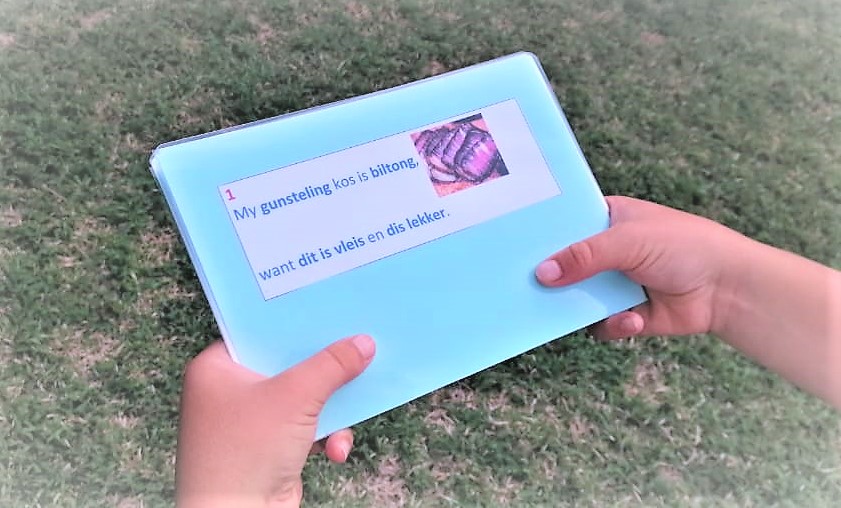
  • Gebruik die getikte toespraak, vergroot die font, voeg spasies tussen natuurlike paragrawe in en knip die geskrewe toespraak in ‘n gepaste grootte vir die klein handjies.
  • Nommer elke kaartjie. (Daar behoort tussen vyf en sewe kaartjies te wees.)

Oefen die toespraak

  • Help jou kind om die toespraak op te sê met behulp van die kaartjie. Maak seker die nommers is groter as die sinne, sodat hy die volgorde maklik kan volg.
  • Leer hom om oogkontak te maak terwyl hy praat en die kaartjies slegs ondersteunend te gebruik.
  • Gebruik ten minste een hulpmiddel. Dit kan ‘n foto of ‘n speelding wees wat by die tema pas. Wys hom presies hoe en wanneer hy die hulpmiddel moet gebruik.

As julle al hierdie stappe volg, behoort hy goeie punte te kry – dalk self “half tien” soos ons Graadeentjie toe hy nege-en-‘n-half uit tien gekry het!

Graad 3 en 4

  • Noudat jou kind gemaklik is met sinne skryf, kan hy al ‘n groter deel van die werk self doen.
  • Volg die bogenoemde stappe, maar laat hy self sy sinne skryf.
  • Doen die tik- en redigeerwerk en help met die rangskikking van die orde.
  • Help ook met ‘n aandag-trek begin en ‘n goeie einde.
  • Neem die toespraak in die kind se stem op as hy al goed genoeg lees. (Doen dit andersins self.)
  • Laat hy die toespraak leer totdat hy dit vlot kan lewer.
  • Maak genommerde kaartjies ter ondersteuning en fokus op oogkontak en dat hy nie die hele toespraak aflees nie.
  • Gebruik hulpmiddels.

Graad 5 en hoër

  • Jou kind behoort nou langer praatjies/toesprake self te kan skryf. Vra vrae en speel duiwelsadvokaat om jou kind te leer om beredeneerd te dink.
  • Sit hand by met veilige internetsoektogte en gee raad oor struktuur en volgorde.

Hier is ‘n voorbeeld van ‘n struktuur van ‘n redenaarstoespraak.

Kliek hier vir persone wat hulp verskaf met die skryf van redenaarstoesprake vir jou ouer kinders en kry hier wenke as hy dit self skryf.

***

Voorbeeld van ‘n Afrikaanse praatjie

As my boetie bad

(voorbeeld van toespraakkaartjies)

1

Dis net sploesh-splash, sploesh-splash

wanneer my boetie bad

en dan is alles sopnat!

2

My boetie is vyf jaar oud

en ek en hy bad elke aand saam.

3

Party aande speel ons lekker

met ons bootjies in die water,

maar ander aande raak hy heeltemal laf!

4

Dan wil hy in die bad duik of lê

en dan vat hy soveel plek

dat ek met my boud

op die prop moet sit! Dis eina!

5

Sommige aande stoei ons in die bad

en dan sien jy net water spat!

Ek klim gewoonlik maar vroeër uit

sodat hy lekker alleen verder kan speel.

6

Hy maak dan sy hele kop vol skuim

en blaas borrels daarmee!

7

Dis nie altyd lekker om saam met my kleinboetie

in die bad te wees nie,

maar dis darem lekker om te sien

hy geniet sy badtyd terdeë!

***

Voorbeeld van ‘n Engelse praatjie

My Superpower

(Example of speech cards)

1

Superheroes are very cool!

Superman is strong and can fly.

Batman is rich and clever.

Spiderman can swing between buildings.

And Ant-Man is small enough to get in anywhere.

2

Most superheroes have only one or two superpowers.

They save people’s lives and do brave deeds.

I like watching movies about superheroes

and my little brother dresses up as Spiderman every day!

3

I love superheroes and I like what they do,

because they always beat the bad guys.

But the thing with superheroes is

that they are only imaginary.

4

I sometimes dream about having superpowers.

I would love to be strong

or to fly

or to shrink myself

or make myself big,

but I can’t,

because I am a real person

and not living in a movie or a book.

5

But we can have superpowers

and we are better than superheroes,

because we are real!

6

All we have to do is

find our superpowers.

7

I like to be kind

and to be helpful.

I like to comfort people when they are sad.

So, I think my superpower is to help people

and I always want to use it

to make people around me happy.

Vir ‘n meer volledige uiteensetting van toesprake vir redenaarskompetisies, lees hierdie bloginskrywing en volg hierdie wenke.

Kliek hier vir hulp met die skryf van redenaarstoesprake vir jou ouer kinders.

***

© 2021 Fielies De Kock

Vrou, ma, blogger. My kinderboek, Yeovangya’s Quest, en my en ons seun se eerste boek saam, 125 Creative Writing Prompts for Petrolheads, is op Amazon beskikbaar.

My Children’s Book, Yeovangya’s Quest, is now available on Amazon Kindle

Yeovangya’s Quest is now available in eBook and paperbook formats

My children’s book, Yeovangya’s Quest, is now available to purchase on Amazon Kindle Books in both eBook and paperback formats.

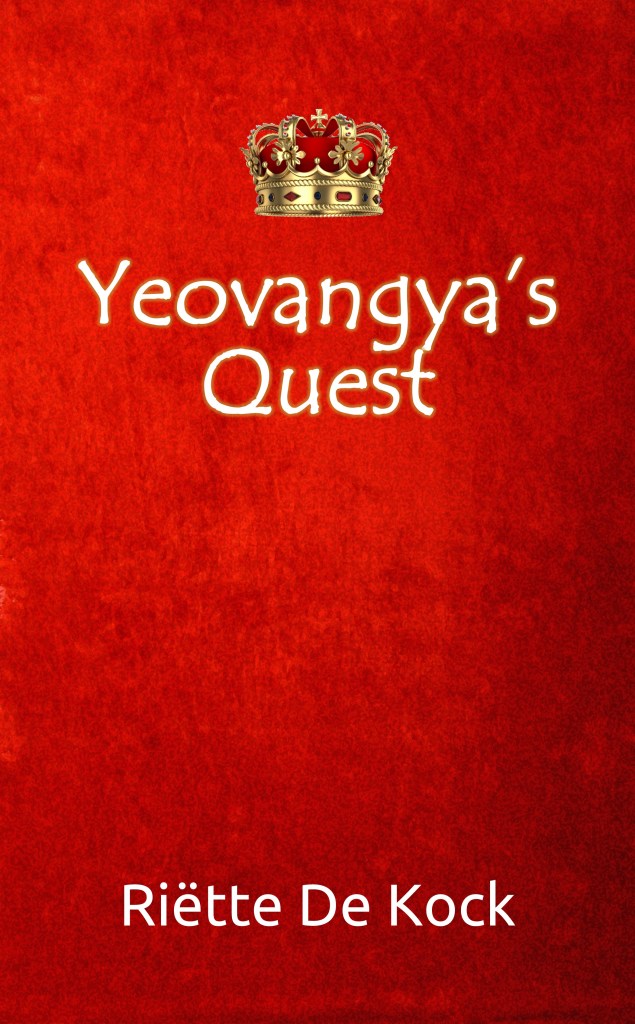
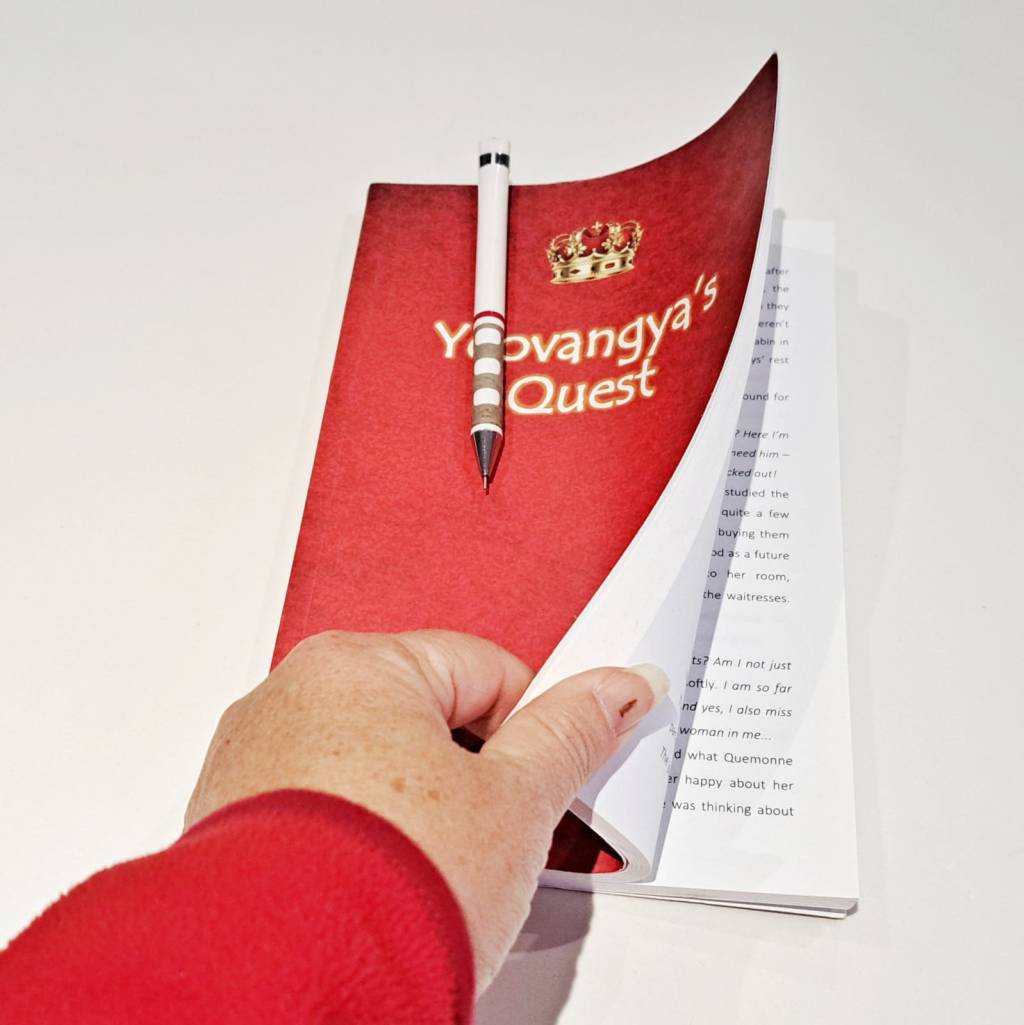
Yeovangya’s Quest is the true fairy tale of a princess past her ‘marriage age’ who doesn’t want to marry through arrangement, but only for true love – just like her parents did. She decides to determine the outcome of her future herself, by embarking on a journey looking for the love of her life. She concocts a plan with her father’s confidant, cuts her hair, dresses as a boy and sets off with her two closest companions – Blaffi, her brave and loyal dog, and Prr, the lazy, upstairs palace cat. Together they face many adventures and dangers, such as a dual with a man who can’t handle his beer, almost becoming lunch to a hungry lion, being attacked by three bad princes and even being shipwrecked.

Yeovangya finds more than what she looked for. She learns about her own weaknesses and about the consequences of selfishness. Above all, she learns to love in more ways than she expected to. She experiences abundant joy and the hurt of loss and having to let go – before she eventually learns to embrace what life offers.

Yeovangya’s Quest (a 10-chapter book) is good, clean reading, packed with adventure and action and even contains a few life lessons, and is perfect for young readers between the ages of 9 and 14.

Yeovangya’s Quest has enough action to keep boys’ attention captive and plentiful romance for girls of all ages.

(If you are a Kindle Unlimited subscriber, you can read the book for free. Kindle Unlimited is available at a monthly cost on Amazon and if subscribed, works pretty much like a library – except that the author gets paid for the amount of pages lenders read per book. This is just to tell you how it works and is not an advertisement. Unfortunately, otherwise I would have gotten paid for it. Smile.)

Purchase your copy of Yeovangya’s Quest here.

Yeovangya’s Quest is now also available in paperback.

Remember, when you purchase an eBook, it stays in your library where it can be read over and over again. So, all your children – over the span of their growing up years – can read it, just like with a book in the bookshelf of your family room.

©2021 Riëtte De Kock (Fielies De Kock)

Riëtte De Kock (Fielies De Kock) lives in a coastal village in the Overberg region, South Africa, with her husband and two dogs in an old heritage house and their freelance-writer son in the garden cottage. Fielies’ other books and eBooks are available here.

The Cat is out of the Hat – History is Repeating Itself

I normally write blog entries about things that I love and find interesting and almost never rant here. I have decided today though, to speak a bit of my mind, because I am worried about where ‘we’ are going with freedom in this world of ours.

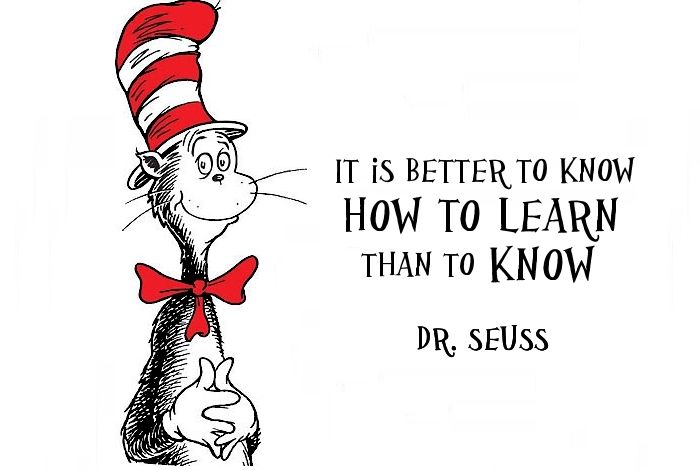
By now every reader had probably heard about certain Dr Seuss books being withdrawn from the market. You can find out about it here.

I don’t know why we always have to be seen as ‘left’ or ‘right’ when we raise an opinion. What happened to be decent, having common sense, choosing the midway? Sometimes things are not just black or white, but actually grey or yellow or purple or blue or orange with green dots. This is after all something liberal thinkers fought for throughout the centuries! Many even died for it!

(Maybe it is because we are mostly exposed to/dependent on American commentary and entertainment and they – the biggest democracy in the world – has only two political choices available – either Democrat or Republican! You guessed it – left or right. The in-between parties are for all practical purposes non-existent. And maybe this – their political choice – had spiralled downwards into every other inch of society. But, that’s just my [in-between] opinion.)

I look at events these days and think that modern liberal thinkers had lost the plot, because one see more and more Nazi-like censorship from liberal (!) sources everywhere. It makes me sad, and frankly, quite scared. Like Hitler’s SS did in the 1930s, we are being told what to believe, what to discard, what is right, what is wrong etc. and this is all done under the flag of political (and social) correctness. And by doing so, they kill those fighters for freedom of speech all over again!

What happened to common sense? What happened to reading literature in context and then have discussions over it instead of just banning authors. Isn’t that one of the reasons why we read? How will our children learn to think critically if they don’t have access to read (even politically incorrect) literature and ask questions about it? Do ‘we’ want to raise little obedient, non-thinking, political-correct robot people? It seems more and more that it is coming to this.

Are ‘we’ back to burning books again? Yes, ‘we’ are. ‘We’ have just burned Dr Seuss books.

History is repeating itself.

This Dr Seuss-like story is a reply to the sad affair by author Laura Ainsworth. Quite sharp I thought.

(WARNING: This is not socially or politically correct reading.)

Let your Characters Reveal Themselves to you

By Fielies de Kock

I am always amazed by how my characters can surprise me. Just this morning I wrote a flash fiction story. Yesterday the ending of the story popped into my head. I decided to write it on my phone last night whilst in bed, but I was too lazy to figure out the plot details. This morning I decided to sit down and labour over it a bit. I knew the ending was words uttered by a soldier in a war, but I had no idea about how I was going to get there.  But when I started writing, Uwe, the protagonist turned out to be a dentist in the German Army during WW2 who was experiencing a crossroads moment. I didn’t make Uwe up. He created himself before my mind’s eyes. All I had to do was to start writing a few words. The moment Uwe was ‘born’, he developed a life and a voice of his own.

The same happened years back when I started writing a novel (which is still only two thirds into the creating phase of the writing process). I wrote a chapter in which the two main characters – a couple – invited a new friend over for dinner. This friend plays the other main character in the story and they were chatting away soon enough. At that stage, all I knew about my couple was that they previously had a relationship, were reunited and were engaged now. During the dinner conversation I learned that they both left South Africa at different times to work on kibbutzim in Israel. They eventually ended up at the same kibbutz, fell in love, got pregnant, lost their baby girl in a bus bomb during an intifada and then the woman went home brokenhearted. They met again years later after she got divorced from her abusing husband and finally had counselling – and were now sitting, engaged to be married, at a dinner table, telling their new friend – and most importantly, me – their whole story. I was flabbergasted by my characters’ secrets. I really didn’t know all those things about them until that scene.

Listen to your Characters

So the moral of the two stories is to learn to sit back and let your characters do the talking – literally! We live in a world of helicopter parenting, controlling our every move to the finest detail and fomo, and writers sometimes tend to overkill on character development to a point of stereotyping (just watch any Hollywood movie) – like the police detective whose boss hates him, is divorced/getting divorced, has a drug/drinking problem, is an absent father and has a heart which is just waiting to attack him. Where are the out-of-the-ordinary detectives who are kind-hearted, crochet with their grandmothers, are happily married, romantic husbands etc? Are they really too boring to write stories about or are we are just too lazy to work out great story lines for them? (And there’s another challenging story idea right there! Don’t steal it – it’s mine!)

We should sometimes just sit back and just listen to our characters telling us who they really are. Maybe they have more to offer than the one dimensional stereotype we so often mould them into.

How do you Listen to your Characters?

Go about your character developing the way you normally do. Give them their eye and hair colour, pet peeves, characteristics, likes, weaknesses, family ties, problems etcetera, as much as you like, but don’t limit their back stories because of your own preconceptions. Put them in different circumstances and see how they react. Listen to how they talk to other characters and to what they tell them. You might be stunned at what they might reveal. The best way to do this is to sit down and whether you write to a strict outline or if you are off-the-cuffing it, free write your scenes. Follow these guidelines.

  • Don’t think too much or wait until you have everything figured out before you start writing. If your character do or say things that you didn’t plan, let him/her without interrupting or censoring them.
  • Explore the character by keep writing. Don’t hesitate if weird things flow from your pen or keys and don’t stop writing for even a second! And never, ever stop to correct anything until the free writing is over! Allow freewriting sessions of at least ten minutes per character.
  • Write whatever comes to mind – even if it scares you a bit or if you didn’t plan things the way it plays out. You can always adapt the story line later or edit some of what you have written. It is better to have and to do away with than not to have at all!
  • Trust your instincts (or those of your characters), because when you free write, your instincts take over and most of the time we write better this way than when we are forced to write according to a plan.
  • Just keep going until you reach a point where it feels as if it is done – even if it takes longer than the time allotted for the session.
  • Don’t edit immediately after writing. Leave your work until the next day or even a few days later. This will give you time to think about the revelations you characters made and how it will influence the plot and your story line and if everything still fits in the greater plan. Most of the time you will be pleasantly surprised. If you really find after rereading your work that it is not the case or that it really is a bunch of Charlie Romeo Alpha Papa, you can always delete what you don’t like and/or edit it until you are happy.

Learn to start trusting your characters to reveal themselves to you. You might discover a whole new approach to character development for future use.

© 2019 Fielies De Kock

Awesomest wife. Finest mom. Hopefullest writer. Foreverest dreamer. Living in a coastal village in the Overberg, South Africa, with her husband and two dogs in a small heritage house, and their adult, graduate, job-seeking son in the garden cottage. His CV is available on request. 🙂