
#thewritingclubdieskyfklub #fieliesdekock #riettedekock #fieliesriettedekock

#thewritingclubdieskyfklub #fieliesdekock #riettedekock #fieliesriettedekock




Please NaNoWriMo, don’t sue me for the spin-off. It was just my way of not doing nothing writing wise for a month.
I have no time in November – not this past November or any other as in our yearly routine it might just be the busiest time. For that reason I don’t even think of signing up for NaNoWriMo yearly, because although I might write my daily dose of 1333 words on the first day an maybe the second and even a third, I know that I will be disappointed down the line, because it will end. But, I still wanted to dedicate at least a bit of time to regular writing during the month of November just to feel part of something bigger, so I decided on my own personal alternative – National Flash Fiction Writing Month or NaFFWriMo. I decided to write a short story every day of the month. I wasn’t a 100% successful, as the last few days I got busy and I stopped a few short. Nevertheless, I have 26 stories more than I had on 31 October, so I’m at least a bit satisfied by my effort.
The Rules of the Game
At first my thinking was to write 100-word stories, but the first one was shorter and I felt that if I forced it to be longer it would lose its effect, so although I managed a few precise 100-word stories after that, I decided earlier on that I was not going to put any restrictions on myself other than that all the stories would probably be under 500 words.
Statistics
A few things I’ve learned during my NaFFWriMo
PS: And just for the record – I know that NaNoWriMo is an American invention, but I think the name should change to IntNoWriMo to include the rest of us. Just sayin’. J
© Fielies (Riëtte) De Kock
Awesomest wife. Finest mom. Hopefullest Writer. Forever dreamer. Temporarily living in Cairo, Egypt.
I remember my pre-school growing up years in two phases – a phase where we lived on two farms, although I actually only remember the second farm. Of the first I only have two memories – one where I received my soft toy monkey and namesake, Fielies, as a Christmas gift around my third birthday (yes, I actually remember getting the present and opening it) and the other where my sister, twelve years older than me, ignored my mother’s instructions and gave me Coke-Cola in a baby bottle, even though I wasn’t supposed to having Coke or be drinking bottle anymore.
Of the second farm I have many happy memories, much of them involving my brother, father and grandfather.
The second phase was living in the neighbouring town. Here my memories contain mostly our house, my brother who was nine years older than me and in high school in the next town during the week – and my grandfather’s shop.
My grandfather sold stationary, fireworks and also gifts and gift cards in his shop. My grandfather and grandmother taught me to read and write numbers and I helped them put handwritten prices on the products in the shop. This made me feel very smart. But what didn’t make me feel smart was that although I could write numbers, I couldn’t read letters. The gift card display cupboard filled with Helen Steiner Rice cards made me realised that. The cards were different than the other cards in the sense that they didn’t only have words inside the cards, but also on the outsides.
I was fascinated by these little symbols that, when put together with other sets of letter combinations, formed words. I was even more amazed by the fact that so many different words could be formed by using those letters. And with that, if you know how, one could make sentences using all kinds of different words. And these sentences became the keys to creating other worlds. Worlds full of stories.
To overcome my frustration I sometimes asked my grandmother or grandfather to read me some of the cards instead of a storybook. I didn’t understand much, because the words confronted emotions and life experience I could yet identify with. But what I did get, was the wonderful rhythm of the rhyme that made those words sound as beautiful as a symphony in my ears. I could just listen and listen. As soon as I learned to read in school, I used Helen’s cards to practice my reading.
Then one day a new order from the big city arrived which got mixed up somewhere and the shop got someone else’s order and to my shock and wonder I found out that Helen was speaking English too! I could now practice my English reading too. It paid its dividends, because my English spelling became very good and my vocabulary grew beyond my second language reading book’s arsenal. I won’t comment on my speaking ability though because in our town no one spoke English. There were Afrikaans, Tswana, Portuguese and Lebanese people living there, but somehow no one spoke English!
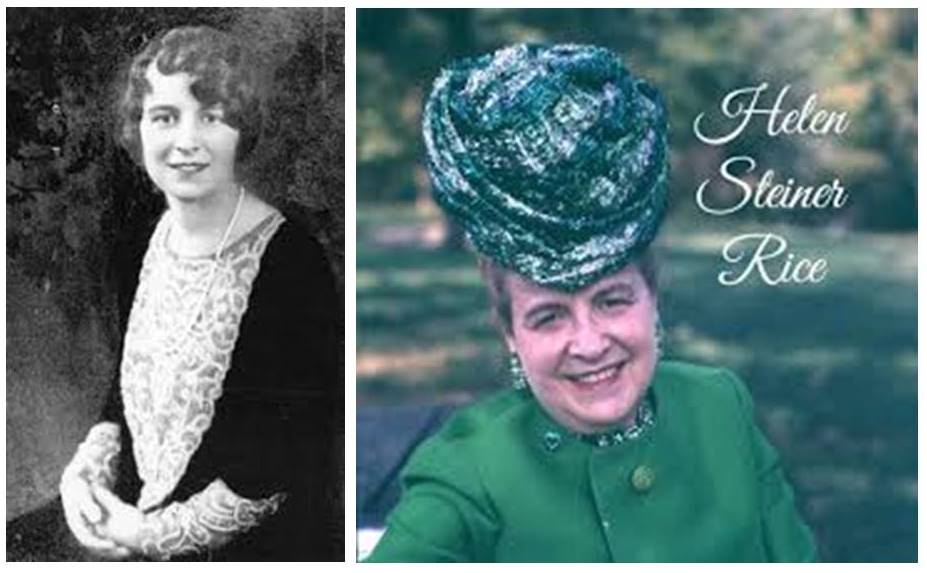
Only many years later I learned to my surprise that Helen Steiner Rice (I thought the name was a bit foreign) wasn’t a nice Afrikaans speaking boere antie (Afrikaner/farmer aunty), but actually a very nice American woman who started writing greeting cards when she took over a greeting card company and she realised the need for cards with feel good messages.
Although Helen was dubbed ‘Ambassador of Sunshine’ at the Gibson Art Company in Cincinnati, she didn’t only know the sunny side of life. Her father died when she was young and instead of pursuing her dreams, she helped her family survive. She married a young business man who lost everything in the 1929 New York stock market crash and was left widowed at age 32 after he took his own life due to depression related illness. But she became a successful business woman and ran the greeting card company for forty years, while keep writing her beautiful poems and unknowingly taught a little Afrikaans girl how to read, first in Afrikaans and then in English. And then to write. First in Afrikaans and then in English.
Thank you, Mrs. Helen Steiner Rice, for unlocking the world of words for me.
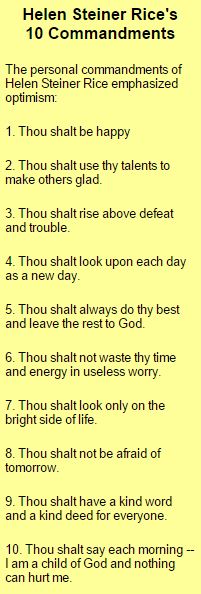
PS: You can read the story of Helen Steiner Rice here.
PPS: I found out today that either Google doesn’t know everything or that I don’t know how to get the information I need out of Google. I tried to find out who was responsible for the translation of Helen’s poems into Afrikaans, but I couldn’t. I also tried to find out into how many languages her work is translated into. I’m still searching. If you have more information on this, please comment.

© 2016 – I, Fielies (Riëtte) De Kock tries hard to be a Proverbs 31-woman – excellentest wife, finest mom, greatest lover and successful ‘wordpreneur’ all at the same time. I share my current living space in Cairo, Egypt with my husband, young-adult son, the building’s ginger cat – and the space in my head with way too many ideas and multitudes of story characters to function as a normal human being.

Maybe you sit there at work today, wishing that you were rather writing that big dream novel of yours. Or maybe you are privileged enough to be busy writing that great novel, but are stuck a little bit and need a challenge to kick-start you back into literary action. Or maybe you have a bad attack of writer’s block and don’t know what to do to untangle your imagination. If you fall into one of these categories, then consider doing something else to get you mind off things or to rekindle your creativity. One thing you can do is to enter a writing competition.
There are pros and cons to writing competitions, but the pros outweigh the cons by quite a margin. A writer – either one just starting out or a seasoned one – can learn a lot by regularly entering competitions.
Here are a few of the pros:
The cons:
I haven’t won a competition before, but I had a few pieces published as runners up. Currently my entry is in for a story in my native language, and we happen to be going home when the winners are announced. We plan to pass through Bloemfontein on route to the Cape the weekend when the winner will be attending a writer’s workshop presented by Deon Meyer. Coincidence? We’ll have to see. J
Take that first step today and do something to pursue your writing dream or to get you out of a writer’s slump. Enter a writing competition. For your convenience, I have listed a few links to pages where competitions are advertised. I included competitions for the Afrikaans writing scribblers out there too. There are more and more Afrikaans competitions available. Watch out for them.
For English Competitions
http://www.writersdigest.com/writers-digest-competitions
http://www.aerogrammestudio.com/2014/11/27/19-short-story-competitions-2015/ (various competitions)
http://www.freelancewriting.com/creative-writing-contests.php (various free competitions)
For Afrikaans Readers
Ook vir jong skrywers en poëte (as daar nie so ‘n woord is nie, is daar nou een)
http://www.rsg.co.za/promosie.asp?id=184
https://bloemsv.files.wordpress.com/2014/11/bsv-skryfwedstrydpamflet-2015.pdf
Best of luck. Let me know when you win!
© 2015 – I, Fielies (Riëtte) De Kock tries hard to be a Proverbs 31-woman – excellentest wife, finest mom, greatest lover and successful ‘wordpreneur’ all at the same time. I temporarily share my living space in Cairo, Egypt with my husband, young-adult son, the building’s ginger cat – and the space in my head with way too many ideas and multitudes of story characters to live as a normal functioning human being.

VRYWARING: The Writing Club/Die Skryfklub het geen amptelike verbintenis met die ATKV, óf tree as spreekbuis vir hulle op, óf doen reklame namens die organisasie nie. Die rede hoekom soveel van hulle hulpbronne in hierdie les genoem word, is omdat hulle aktief die Afrikaanse taal bevorder (wat Die Skryfklub ook ondersteun en nastreef) en hulle nou met skole saamwerk in hierdie verband.
Vir hulp om toesprake vir jou kind te bekom indien jy dit steeds nie self wil help skryf nie, kliek hier vir kontakbesonderhede https://fieliesdekock.com/2018/02/14/kontakte-vir-hulp-met-toesprake/
Liewe Ouers,
Dit grief my dat Graad 1-leerders ‘n toespraak gereed moet hê twee weke nadat hulle vir die eerste keer skool toe is. Hulle kan nog nie eens self lees of skryf nie! So, wie doen hulle werk? Jy, natuurlik!
Ek sal nie dieper in my opinie van die skoolsisteem ingaan nie, maar tot die punt kom en jou ‘n paar idees gee om jou te help om jou kinders se toesprake te skryf. Sodoende, wil ek jou help om so min as moontlik onnodige tyd daaraan te spandeer, maar belangrikste van alles is dat ek jou wil help om jou kinders te leer om hulle eie toesprake te kan navors en skryf (sodra hulle kan lees en skryf… #sarkasties)
Dit blyk asof staats- en redenaarskole in Suid-Afrika meestal die ATKV-riglyne vir redenaars volg. Vir die jaar se temas, hoe lank die toesprake moet wees en ander hulpbronne, besoek hulle webwerf by https://www.atkv.org.za/af/taal/redenaars/atkv-redenaars-temas-2016.
Soos uit bestaande voorbeelde van toesprake blyk, is daar ‘n duidelike en eenvoudige struktuur wat gevolg kan word om ‘n praatjie te skryf. Die inhoud, tema en lengte hang van die ouderdomsgroepe af.
Hierdie skrywe is geensins daarop gemik om ‘n in-diepte studie of les oor toespraakskryf te wees nie, maar bloot ‘n hulpmiddel om besige ma’s te help.
| Jy is dus baie welkom om hierdie wenke gratis, vry en verniet met jou vriendinne te deel. Moet asseblief net nie jou eie besigheid daarmee begin en dit verkoop nie. 🙂 |
Stuktuur van ‘n toespraak
Die basiese struktuur van ‘n redenaarstoespraak bestaan uit:
Die ‘kop’ van die toespraak
Die ‘lyf’ van die toespraak
Die ‘bene’ van die toespraak
Hier is ‘n opsomming van die struktuur om naby te hou of dalk op jou kennisgewingbord te sit.
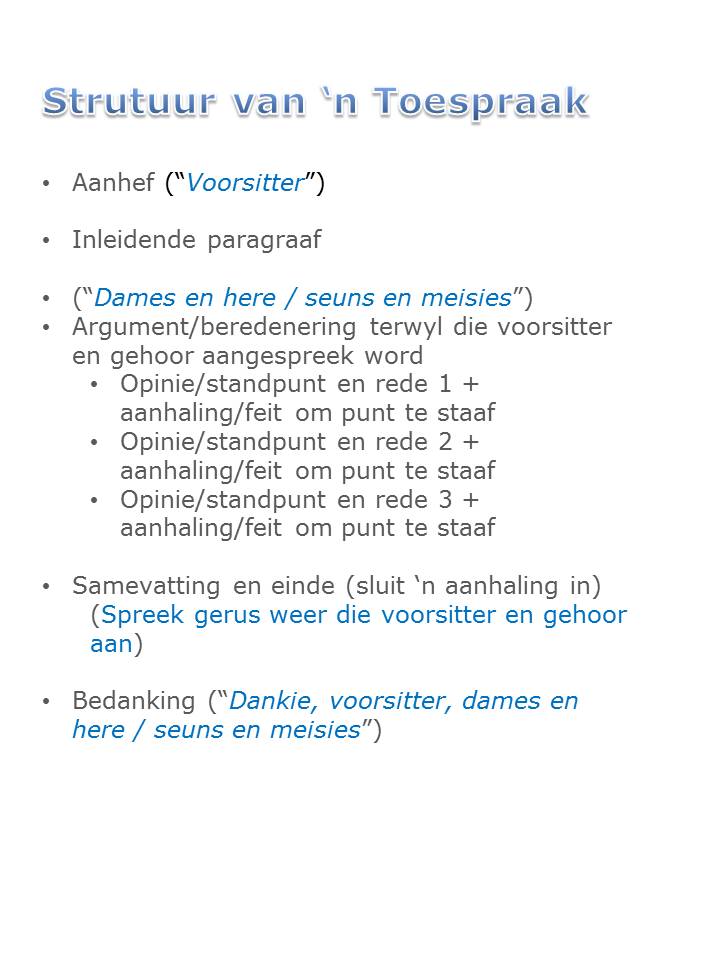
Hier is ook ‘n prentjie om die struktuur vir die kleiner kind te verduidelik, sodat sy beter kan verstaan en haar later te help om haar toesprake self te skryf.

Wenke
(Hierdie is ‘n goeie oefening om deurentyd met jou kinders te doen. Betrek hulle by besluitnemings in die huishouding. Beredeneer dit om die etenstafel. Onthou die reël: vir elke mening MOET daar ‘n rede gegee word. Draai die situasie soms om en laat hulle die teenoorgestelde van hulle mening verdedig. Dit oefen hulle ‘dinkspiere’ en leer hulle ook om empatie met ander se standpunte/omstandighede te hê.)
(Die ‘voordra’ van hierdie toespraak is presies dit – voordrag, so dis baie vol drama en handgebare en nuanses. Laat jou kind die toespraak stukkie vir stukkie memoriseer en soveel as moontlik vir jou voordra. Jy kan hiermee help tot die beste van jou vermoë. As jou kind deurgaan na ‘n volgende rondte in die skool, sal die onderwysers verder help afrig.)
Kinders so klein as twee/drie kan verstaan dat hy een dag winkel toe kan gaan om ‘n swietie of ‘n speelding te koop en ‘n ander dag net mag rondkyk. Ek het dit getoets. As kinders gevolge kan verstaan, kan hulle jou reëls insien. Dit help hulle om nie so maklik rebels te wees nie en om vir hulleself te dink. Ons het denkende jongmense in ons land nodig. Voed asseblief vir ons ‘n paar op!
O, jinne, laat ek ophou voor ek preek.
Nog oefeninge om jou kind te help
| So, mamma, oor ‘n maand is dit tyd vir jou kinders se Engelse toesprake. Jy is nou toegerus om dit self te skryf. Pas net dieselfde beginsels toe. Byt vas, een van die dae leer jy hulle om dit self te doen! |
Daar is regtig nog baie wenke op die internet beskikbaar. Benewens www.atkv.org.za, is daar ook: www.redenaars.co.za, www.storiewerf.co.za, sterredenaars.wix.com, www.watsejyredenaars.com, toespraakhulp.blogspot.com, www.youtube.com
‘n Nagedagte
Daar is ook baie Engelse webwerwe wat uitstekende hulp bied, maar dit verskil van hoe Afrikaanse skole dit doen. Persoonlik verkies ek eersgenoemde meer, want kinders word meer aangemoedig om hulle eie werk te doen, interessante onderwerpe te kies en meer vir hulleself te dink.
Vir hulp om toesprake vir jou kind te bekom indien jy dit steeds nie self wil help skryf nie, kliek hier vir kontakbesonderhede https://fieliesdekock.com/2018/02/14/kontakte-vir-hulp-met-toesprake/
Hulpbronne
As jou kind een van daai oulike, bekkige, dramatiese outjies is en as ‘n kampioenredenaar ontluik, gaan jy baaaaaie toesprake in 12 jaar nodig hê. Leer hulle so gou as moontlik om hulle eie ding doen, maar help altyd met die taal, redenasies ens. en as jy vasbrand, is daar hulp op die volgende plekke.
Videos
http://www.redenaars.co.za/cu4/ATKV-Redenaars-riglyne.aspx
eBoeke
http://www.redenaars.co.za/c4/Skryf-Self.aspx
Koop Afrikaanse toeprake
http://www.redenaars.co.za/c2/Nuwe-Toespraak.aspx
http://sterredenaars.blogspot.com/
Voorbeelde van Afrikaanse toesprake (slegs te koop)
http://www.redenaars.co.za/c3/Bestaande-Toespraak-Voorbeelde.aspx
http://www.redenaars.co.za/c26/Graad-1—3.aspx
Voorbeelde van Afrikaanse toesprake (Gratis)
http://www.storiewerf.co.za/kollig/re_voorbeeld.htm
http://sterredenaars.wix.com/ster-redenaars#!voorbeelde/cov2
Voorbeelde van Engelse toesprake (Gratis)
http://www.watsejyredenaars.com/#!voorbeelde/c24vq
Werkwinkels (Betaal)
http://www.redenaars.co.za/c5/Slypskole.aspx
Hulp met Afrigting
http://toespraakhulp.blogspot.com/2013/02/belangrike-raad-vir-jong-redenaars.html
Kyk toesprake op YouTube
Vir hulp om toesprake vir jou kind te bekom indien jy dit steeds nie self wil help skryf nie, kliek hier vir kontakbesonderhede https://fieliesdekock.com/2018/02/14/kontakte-vir-hulp-met-toesprake/
Voorbeelde van toesprake (Hierdie toesprake is spesiaal vir twee kinders geskryf, so moet dit asseblief nie gebruik nie.)
Voorbeeld 1 Met grysheid kom die wysheid
Voorsitter,
Daar is ‘n spreekwoord wat sê dat grysheid wysheid bring. Is dit so? Dit is soms so. Maar ook soms nié.
Dames en here / Seuns en meisies,
Eerstens is daar ‘n verskil tussen slim en wys. Slim is as ‘n mens baie leer. Jy kan nog baie jonk en baie slim wees. Soos Bill Gates van Microsoft wat dit regkry om die hele wêreld op rekenaars te laat werk. Hy is baie slim, maar ook wys, want hy sê kinders moet baie lees. Ek weet nie of hy dit gesê het toe hy al grys was nie.
Die wetenskaplike, Albert Einstein, was baie slim én baie wys. Hy het moeilike probleme opgelos en ontdek hoe dinge werk. Hy het ook gesê dat verbeelding belangriker as kennis is. Al was hy grys, dink ek nie hy was dan ooit ‘n grootmens nie, want grootmense sê soms anders.
(En), voorsitter, Dan is daar my ouma, Antjie. Sy is grys én slim én wys. Sy is so wys, sy is sommer een van ‘n tweeling. Ouma Antjie kan koek bak en stories vertel en grappies maak en einas regdokter en baie mooi prente verf.
Dames en here / Seuns en meisies,
Daar is altyd uitsonderings. Jesus was die wysste van almal en Hy het hemel toe gegaan vóórdat Hy grys was. En soms as kinders iets ouliks sê, dan sê die oumas:
“Is sy nie te grys nie?!”
So, ek is nie heeltemal seker dat alle wysheid met grysheid kom nie. Maar één ding weet ek! Dit rym!
Baie dankie, voorsitter
Voorbeeld 2 Een vrot appel steek al die ander aan
Voorsitter,
Kan één ou klein appeltjie nou regtig ‘n hele boks vol appels vrot maak? Volgens die Bybel en baie slim mense, kan dit!
Dames en here, Appels en Pere / Seuns en meisies,
Op die webblad – todayifoundout.com – skryf Daven Hiskey dat ‘n slegte appel gewoonlik ‘n siekte het of dat dit oorryp is. Daardie één appel kan regtig al die ander appels om hom aansteek en vrot maak! Hy weet, want hy is ‘n baie slim man wat met met appels werk.
(Maar), voorsitter, Dié idioom praat nie rêrig van appels nie. Dit gaan eintlik oor slegte mense wat goeie mense leer om slegte dinge te doen. In 1 Korinthiërs 15 vers 33 in die Bybel staan: Slegte geselskap bederf goeie sedes. Die Bybel sal weet. Dis die slimste boek op aarde.
‘n Anonieme aanhaling sê dat ‘n mens se gesin jou eerste vriende is. Ons familie is die mense wat ons die liefste het. Hulle sal ons nie leer om slegte dinge te doen nie. So, as ons eerste vriende ons familielede is, sal ons nie vrot appels word nie!
Dames en here / Seuns en meisies,
Meneer George Washington was ‘n Amerikaanse president en nóg ‘n slim man. Hy het gesê dat dit beter is om alleen te wees as om slegte vriende te hê. Maar ek sê, kies van jongs af goeie vriende en jy hoef nooit alleen pret te hê nie! Is ek nie ook slim nie?
Baie dankie, voorsitter
© 2015 – I, Fielies (Riëtte) De Kock tries hard to be a Proverbs 31-woman – excellentest wife, finest mom, greatest lover and successful ‘wordpreneur’ all at the same time. I temporarily share my living space in Cairo, Egypt with my husband, young-adult son, the building’s ginger cat – and the space in my head with way too many ideas and multitudes of story characters to live as a normal functioning human being.
Vir hulp om toesprake vir jou kind te bekom indien jy dit steeds nie self wil help skryf nie, kliek hier vir kontakbesonderhede https://fieliesdekock.com/2018/02/14/kontakte-vir-hulp-met-toesprake/
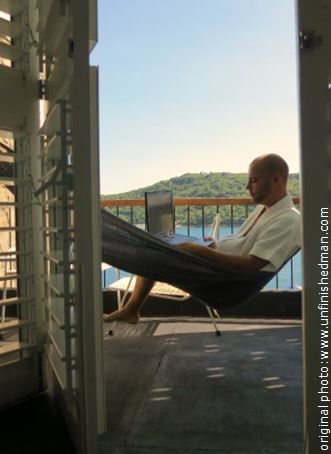
At the end of a year and before the next begins, it is a good idea to spend some time ‘taking stock’ of our lives. During the next few days, get your journal or a notebook, go and sit in a quiet place and contemplate. Then make two lists.
List 1
List the following in your ‘To think about’ list:
Take Time to Think in Between
Take some time to think these things over. If you have gone through an exercise like this last year, go through your lists and mark the things that you wanted to do, but didn’t.
List 2
Make another ‘To do’ list about the following:
Get into Some Creative Action
Enjoy your time of rest.
© 2014
I, Fielies (Riëtte) De Kock tries hard to be a Proverbs 31-woman – excellentest wife, finest mom, greatest lover and successful ‘wordpreneur’ all at the same time. I temporarily share my living space in Cairo, Egypt with my husband, almost-university-student son, the building’s ginger cat – and the space in my head with way too many ideas and multitudes of story characters to live as a normal functioning human being.

I have slowly started to spend time writing again. Now that Michael had finished school I am supposed to have more time, although the functions accompanying Deon’s job here in Egypt distracts me from writing as ‘full time’ as I want to. But, I appreciate and cherish every moment I can use to write. I am working to finish my novel, Change of Heart. It’s at 81000+ words now which makes about 356 typed pages. Not bad, but there’s quite a bit of writing to do still.
I am also reading a book Why Authors Fail by Derek Doepker. (Available from Kindle ebooks at Amazon http://www.amazon.com/Why-Authors-Fail-Mistakes-Self-Published-ebook/dp/B00L9GM1RO) I can tick off almost all 17 of the mistakes he discusses. It is tough to realise that I have so many flaws as a writer and worst is that I knew all these things before I read the book. It is as if he just summarised all my shortcomings in book form. So, aside from writing, I would have to work hard to fix those mistakes and inadequacies. But in the meantime, I have more important things to do. Like writing.
One of the questions asked by Mr. Doepker is why is becoming a successful author important to me?I thought that I should do the exercise and write down my reasons. It will also serve as motivation. So, here’s my reasons:
1. I don’t have a choice. I write because I have to – because I love writing. I have stories and ‘people’ living in my head which have to get out. Some I hope are good. Some are horribly sentimental and will never be written. They would always have to linger oh, so sweetly in the matter between my ears. My poor brain! Writing energises me. When I write, I exercise and I cook and get compliments from my family for the nice food they get. It makes us all feel good.
2. I want not only to write and publish a book – I want to write and publish books. I have written a few books and quite a few longish short stories already – it is the publishing part which lack seriously in the picture of my dream job. I want to be good enough a writer to have at least more than ten books published. For that I need to write more regularly. More and regularly. And I need to muster the courage from somewhere to get the first one published.
3. I want to be a successful author because I think I write good enough stories to receive at least some income from it. This will make me feel useful. Not that I’m not. I am a mom, but the boy is all grown up now and I want to ‘redefine’ myself as a wordpreneur who actually sells my words.
4. By being a successful author I will thank God for giving me the talent to write.
5. I want my husband and son to be proud of me. I know they are already, but I want their pride being expanded to the gifts given to me.
6. I want to get my writing published, because it depresses me when I read or watch programs about other people doing what they are good at and succeed and I have still ‘done nothing’ about my dream. I want to live my dream of being a paid writer.
7. I want my children’s story, Yeovangya, made into an animated movie, because every time I see a new animation movie it frustrates me that my movie is not yet out there – and it take. So. Very. Long. To. Make. Yeovangya is available as a Kindle ebook at Amazon at http://www.amazon.co.uk/Yeovangya-Riette-De-Kock-ebook/dp/B008CP2RQ0. (See, Mr. Doepker, I’m marketing. I’m working on at least one of my weaknesses.)
8. If I don’t at least get one book published, I will feel very disappointed – maybe even a bit like a failure.
9. I must at least try. If I don’t make it, then I know I wasn’t good enough. There will be closure in that. But if I don’t try, I will always feel regret and dissatisfaction. And there’s nothing worse than living a “What if..?” life.
10. If I don’t make it as a successful author of formally published books, I can always keep on publishing ebooks and hope my family and friends love me enough to buy my electronic scribblings for forty Rand or so…
What I have to do now is to do something about the shortcomings listed in Mr. Doepker’s book. And then do my best at succeeding. WOW, this is a very close-to-home confession. Now my big dream is out there for the world (or the few loyal family and friends at least who actually read my blog) to see and hold me accountable.
Eish!
I, Fielies (Riëtte) De Kock tries hard to be a Proverbs 31-woman – excellentest wife, finest mom, greatest lover and successful ‘wordpreneur’ all at the same time. I temporarily share my living space in Cairo, Egypt with my husband, almost-university-student son, the building’s ginger cat – and the space in my head with way too many ideas and multitudes of story characters to live as a normal functioning human being.
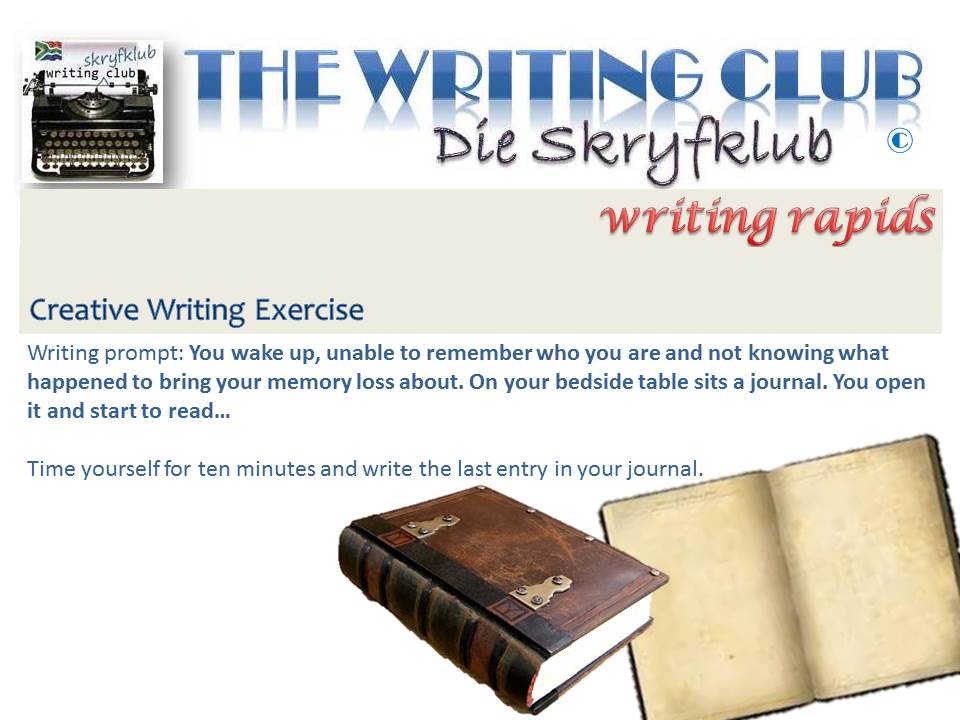
Click on pic for better viewing
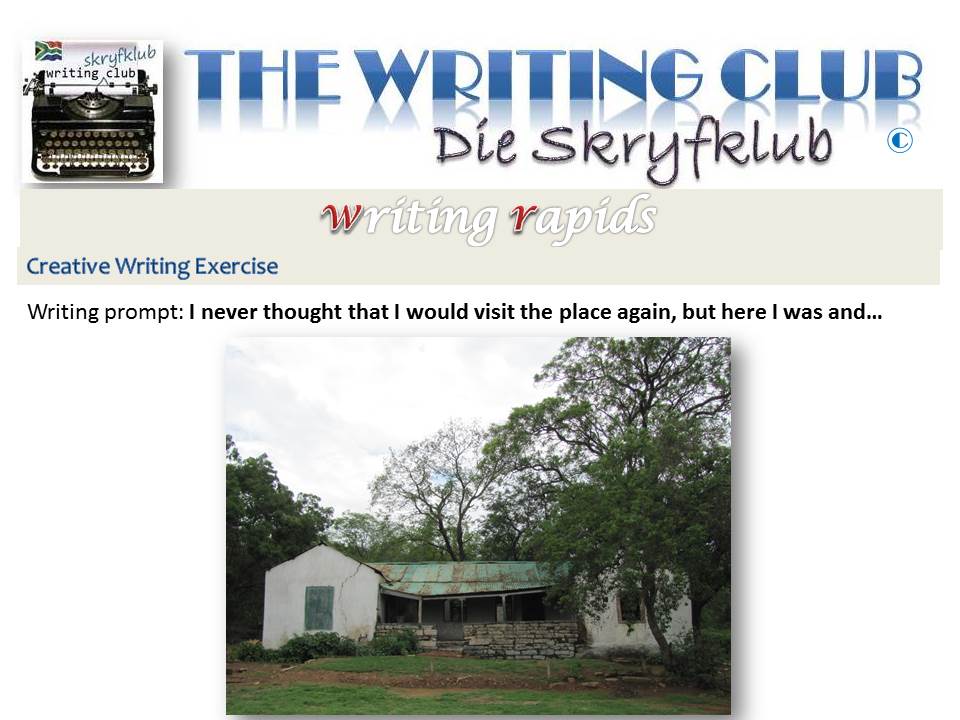
Click on pic to enlarge

Click on the pic for better viewing
c 2014 Riette De Kock
Another creative writing exercise for you:
Click on the pic for better viewing
c 2014 Riette De Kock

Click on the pic for better viewing
c 2014 Riette De Kock
Let’s get The Writing Club © Facebook page buzzing!
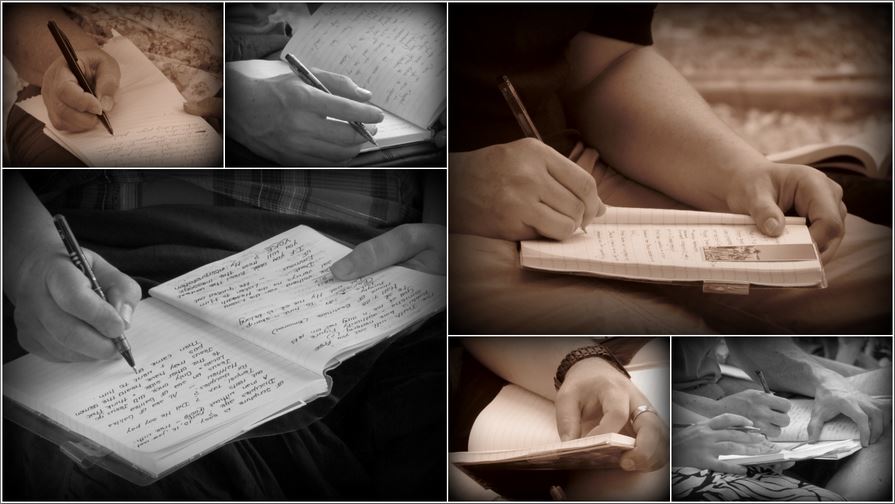
I never travel without my diary. One must always have something sensational to read on the train. – Oscar Wilde
(Read the previous blog – Thinking about Life – entry before this one at https://fieliesdekock.com/2014/03/17/article-on-writing-thinking-about-life/.)
People keep journal for different reasons and therefore there are various kinds of journals, such as spiritual journals, therapeutic journals, ideas journal, memoires, personal memories, research journals, journals keeping track of illnesses, art journals, travel journals, thank you journals, etc.
Why do People keep Journals?
The function of journaling is to keep record of information (or statistics/thoughts/memories etc.) regularly for later use.
The difference between journals and diaries (according to the website http://42explore.com/journl.htm) is:
A journal is a continued series of writings made by a person in response to their life experiences and events. Diaries contain a description of daily events. A journal may include those descriptions, but it also contains reflections on what took place and expresses emotions and understandings about them. It doesn’t matter what you call your writing, either a diary or journal, as long as you see the distinction between these two ways of writing.
Different journals have different styles. In some journals, like that of a researcher, a therapist, or a traveller, the writer must be meticulous about recording facts accurately to write academic papers, truthful articles or medical reports later on. In other journals used to record memories or spiritual growth feelings, emotions and thoughts play a more important role.
Examples of Journals
One can almost record anything in a journal and although there are more types of journals, we will look at only a few.
Spiritual Journals. Prayer requests (and answers) and notes on one’s personal spiritual growth, conversations with our Father in heaven and life lessons learned, are the basic aspects recorded in these journals.
Therapeutic Journals. Psychologists and patients can both keep record during therapy. Therapists will write entries about their patients’ progress and treatment, while patients will write down their emotions and thoughts and also about their physical wellbeing and/or symptoms.
Ideas Journals. It is a good idea if you are/want to be an artist, inventor or a designer to keep a journal where you can dot down your ideas. Painters or song writers find this extremely helpful. In today’s busy life, we tend to forget easily, but when you use a journal, all those wonderful ideas you have won’t go to waste if it is penned down immediately. These days, digital devices such as cell phones, laptops, iPads and tablets have memo pads, voice notes and apps available which come in handy to quickly type or record a thought for later use.
Memoires. Many people, especially famous ones, want to write their memoires or autobiographies in the future. Keeping a journal helps one to preserve important memories. (Keep in mind that there is a difference between autobiographies and memoires.)
Research Journals. Scientists, archaeologists, journalists, statisticians, mathematicians etc. normally keep journals wherein they record their research and findings for later use.
Progress Journals. Teachers, scientists, project managers etc. use journals when monitoring the progress of projects.
Medical Journals. People who are seriously ill use journals to keep track of symptoms, treatment, reaction to medicine, etc. Doctors do the same when monitoring illnesses or researching new treatments.
Art Journals. Artists use journals to plan paintings, write down ideas for art pieces etc. It helps them to plan projects which they cannot work on right away.
Travel Journals. Journaling helps travel writers (or just for-fun travellers) to write down important notes while travelling, on detail such as routes, costs, contact numbers, addresses, web site addresses, names of people and places etc. They can also use their journal to keep track of pictures taken.
‘Thank You’ Journal. Some people like keeping a journal of the things they are thankful for. It is a wonderful way to learn to write regularly and it also helps a writer to always be on the lookout for something to write about and a good way of learning to be thankful for what you have.
Dream Journal. Some people record their dreams in their journals just after they have woken up. Some dreams have meaning and it helps people to write down their dreams before they forget them.
‘Diary’ Journals. It is a journal containing daily events, thoughts, feelings, dreams and sometimes, even secrets and is normally the first step in journal writing people start at a young age.
Tips on Journal Writing
You don’t have to limit yourself by having a separate journal for every different aspect of your life. You can use only one book to record all the different facets of your life. I have two journals – one for my personal thoughts etc. as mentioned above and another that I use as a notebook for writing poems, jotting down story ideas, planning dinners and recording admin. That way I only grab one book when leaving the house and I don’t need a trailer to transport all my journals every time I go somewhere.
I also have a WhatsApp group with myself (with my phone and tablet names) where I write when I have no other way. That way I can transfer my thought electronically to my journal when I get home without having to type it again.
Did you Know?
Famous People who Kept Journals
Who knows, maybe one day, I will add your name in an updated version of this blog…
Creative Writing Exercise
Write a 10-minute journal entry in your current journal or in a note book if you don’t have a journal yet. Write from your heart. You can write about something you did or about something that you feel sad about or something that makes you very happy or something that you are thankful for or all of the above! Or write down your love story, or write about your dreams, places you want to visit etc.
Some Last Notes
Remember to write the date with every entry.
Try to make at least two journal entries per week from now on. Schedule a special appointment with yourself on a Saturday/Sunday afternoon and one week morning/night.
Happy journalling!
(Read the previous blog – Thinking about Life – entry before this one at https://fieliesdekock.com/2014/03/17/article-on-writing-thinking-about-life/.)
©2007 Riëtte de Kock

* This blog entry is introductory to next one about journal writing. Read it at https://fieliesdekock.com/2014/03/17/article-on-writing-journal-writing/
To be a good writer, one must have a ‘writer’s voice’. To have a ‘writer’s voice’ it is important to have opinions about lots of things in life. To have opinions one must spend a great deal of time thinking about various subjects and issues.
We are Spirit within a Body
A human being is not only a piece of meat filled with bones and blood and water. Man consists of body, mind and spirit and soul. We are complicated beings. We must understand that we don’t just have a body to look after, but also a spirit/soul/mind. Not only needs our body to be fed with food, but our spirits also need food. Most people are religious and believe in some or other god. I for instance, believe in the Living God of the Bible. So for me to become a whole human being, I need more that only food for my body. I need to learn of and communicate with God in order to feed my soul/ spirit. We are spiritual beings in fleshly bodies.
Making Sense out of Life
Sometimes things happen that don’t make any sense to us and true to our human nature, we want to make sense of it. Sometimes we talk to a trusted friend about it and sometimes we keep it to ourselves. It happens to every person at some stage. It is good to talk to someone about our problems and worries and concerns. But sometimes there isn’t anyone to talk to. Or we don’t want to talk to anyone about certain things. What to do then?
Dreams and Goals
Apart from experiencing things and having fears and problems, we all have dreams and goals in life too. Those dreams and goals will not just happen without us doing something to make it happen. Therefore it is good to think about the things we want from life and write it down – because when we write things down, they start to become real in our minds.
If you don’t think about life and what it is that you want to do, then you will probably end up doing whatever comes along and not what you are supposed to do with your life.
We all have different dreams, talents and passions. Unfortunately, there are many people today who don’t know what their life’s dream is, because they never take the time to think about life and to learn to know themselves. Don’t let that happen to you.
It is therefore important that we learn to know ourselves – our dreams, talents, passions, short falls and behavioural patterns. Just as a sportsman have to practice every day to become fit and to master every bit of skill there is to master in his sport, so we have to ‘practice’ every day to become the best we can be.
Only you can be you, so be the best you you can be.
(Yes, I know it sounds cheesy and I don’t know if someone else had said it before.)
How do we go about Becoming the Best we can be?
By thinking – thinking about ourselves, our behaviour, the way we handle things and the way we don’t. By thinking about things that are important to us, things we don’t like or things that we do like. By thinking about what we want to do for others and for ourselves. And by thinking about our points of view on different issues we hear about on the news, such as global warming, abortion, human rights, world politics etc.
Make Time to Think
These days we seem to be too busy to think. We have school or work, sports, chess practice, piano or violin lessons, extra maths classes and then we still have to watch TV and DVDs, listen to music, go to the movies, keep up with our Facebook and Twitter friends and do homework. It’s exhausting!
We don’t have time to become quiet and listen to ourselves. That way we get used to other people thinking for us and making decisions on our behalves. Teenagers wear what Hannah Montana wears and listen to Justin Bieber because they are told to listen to him.
Children make their parents buy them toys they can’t afford, because the TV ads say that everyone must have them. But do all girls really like to look like Hannah or like to listen to Justin or do children really need those expensive toys?
Most children today don’t know the answer to these questions. They just do as they are told because they don’t know what they really like, because they don’t think for themselves.
The same applies to adults.
Introduce Yourself to Yourself
I want you to make a stand and change all that today. I want to encourage you to start thinking for yourselves.
Make time every day to spend thinking. It can be early in the morning (if you are an early bird) or in evening before going to bed. Or somewhere in between. Go to your room and switch off everything so that you can hear the quietness. (And leave your cell phone in another room.) Or go outside and sit or lie on the grass or sit on the porch. (And leave your cell phone inside.) Just be quiet and allow your thoughts to flow naturally. Eventually you will start thinking about the things that are important to you. Keep a notebook or your journal close and write done things that you don’t want to forget.
A Few Exercises to get you Started
Creative Writing Exercise
By doing a few of these exercises you will be ready for the following blog entry on journal writing. Read it at https://fieliesdekock.com/2014/03/17/article-on-writing-journal-writing/
For more writing related articles, follow The Writing Club / Die Skryfklub on Facebook at https://www.facebook.com/thewritingclubdieskryfklub/?ref=bookmarks
©2007 Riëtte de Kock

Business owners sometimes spend so much time finding ways to increase their profit that they forget that it is not the only aspect ensuring a successful business. Often when reading through advertisements or brochures of SME’s and even large, well-known companies one finds the quality of writing notably lacking.
Companies spend lots of money and other resources on marketing and branding, but not enough is done to ensure that promotion activities are not undermined by the inability to communicate effectively. With a little bit of effort a business owner can change this.
Spell checking
Teach all employees to activate and use spell checkers on their computers. Ensure that ‘English South Africa’ is chosen as the default spell checker for everyday use. Use ‘English U.K.’ or ‘English U.S.’ for documents sent to the U.K. and U.S.A. respectively or the language choice for any other languages used.
E-mail etiquette
Apart from encouraging employees to avoid sending and receiving personal e-mail at work, introduce the following guidelines for efficient and professional communication via the Internet:
· Include a signature below every outgoing e-mail, consisting of the staff member’s name, contact details (telephone, cell phone and fax numbers, e-mail, web page and Skype addresses) and the company logo and slogan.
· When employees are on leave or away on business and can’t access their e-mail, activate the ‘out of office’-reply.
· Write in full, well-structured sentences.
· Spell check all messages before sending.
· Use a professional, formal writing style for all external communication.
· Use the ‘Bcc’ function in the address box to keep clients’ e-mail addresses confidential and secure from companies or individuals who steal and sell address lists and also to prevent unwanted incoming e-mail to clutter the company server.
· Use the ‘read (or received) receipt’ function to keep saved records of sent e-mails.
Websites
Apart from being updated regularly, all content for uploading on the company’s website must be checked for spelling errors, statements and advertising that can cause legal action against the owner. Make sure that quotes are the original words of the person quoted and that all other information given is factual. Check the accuracy of the contact details every time when the website is uploaded. Test every button and every link on the page before uploading.
SMS Messages
Use full sentences and proper spelling in all SMS communication.
Terminology and Names
Compile a list of distinctive terminology used in the company or sector of business, standardise it and make it available to all employees. Include clients’ and companies’ names and abbreviations of companies and organisations and update the list when needed.
Presentations
Spend money on presentation designing courses for employees who need to make use of presentations regularly. Encourage users to spell check all presentations.
Start a Company Newsletter
Promote the esprit de corps in the company by sending out a monthly newsletter, encouraging employees to contribute. The newsletter can be used to:
· Convey company policy;
· Communicate new developments and research in the field of business;
· Publish company news and successes;
· Run competitions between departments or individuals and challenge employees’ Creativity regarding problem solving; and
· Announce the implementation of new work procedures.
The company newsletter will also improve contributing employees’ writing skills and give the staff some pride. Set apart a section for not work related issues such as book and movie reviews, announcements, advertisements etc.
Encourage Employees to Read
Employees can improve their skills by reading books and articles on work related subjects. Reading will also develop their writing skills and ability to spell accurately, which will have a positive reflection on the company.
Proof-reading and Editing
Improve the company’s image by investing in professional writing, editing, translation and proof-reading services to ensure immaculate external communication. When the company can afford it, an in-house department can be dedicated for this purpose, which will save money on the long run.
Crash Courses for New Staff
Initiate new personal with a one-day workshop by introducing them to the company’s writing style, rules and regulations.
Stay updated
The rules of language change as writing inventions and technological developments change worldwide, introducing new words in English and other languages on a regular basis. Workshops to update employees on language terminology and tips regarding writing skills can be conveyed via e-mails and/or the monthly newsletter.
Desktop Help
With today’s advanced technology it is easy to install dictionaries, thesauruses, currency converters and other helpful aids on every computer desktop. This will aid staff in checking spelling, the meaning for difficult words, currency abbreviations etc.
With a bit of company effort, training and the technology available, no person on any step of the proverbial corporate ladder has any excuses anymore for not writing properly.
© 2007 Riëtte De Kock
I am trying hard to be a Proverbs 31-woman – excellent wife, finest mom, greatest lover and successful entrepreneur and freelance writer all at the same time! I share a living space in Pretoria, South Africa with my husband, son, mother, four dogs and sometimes the neighbours’ cats – and my head with way too many ideas and multitudes of story characters.
Visit my website at www.thewritingclub.co.za and buy my children’s ebook, Yeovangya, on Amazon Kindle at http://www.amazon.co.uk/Yeovangya-ebook/dp/B008CP2RQ0
My Afrikaans blog is available on my website – or just click on this link: http://www.thewritingclub.co.za/writingclub/index.php?option=com_lyftenbloggie&view=lyftenbloggie&category=bloggies&Itemid=66
This article may be used only in free publications and with both the copyright and the author’s bio included.
 Fielies (Riëtte) De Kock