This is NOT an AI Hate Article – It’s Just an Appeal to Survival

Written by a human

100+100 Words: Since being on the towards-hundred-side of 40, I too started reminiscing on memories of things past. This is not on purpose – it seems to happen by design. I remember an innocent time when children played in mud and climbed trees and collected anything from erasers to stamps and writing block pages as hobbies and I remember – tearfully – family and friends who are not here anymore and friends who had emigrated for their children and are now left by their children. And sometimes I even wonder if the memories I have, are mine or if they’re from books or made up.

Today we – once innocents – are up against intelligence generated by machines. We have more knowledge available at our fingertips than any other generation before us. But it made us lazier and dumber. AI is the next buzz happening and it’s a bigger threat to human creativity and originality than anything ever before. And like the phenomenon of smart phones, we will let it take us over – willingly. But let’s fight back. Let’s do real things again, like crocheting and drawing by hand. Let’s write emails and essays using our brains, because if we don’t, soon we won’t be able to anymore.

10+10-words Takeaway: Let’s live for real in an artificially-driven world, so that we have real memories to reminisce on when we’re old.

Read the previous 100-word Pondering here.

© 2025 Fielies De Kock

Fielies De Kock is a freelance content writer/blogger (www.fieliesdekock.com) living in Hermanus in the Overberg, South Africa, with her crazy-haired husband and two dogs. She authored a children’s chapter book and a few short reads and is co-author of 125 Creative Writing Prompts for Petrolheads (available on Amazon Kindle) with her content writer son – who also has crazy hair.

How to stay on the Write Track During Lean Writing Times

Warning: This is a long read.

(Replace ‘Writing’ with your Craft – the Principle Stays the Same)

Written by a human 😉

We, as writers (or any creatives), make a point of learning as much about our craft as we can. And, probably, our greatest challenge is to have a regular writing routine – a schedule to help us to get all our wonderful words onto paper and try to get it published, so that we can entertain people, and in the whole endeavour aim to earn a few bucks. And in doing so realising our dreams. Of course, we have a lot of other challenges, but building a habit of writing regularly is probably the one thing writers struggle with the most, because we are not just creatives – we are normal humans too, with normal human stuff to be done – which can absorb all of our writing time.

I too read and watch a lot of videos about successful writers’ routines to see what and how they do it. And yes, I even saved up some hard-earned money to subscribed to Master Class for a year – which cost A LOT in South African currency.

I’m often jealous of successful authors’ discipline and their productive writing schedules. One writer whose prolificness is really mind boggling to me, is Alexander McCall Smith, who, by the way, is one of my favourite authors – and who I recently had the privilege and pleasure to meet in person in my own little village! I love his beautiful prose and have read a lot of his books so far. He has written more than 100 novels already and publishes four to five books per year in four different series. That’s quite a bit of writing, yes!

During my life so far, I too struggled to have a good writing routine. Most of my writing when I was younger, happened on a Sunday afternoon while most people in the household took a nap. (I’m not a day sleeper.) Since, I had only been partially successful in establishing writing routines of my own – during different phases of my life. And this is what I found influenced my writing routine most in my life – life phases.

This piece is not about identifying or making excuses about not having time. We all have reasons and excuses – lots of them – of which some are very valid and some not that much.

Apprentices in Life

We learn most things in life from watching others. Wannabe writers tend to read about or listen to successful writers’ writing routines and try to imitate them. (There are lots of videos on YouTube about writers trying out the writing routines of Stephen King, Neil Gaiman, etc., in which they then tell what they have learned while trying it.) And although it is important to learn from and imitate the successful best, it’s unfair to compare ourselves to authors who do it professionally for decades already. Some authors write for more than eight hours a day – in different sessions during the day. They do it, because that is what they do for a life. It’s their full-time job.

Unfortunately, for most of us, still living in WannaBeAnAuthorville, hoping to be on the bus to IamASuccessfulAuthor City – still have to steer ourselves through normal family and work life, while trying to achieve our writing dreams.

And this is where the subject of life phases comes in.

Life Phases are Real – Very Real

I started writing before I could even form letters. (Read about it here.) . I toddler-scribbled in a notebook and imagined that I was writing stories. I would even read them to my dolls, all lined up on the couch for story time. My biggest frustration when I was four and five years old, was that I couldn’t write real words yet. In South Africa we only go to ‘big school’ at age six and in my day, in the small town I grew up in, pre-school wasn’t a thing yet.

Eventually the school phase came, and I learned to write and read, and I could finally start to write stories. In primary school, story writing was limited to writing essays in school about ‘My Holiday’ or ‘My Family’. In high school though, we had great language teachers who gave us a bit more challenging subjects to write about. I loved essay writing and even wrote four friends’ essays for them on a regular basis. Unfortunately, I wasn’t much of an entrepreneur, so I didn’t charge them for suddenly getting A’s – as I should have had! But the reward when getting the marks back was payment enough at that stage.

A New Phase – A Life Dream Started

Staying in a high school dormitory, we sometimes had time on our hands, and I started writing stories with friends in exercise books. We were about 15 years old then. The stories were sweeter than honey and drippier than sugar cones, but it didn’t matter because it taught us to start and finish longer pieces of writing. We later had a whole carton box filled with our ‘books’ and it became a small ‘library’, which some of the other girls borrowed to read. Unfortunately, at the end of our high school years we thought our stories too immature (which they of course were) to keep, and discarded of them – which was a pity, because they would have been really cute souvenirs of the humble beginnings of a few wannabe authors. I don’t have intimate contact with my high school ‘author colleagues’ anymore, so I don’t know if any of them still writes, but for a short while in our teens, we were a little society of writers, which felt fanciful. I went on to write and I sell articles and have a few self-published ebooks on Amazon Kindle (link here) but so far that’s it. (The rejection letters gotten from the real publishing industry is the subject of a another piece of writing on another day.)

With that life phase over, I meandered on to studies and work and married life – as most people do. For writers, this phase can be both friendly and enemy-like.

Life Phases – A Writer’s Friend or Enemy?

Life phases are facts of life. Everybody goes through them – no matter what your path is or what life choices you make.

On a friendly note, life phases gift us with experiences, thus, they give us something to write about – something to fall back on when we craft our protagonists and antagonists and side-kicks for the novels we hope will make it big one day. They add depth to our article and blog writing, because without experiencing life, a writer won’t be able to ‘move’ his or her readers. Because only when we really feel as we write, we can make others feel too.

The same argument applies for helping others through our writing. Writing about grief must come from a place of experience, otherwise it would be empty and unbelieving. Writing about falling in love, without ever having being in love, will probably not result in believable writing. Writers need the experience of life phases to be reliable witnesses.

So, life phases help us build the knowledge we need to become trustworthy wordsmiths. No matter how unbelievable one’s fiction ideas might be, if written from conviction, the account becomes authentic.

On the opposite side, life phases keep us very busy and often distract us from writing as regular and as much as we want to. During our student years, we might have time for writing during off times, but our priorities might be focused on totally different goals. And once married and having children and juggling a job in between, we rarely have the time to spend on writing.

Throughout my life, I time and again tried to fight to find regular writing times, while managing the business of life. Oftentimes, I succeeded to an extent and became quite productive – which I enjoyed while it lasted – only to move into a next life phase and having to start all over again!

This happened to me repeatedly and every time one must start from the beginning. And starting over, means getting used to new circumstances and finding time within these changed circumstances and environment to carve out a writing routine of sorts.

Life phases Are not Set in Stone

About a decade ago, I ran a writing club for children, and I wrote regularly myself too. I had quite a rhythm and a routine, all while having a full-time homeschooling teenage son and an ageing parent in the house. I was looking forward to when our son would be finished with school, so that I could fully concentrate on ‘my writing career’. Finally, there was a life phase holding the promise of that!

New Unplanned Life Phases Can Arrive Unexpectedly

One afternoon, my then still-soldier husband came home and announced that we are relocating to another country for his last few years of service. And just like that, we were kicked into another (and unexpected) life phase while managing our son’s final school year ‘on this side’. I had to stop in my tracks again. The writing club had to end and of course, my personal writing ambitions was suddenly limited to journaling, blogging and WhatsApp messaging friends and family. Only after arriving and adapting on the other side, could I eventually get my time organised again. Or a bit at least.

I kept working on my novel, wrote short stories and fell in love with flash fiction (Drabbles – 100-word stories – to be precise). I tried a few things writing-wise, but nothing much successful happened. I started looking forward again to our next life phase, when my husband would be retired, and we would have more time to ourselves. And oh my, did I have plans! Finally, I would have that dreamt-about-plenty of time to just write.

Life phases Are not Set in Stone – Take Two

As it goes with moving from one life phase to another, this new phase took surprisingly much effort to adjust to. Because all those wonderful things one dream of, isn’t all you get. With retirement comes changes. Lots of it! You’re suddenly not working, you feel useless and one wakes up in the dark morning hours with questions such as “What now?” And “Who am I now?” And “What is my purpose now?” And “Do I have any purpose anymore? And eventually, “Am I not to old now to make it in writing? And eventually, “Do I even want to write anymore?”

To suddenly have time on one’s hands is a bit like coming into money unexpectedly and not knowing what to do with all of it. And then you start wasting it, because you have so much of it and you don’t appreciate it enough. Your days become unconstructed, unplanned, unroutined. And they merge into one another without you knowing what you have done the previous one or what you are going to do with the next.

And after many heart-to-heart talks between irritated, unsure spouses, a blessing in disguise happens – Covid. The useless-feeling husband, stripped of crises to handle, suddenly have some crisis to handle and some leading to do and snaps back into becoming his old self again.  And slowly the dream life phase turns into a dream again.

So, COVID brought a bit of order for us, where I know it brought chaos and/or disorder and/or grief to many others. As everyone else, we baked and cooked and planted. And like every other writer, I wrote. I wrote blogs with tips on how to survive the tough lockdown. And sent out a series of writing prompts and did a lot of other writers’ prompts myself. Our son and I even co-authored a writing prompts book for petrolheads (link), which we started on a plane somewhere over the Alps years earlier. And slowly I got to a place where I wrote more and more. I even started selling articles again and thought I finally had something going.

Surprise, Surprise – Another Unexpected Life Phase!

And just when I thought that I had a routine figured out, our current dream life phase changed. Again. Opportunity came knocking and we answered and like many people do after retirement, we suddenly found ourselves working again – and just to keep it incredibly complicated, this work took us to another country. Again. Only for three and a half months, they said. We stayed six. And six in the second half of the following year also. So, in practical terms, my writing routine took a two year hiatus. Ouch. Ouch. Ouch.

That was where I found myself writing this. Sitting in yet another country in another life phase – working away from home. And I am unanchored, uncreative, unfocussed, missing our dogs, our home, our town and our wonderful new-found life. The work we were doing was, unlike creative writing, only draining energy and giving nothing (except very welcome monetary compensation) back. It was just tiresome – physically and mentally. Other factors add to the discomfort, like issues with colleagues, heat and very dry and what felt like oxygen-less air, which affects one’s body in various ways. (This sounds like moaning, but it isn’t – it is just sketching circumstances.) I am actually very, very thankful for the opportunity we had to do it, because it rid us of debt we accumulated due to a parent’s dementia care.

Finally Getting to the Point – How to Stay on the Writing Way

So, that was a long introduction to getting to a point of answering the problem stated: How to stay on track during lean writing times?

How do you stay sane and focussed and keep writing when you literally don’t have time to do it? The short answer is – in the same manner one gets any other big or overwhelming task done: By doing it in small quantities, in short bits – or in our case as writers – one word at a time. Because words become sentences, becomes paragraphs, becomes pages, becomes chapters, becomes manuscripts, becomes books.

It’s really simple – but not necessarily easy. If you can’t do something big, do something small – but try to do a lot of it.

I am no expert on anything really – least of all writing success – and I have threatened myself by myself and in public (in our home) to stop trying altogether. Only for my wise husband and beautiful son to tell me that I won’t stop and that I should keep writing, even if I do it just for myself. I found that they were/are right. I cannot NOT write. Even if it is in down times and I only write (very) irregular entries in my journal (electronically). But I keep writing. And yes, unfortunately, apart from a few sold articles etc., I still only write for myself. And that is okay. For now. Maybe, just maybe one day someone will pay to read something (like a novel) of mine.

In his MasterClass, David Baldacci says that every person that should be a writer, will be a writer. I didn’t breathe for a few moments when he said that and I’m still not sure if this encourages or discourages me, but somehow, I find peace in those words. In the meantime, I will continue to write. Maybe, who knows – if I should be a writer, I will be.

So, how do we Practically Keep Writing in Times that we can’t Really do it or don’t have Time to do it?

Fortunately, I am blessed with the ability to be able to concentrate anywhere and that helps me to at least be a bit creative (with the emphasize on ‘a bit’). Because if I’m not creative, I go a teeny-weeny bit mad. I always must have something to do. When sitting in meetings, I doodle. When talking on the phone, I doodle or play a non-thinking game. When watching TV even, I am crocheting or knitting or drawing or designing on Canva. So, while working on this energy sapping project, I’ve decided that I need to make time to do some creative writing – even when there is no opportunity to take hours or days off to write. This is where one must have a bit of a criminal mind, because if you don’t have time and cannot make time – you have to steal it!

This is literally what I was doing writing this. While my very capable colleague was presenting the class, I wrote this. Fortunately, I don’t need to interact in any way in the class, so, I stole this ‘dead’ time to create something. For my sanity. And for the sanity of those round me.

Normally, while on a road trip, working, or in a meeting or just before going to sleep, an idea would present itself out of the blue, and I will just grab my notebook or open my WhatsApp writing group I have with myself, and I would act on the idea. I wrote an 18-page children’s story (by hand) while sitting in a lecture the other day. (I had to attend, but the lecture wasn’t presented on my behalf – so no harm or disrespect there.) I then went on and wrote three more stories of the same length in the days following! On many other occasions I would spend five minutes to write a quick flash fiction story (like a Drabble). I’ve amassed quite a few so far. I’m intending of self-publishing an ensemble in the very near future.

Create Every Day – even if it is Minute!

So. I try to do something creative everyday – even if is something very small. To do this I create do-able goals and keep record of my daily creative processes. At the end of each month, I look at the record I kept for every week. If one is successful in writing something (no matter how little) only twice a week for a month, you already have a bit of a routine – and that is an amazing achievement in lean writing times! Not only do you build up ‘stock’ for you writing ‘enterprise’, but seeing that you have at least accomplished something, is very good for the mood and one’s overall mental health in general and there are ways to keep going!

Ideas for Small Writing Projects if you can only Manage to Steal Small Moments of Time

  • Keeping a personal journal is the best way to help you create a daily writing routine. Choose a time of day (or even week) when it is convenient for you to write, but keep to it maybe for before going to bed or first thing in the morning. Or set an alarm at a convenient time of day. That way it will eventually become a habit (while working your way up to a daily writing routine). Many a diary entry of mine had turned out to become blog entries, and basises for writing articles and stories. Journal entries doesn’t have to be pages long. Two sentences will suffice. And if you don’t write for a week or a month or even two – don’t stop! Just keep going on where you left off. It’s your journal after all!
  • If you love writing poetry, try writing one short verse of poetry every day, until you have a whole poem at the end of the week or weeks. If you don’t or never have written poetry, try your hand at it. It will build new brain paths and even make you feel better (more productive). Poems also help when we have a bit of blues – so explore your poetic side a bit.
  • If you’re a fiction writer, write flash fiction. Set a goal to write one flash fiction story every day – or just every day of the week/weekend for a start. It might be anything between six and 500 words. If you manage to steal more time, write one or two more for the day, it will help you to have a stash of new stories at the end of this dry time, and – when you finally get out of it, you have something to show. Lean writing periods are perfect flash fiction ‘stock building’ periods. Some of these flash stories, might even become the basis for something longer.
  • Another piece of writing that doesn’t have to be very long is character writing descriptions for a story that you are busy working on or want to write. Working on this will help a lot when you finally get to write the story, and then half of the work is already done.
  • Have your notebook with you at all times and when you have quiet time or is bored during work time, and you can get away with it, think about ideas for stories and jot them down immediately. (Because by tonight or tomorrow you will have forgotten it!)
  • Use a few minutes per day and think of plot ideas for the story ideas that you already have jotted down in your notebook. These plots don’t have to be set in stone. They are just initial work to get yourself thinking about your story. This way you give yourself time to brood on plot difficulties and fix problems. It doesn’t matter if the plot lines suck initially. Fixing them is wayyy better than having nothing to fix! When you have a plotline going, start working on an outline for the story.
  • If you are really stuck and don’t know what to do, look on the internet for writing prompts or just open the nearest book you have close to you and choose the first sentence you read, as the start or finish for a flash fiction/short story. Alternatively, do some of the prompts in this exercise – https://fieliesdekock.com/category/on-writing/.

Get Doing!

It doesn’t really matter what you write – as long as you make time every day to write just a little bit and on the days that you don’t write, do something creative, such as needle work, gardening, model building, Lego building, painting, etc.. Cook or go for a walk or a swim, listen to music or visit a friend (or make that call to a friend you have put off for so long). Walking is very good for letting one’s thoughts just flow and often when walking, we relax and the things that bothers us, just resolve itself in our brains and thoughts. This is a good time to get plot issues resolved. Long or shortish road trips also does the trick for me.

Whatever you choose to do – just do something! It will surprise your brain and your body and soon enough the creative juices will be flowing again. Agatha Christie used to say that ideas come to her and plot issues solved themselves while she washed the dishes. If you’re desperate, try it!

In lean writing periods like the one I was in now, it makes no sense to set big, unmanageable goals. We all know that unrealistic goals lead to disappointment and dejection. Spare yourself that. You ARE NOT a superhuman. Stop treating yourself like one! Before I get too preachy, I will rather end with a quote:

Small things over time, can get big. (Austin Kleon from his book, Show your Work)

As I mentioned above, I stole time here and there to write this blog post during a really, really busy time. It is a testimony, to proof to you that I know what I’m talking about and that it can be done! No matter how busy we are – we CAN find five minutes EACH day to write something – even if we have to write a long piece like this, word for word, paragraph by paragraph every other day.

No apologies. No excuses. Just write – wherever, whenever.

PS: Doggy Bag/Take Away

Whenever we write articles or blogs trying to advise or teach people things – writers can make it sound so easy. But – to turn something into a success never comes easy. Most things worthwhile in life takes effort, self-discipline, routine and resilience.

(Remember this formula: Success = self-discipline + routine x repetition)

Realisation of one’s dreams does not happen while sleeping in daily, lying on the couch watching TV or playing games (and fulfilling other people’s greedy dreams). For dreams to come true – we actually need to do the work. No one else is going to hand us anything for free – or offering us our dreams on a plate, because they are too busy realising their own. Only we, ourselves, are responsible to work towards realising our dreams.

Success (like respect) isn’t inherited or gifted.

It is earned.

© 2025  Fielies De Kock

Fielies De Kock is a freelance content writer/blogger (www.fieliesdekock.com) living in Hermanus in the Overberg, South Africa, with her crazy-haired husband and two dogs. She authored a children’s chapter book and a few short reads and is co-author of 125 Creative Writing Prompts for Petrolheads (available on Amazon Kindle) with her content writer-morphed-into-estate agent son – who also has crazy hair.
How to Do Creative Writing Exercises Using your Favourite Novel

(Note: This article was written by an actual human )


Category: Writing Prompts & On Writing 

  • A few things are as useful as a good writing prompt to get the writing juices flowing. Many writers use writing prompts to get rid of temporary writer’s block or even to fix difficult plot issues in their novels.
  • There are many books and websites offering writing prompts, but if you are stuck and want to have some fun, try this one, in which you can use one of your favourite or just any old novel from your shelf. Make sure to choose one that you have already read as not to spoil your reading experience later if it is a not-yet-read novel.
  • This exercise is a great around-the-table activity to do during a family holiday, a friends weekend break away, at your writing club/circle or book club and also in the classroom at school. It is fun, creative and pushes writing boundaries.
  • Because there are many prompts, it can be done over the span of a few writing sessions.

Have fun!

Instructions

Get a novel from your book shelf and follow these prompts:

  • Exercise 1: Open randomly on a page and point with your finger to a word. Repeat this twice more and then use the three words in a 100-word story.
  • Exercise 2: Use the 5th sentence of Chapter 3 as the ending of a flash fiction short story (under 500 words).
  • Exercise 3: Rewrite the opening paragraph of Chapter 1.
  • Exercise 4: Turn to page 111 and edit/rewrite the 3rd paragraph as if it is your journal entry.
  • Exercise 5: Open the novel randomly and edit/rewrite the whole uneven page. Delete unnecessary adjectives, add better ones, rephrase sentences etc.
  • Exercise 6: Use the last sentence of Chapter 7 as the start of a flash fiction story (under 350 words).
  • Exercise 7: Rewrite the second paragraph of Chapter 2 from the viewpoint of a two-year-old.
  • Exercise 8: Use the blurb of a novel and write a 99-word story with your own ending.
  • Exercise 9: Write a poem from the last paragraph of the last chapter.
  • Exercise 10: Use the first sentence of each chapter of the whole novel and rework it into a short story.

If you are a car enthusiast and love to write about cars, check this out.

© 2022 Fielies De Kock

Wife. Mom. Blogger. Content writer. Living in Hermanus in the Overberg, South Africa, with a crazy-haired husband and two dogs. Author of a children’s chapter book and a few short reads, and co-author of a writing prompts book with her English teaching/content writer son, who also has crazy hair.


10 Weird, Secret and Accidental Clubs that Actually Exist(ed)

Most people are passionate about something and while it is quite usual to find fan clubs around the world with interests such as football teams, vintage cars, favourite writers, or cult-like films (think Star Wars and Star Trek), some people take their passions to another level.

Some clubs or groups are so secret that no-one knows what they are about or if they really exist(ed), like the notorious Bohemian club, allegedly consisting of highflying decision-makers dating back to 1872. But then there are also funny, flamboyantly strange, dangerous, plain weird, and even accidental clubs that exist(ed).

10 The Luxuriant Flowing Hair Club for Scientists

Marc Abrahams, used to compile the Annals of Improbable Research (AIR), a satirical science journal overseeing the annual Ig Nobel Prizes (awards for improbable research) at Harvard Business School. He also ran the Luxuriant Flowing Hair Club for Scientists (LFHCfS). The latter originated from a dream his wife, Robin, a psychologist and researcher, had in 2001. In it, she had to edit a special edition of a prestigious psychology journal in which every article had to somehow mention the luxuriant flowing hair of Steven Pinker. Pinker was a Harvard professor, as famous for his head-full of grey curls, as for his work in cognitive psychology and linguistics. Marc mentioned the dream in a newsletter and photos of scientists picturing their own incredible hair, started streaming in. He posted the photos on the AIR Web site, usually accompanied by an in-depth account of the scientist’s hair history – and so the LFHCfS was born.

Although an online post of a new member dated May 2022 was found under construction and that the LFHCfS “is getting a shampoo and set while moving web hosts”. Had it existed back then, Albert Einstein’s mane would definitively have made the cut.

9 The Order of the Occult Hand

In 1965, Joseph Flanders, a Charlotte News reporter, got a bit carried away when reporting about a shooting incident, writing “It was as if an occult hand had reached down from above and moved the players like pawns upon some giant chessboard.” After a few rounds in a local bar, Flanders’ journo friends joked about his wonderful ‘purple’ prose and decided to try and sneak variations of the phrase into their published work. The inside joke spread, and other journalists joined in and within the next decade the phrase – partly or fully – found its way into multiple publications. It was only when digitalization came along that the secret of the Order of the Occult Hand was exposed in detail by Chicago Tribune staff writer, James Janega, in 2004.

The phrase had been used at least 40 times over the years – with some journalists, like Pulitzer winner Paul Greenberg (at least six-times) getting away with it more than once. With the secret out, rumours are that other phrases were proposed. We will probably have to wait for another occult hand to reveal the new mystery phrase.

8 The UK Roundabout Appreciation Society

“No place in the world exerts such attractive power as an island.” This Robert Louis Stevenson quote welcomes one to the Roundabouts of Britain website – home to the UK Roundabout Appreciation Society (UKRAS). Appropriately, Kevin Beresford, President of UKRAS holds the cool title of ‘Lord of the Rings’.

While the one-way gyratory had its roots at the Columbus Circle in New York City (USA) in 1903, and soon spread to Europe – and eventually the rest of the world – it was the UK who coined the word ‘roundabout’ in 1926, around the time the first one saw the light at Sollershot Circus, Letchworth in Garden City close to London. The roundabout is truly “an oasis on a sea of tarmac” according to their Ring Lord. Yep, only the Brits could have come up with this one.

7 The 20-Minute Society

Another British group, the 20-Minute Society, at England’s Newcastle University, is a fun club organizing mystery social gatherings with only a 20-minute warning to meet at a venue revealed to them via a text message or email. The purpose of the society is to host unpredictable and spontaneous social activities, like pub crawls, extreme trampolining, comedy nights, welfare picnics, summer balls, etc. They also take weeklong holidays to other (mostly European) countries and have their own brand merchandise. They post regularly on social media, such as Facebook and Instagram.

It has become so popular that word spread and similar societies, with some slight variations, have sprung up around the world.

6 The 47 Society

Eric Levine loves the number 47 so much, that he founded a fan club – The 47 Society – dedicated to exploring the ‘phenomenon’ that is 47, because according to the FAQs on their website “many suspect that the coincidental nature of 47 carries some mystical, metaphysical and/or scientific significance”. Logical, isn’t it? It started in 1964, when Pomona College mathematics professor, Donald Bentley, stated that all numbers are equal to 47. His documents of ‘proof’ for this had never been found, but Eric – who learned about it as a student years later – and other fans weren’t discouraged, as sightings of the number are frequently posted on the society’s 855+ member strong Facebook page Articles about its occurrence in history and fascinating facts about the number 47 are available on the Internet.

A Pomona College alumnus, writer and producer for various Star Trek TV shows and films, had even inspired other writers to include ‘47’ in nearly every episode they wrote, which has sparked a dedication of a different sort amongst Trekkies.

5 The Not Terribly Good Club

It’s not always a good thing to be too good at something. In the late 1970s, British journalist, Stephen Pile, started a fan club for people who were not terribly good at the things they do. Stories from all over the world streamed in, which led to him writing the book, The Ultimate Book of Heroic Failures. The original book contained an application form for membership, and it quickly became ‘the official handbook’ of the Not Terribly Good Club of Great Britain. It includes hilariously sad stories of people being terrible at their jobs – such as Benin golf player who wiped out his country’s entire air force with one golf swing.

Unfortunately for Pile, he was not good at maintaining a terrible club and its fandom exploded to a point where it became too successful to fit the original purpose. A Facebook search for the club nowadays, shows a few different pages containing variations of the club’s name with low followings, so maybe they are back on a ‘not terribly good track’.

4 My Little Pony Adult Fan Groups (Bronies)

We know that fact can sometimes be stranger than fiction, and the My Little Pony Adult Fan Groups – also known as Bronies – proved that once again. The Bronies were (mainly) a male fandom springing up from the popularity of Hasbro’s My Little Pony children’s animated fiction. Teenage and adult Bronies even attending BronyCon gatherings in Germany, England, and the USA. So, what was the attraction this little girl series had for their mostly male adult fans? It was rooted in the lessons about ‘honesty, kindness, laughter, generosity, loyalty and magic’ taught by the little ponies – as interviewers learned from research done for the 2012 feature length documentary film, The Extremely Unexpected Adult Fans of My Little Pony. Brave, brave men.

Bronies crossed country and language barriers through using YouTube, blogs, merchandise, and games. Unfortunately, they had their non-fans too – accusing them of racism, Nazism and other isms. The Bronies consisted of at least 80% male (75% single) fans in their teens and twenties, who lived with their parents, and were predominantly white and straight – with a high number having disabilities. They all felt that the My Little Pony content made them feel happy and comforted. Their fandom peaked in 2014, but apparently, their numbers are rapidly declining now and the last BronyCon was held in Baltimore in 2019.

3 The Martin-Baker Ejection Tie Club

Hats off – or is it helmets? – to people belonging to this ‘accidental’ club. The family run company, Martin-Baker, has an exclusive club uniting all pilots whose lives they have helped save. They had been the frontliners in the designing and manufacturing of ejection and crashworthy seats for more than 70 years. During this time over 7,600 pilot’s lives were saved. They have received 11 Queen’s Awards and currently have over 17,000 seats in active service.

Life membership of their Ejection Tie Club is exclusive to those ejecting from aircrafts using their ejection seats. According to its website, the club has grown to over 6000 registered members from all over the world, since the first ejection by an RAF pilot occurred over Zimbabwean (then Rhodesia) airspace in 1957. Members receive a certificate, membership card, patch, tie and pin or a brooch (for females). All Martin-Baker Ejection Tie Club memorabilia depicts a red triangle warning sign – the recognized international danger symbol for an ejection seat. It is probably a club no pilot aspires to belong to.

2 The Outdoor Co-Ed Topless Pulp Fiction Appreciation Society (OCEPFAS)

The topless book club emanated from an emancipation attempt in New York by its founder women, who knew about a law, allowing women to be topless anywhere men are allowed to be bare-chested. The women wanted to practice this freedom and sunbathe in safety and formed topless book clubs. Typically, groups of women would meet in parks, on rooftops, riverside walkways and even the steps of buildings to read together.

Although there was resistance to women reading half naked in public, these groups were normally tolerated and, in some instances, even praised for their bravery. Groups approached by police, were politely left alone after they were reminded that the law was on the women’s side. OCEPFAS was not only about feminism though.  Serious literary discussions made up a great part of their gatherings. Their website and social media sites were deleted and braless women reading in the sun haven’t been spotted in public recently.

1 The Tiger Blowfish Fan Club

Participation in super-secret Tiger Blowfish fan clubs can kill you. Eating tiger blowfish – also known as pufferfish and fugu – was first banned in Japan in the 16th century, but legalized in 1888 by the first prime minister, Hirobumi Ito. The fish contains the poison, Tetrodotoxin – a thousand times more lethal than cyanide – in its liver and eating it can induce symptoms including numbness and paralysis, before causing respiratory failure. Each pufferfish can carry enough poison to kill up to 30 adults! Trade in fugu is secretive and intricately complicated and a 1 kg (2,2 pounds) can cost up to an eye watering US$275.

The risks have not put people off eating it and secret blowfish dinner clubs exist, but are revealed only when word of it leaks or when venues are raided by police. The meat is apparently subtly flavoured and tasty and with still a ‘safe’ amount of poison in the meat, it creates a mild euphoria – hence the willingness of diners to go to great lengths to eat it. Because it is illegal in most countries, the secrecy of clubs, such as the Fugu Supper Club launched in London in 2011, makes it difficult to know where to find them as membership is normally by invitation only – and venues are revealed at the last minute. Many restaurants worldwide love using ‘pufferfish’ or ‘blowfish’ in the name of their restaurant, but do they secretly offer the real thing? Who knows?

Read more of my list articles here.

© 2022  Fielies De Kock

Fielies De Kock is a freelance content writer/blogger living in Hermanus in the Overberg, South Africa, with her crazy-haired husband and two dogs. She authored a children’s chapter book and a few short reads and is co-author of 125 Creative Writing Prompts for Petrolheads (available on Amazon Kindle) with her content writer son – who also has crazy hair.
Friendship

#8

100 Words: The older I get the more I appreciate friends and family, because in certain instances some family had become friends and some friends had become family. Looking around at the lives of others and also ours – as we have moved to a different phase of our lives – I realised that life can get lonelier as we grow older and move up in the family hierarchy to become the older generation. Friends and children move away or immigrate or die, leaving empty holes. But fortunately, our global village is small and a good friend is always just a video call away.

Under 10-words Takeaway: Be that true friend. Make a call.

Read Fielies’ next 100 Pondering here. Start reading the series from here.

Read this article about loneliness and health risks when growing older.

Watch this video to learn how to make a WhatsApp video call.

© 2022  Fielies De Kock

Fielies De Kock is a freelance content writer/blogger (www.fieliesdekock.com) living in Hermanus in the Overberg, South Africa, with her crazy-haired husband and two dogs. She authored a children’s chapter book and a few short reads and is co-author of 125 Creative Writing Prompts for Petrolheads (available on Amazon Kindle) with her content writer son – who also has crazy hair.
Passion is a Built-in Thing

100 Words: I absolutely love writing. I started ‘writing’ before I could even read. I don’t have the most creative imagination, but I do have one and I use it to write stories, articles and blog posts. I don’t make a lot or even enough money with my scribbles and I had too many rejections through the years. This blog is read only by a faithful few, but I keep writing, because I don’t know how to stop. And although I would love to be rewarded for it, reward is not what drives me. Passion is. I write because I have to.

Under 10-words Takeaway: What is your passion and how do you practice it?

Read Fielies’ next 100 Pondering here. Start reading the series from here.

© 2022  Fielies De Kock

Fielies De Kock is a freelance content writer/blogger (www.fieliesdekock.com) living in Hermanus in the Overberg, South Africa, with her crazy-haired husband and two dogs. She authored a children’s chapter book and a few short reads and is co-author of 125 Creative Writing Prompts for Petrolheads (available on Amazon Kindle) with her content writer son – who also has crazy hair.
Tell your Stories

#6

100 Words: It is quite a normal thing to start thinking back on one’s life as we get older. I assume it’s our brain’s way of sorting itself out and making backups of our memories. Retrospect brings perspective. Unfortunately, most people’s stories die with them and they don’t leave a legacy behind. Telling stories, keeping a journal or writing down our memoires are great ways to leave answers to questions our children and grandchildren don’t yet know they have. It also teaches them to tell theirs. Sharing our stories is a gift. Don’t wait for ‘one day’. Start doing it every day.

Under 10-words Takeaway: Jot down a memory per day.

Read Fielies’ next 100 Pondering here. Start reading the series from here.

© 2022  Fielies De Kock Fielies De Kock is a freelance content writer/blogger (www.fieliesdekock.com) living in Hermanus in the Overberg, South Africa, with her crazy-haired husband and two dogs. She authored a children’s chapter book and a few short reads and is co-author of 125 Creative Writing Prompts for Petrolheads (available on Amazon Kindle) with her content writer son – who also has crazy hair.

Don’t Always Believe your Eyes

#4

100 Words: Someone recently sent me a WhatsApp post, asking to forward it. With just a little bit of research I found that the message was fake. This happens daily. People receive and forward quotes, news and even pictures and videos which aren’t always real or true and by forwarding it without thinking and checking facts, we spread lies further. Don’t always believe your eyes or ears. Check facts. Do real research. Don’t believe the ‘gospel’ according to YouTube or Facebook. There are many, many self-proclaimed – and false – ‘prophets’ out there. Choose not to join their flock. They will lead you astray.

Under 10 Words Takeaway: Fact-check before forwarding.

PS: Has your Facebook page been hacked before? Are you regularly using posts to show you what your best characteristic is or what kind of flower you are? Read here why NOT to participate/share these or why NOT to type ‘like’, ‘Amen’ or on certain Facebook messages.

Read Fielies’ next 100 Pondering here. Start reading the series from here.

© 2022  Fielies De Kock

Fielies De Kock is a freelance content writer/blogger (www.fieliesdekock.com) living in Hermanus in the Overberg, South Africa, with her crazy-haired husband and two dogs. She authored a children’s chapter book and a few short reads and is co-author of 125 Creative Writing Prompts for Petrolheads (available on Amazon Kindle) with her content writer son – who also has crazy hair.
Fielies’ 100-word Ponderings: Where had all the Seconds gone?

#3

100 Words: One thing everyone agrees about nowadays, is that time is flying. Within the wink of an eye, we are facing the middle of the year already. Where had all the seconds gone? And what have I done to fill them? It feels that I am only brushing my teeth and going to bed. Is the earth moving faster around the sun or am I spending too much time using a screen? It might be the latter, because my screen time app shocks me daily. I have the same amount of time I always had, but get fewer physical things done.

Under 10 Words Takeaway: Switch the addiction (off) for more living.

Read Fielies’ next 100 Pondering here. Start reading the series from here.

© 2022  Fielies De Kock

Fielies De Kock is a content writer/blogger (www.fieliesdekock.com) living in Hermanus (@hermanus_unlimited) in the Overberg, South Africa, with her crazy-haired husband and two dogs. She authored a children’s chapter book and a few short reads and is co-author of 125 Creative Writing Prompts for Petrolheads (available on Amazon Kindle) with her content writer son – who also has crazy hair.

Fielies’ 100-words Ponderings: Stay in Touch

#2

100 Words: I fail this test again and again. I get an inclination to call someone, but with everyday things interfering, I don’t get around doing it. Two weeks ago, I had the feeling again. Life interfered. I didn’t make contact. Yesterday I got the message that the person I wanted to call – a friend from when we lived abroad – passed on. This morning my heart is heavy. Not just because he is not walking with us anymore, but because I denied myself one last opportunity to talk to him. Rest in peace, our friend. You will forever dance in our hearts.

Under 10-words Takeaway: Make that call. Stay in touch.

Read Fielies’ next 100 Pondering here. Start reading the series from here.

© 2022  Fielies De Kock

Fielies De Kock is a content writer/blogger (www.fieliesdekock.com) living in Hermanus in the Overberg, South Africa, with her crazy-haired husband and two dogs. She authored a children’s chapter book and a few short reads and is co-author of 125 Creative Writing Prompts for Petrolheads (available on Amazon Kindle) with her content writer son – who also has crazy hair.
Reblogged: Read my latest article ‘10 Notable 100th Celebrations in 2022’ on Listverse

Read my latest article, 10 Notable 100th Celebrations in 2022, now on Listverse.

© 2022 Fielies De Kock

Fielies De Kock is a content writer/blogger (www.fieliesdekock.com) living in Hermanus in the Overberg, South Africa, with her crazy-haired husband and two dogs. She authored a children’s chapter book and a few short reads and is co-author of 125 Creative Writing Prompts for Petrolheads (available on Amazon Kindle) with her content writer son – who also has crazy hair.
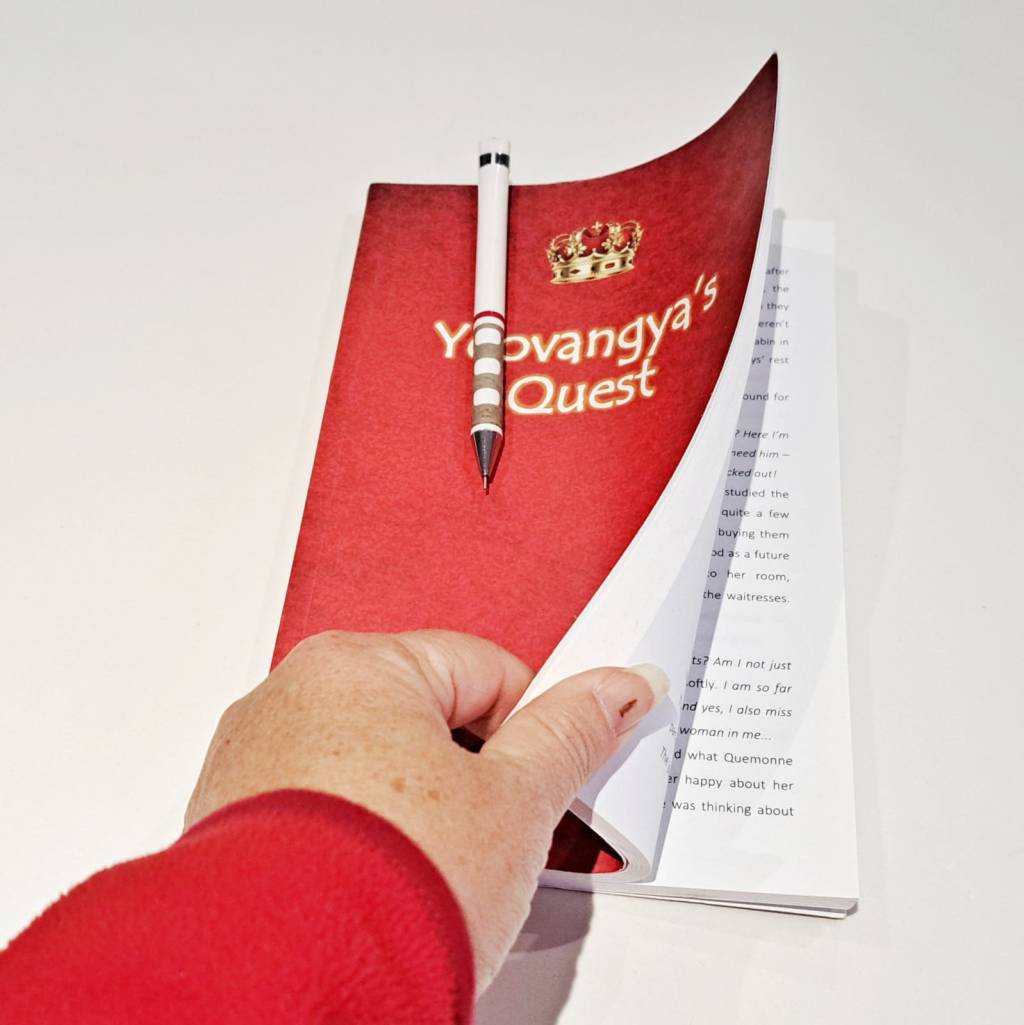
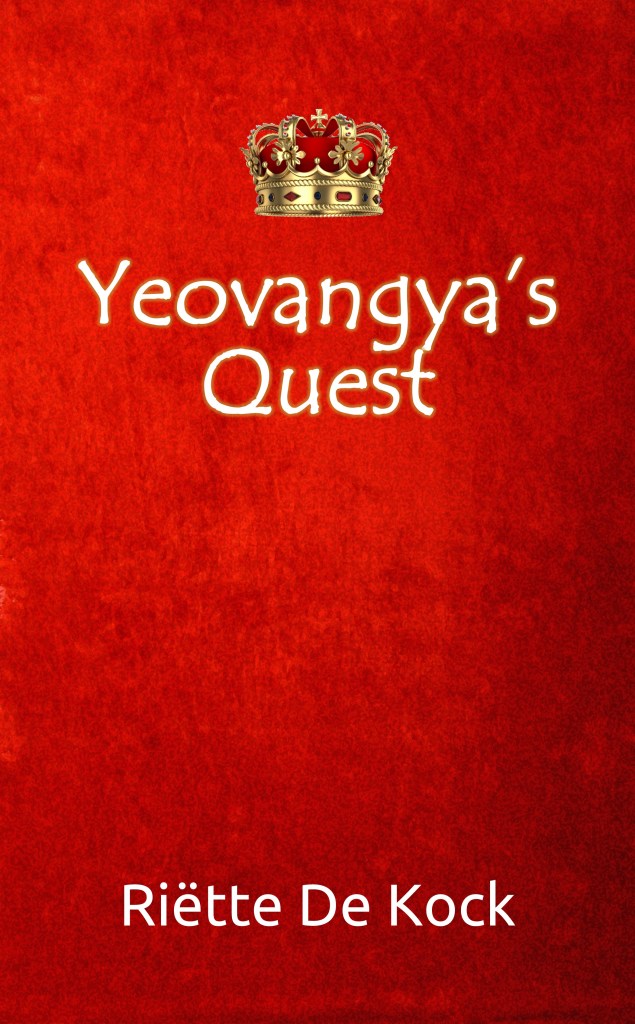
My Children’s Book, Yeovangya’s Quest, is now available on Amazon Kindle

Yeovangya’s Quest is now available in eBook and paperbook formats

My children’s book, Yeovangya’s Quest, is now available to purchase on Amazon Kindle Books in both eBook and paperback formats.

Yeovangya’s Quest is the true fairy tale of a princess past her ‘marriage age’ who doesn’t want to marry through arrangement, but only for true love – just like her parents did. She decides to determine the outcome of her future herself, by embarking on a journey looking for the love of her life. She concocts a plan with her father’s confidant, cuts her hair, dresses as a boy and sets off with her two closest companions – Blaffi, her brave and loyal dog, and Prr, the lazy, upstairs palace cat. Together they face many adventures and dangers, such as a dual with a man who can’t handle his beer, almost becoming lunch to a hungry lion, being attacked by three bad princes and even being shipwrecked.

Yeovangya finds more than what she looked for. She learns about her own weaknesses and about the consequences of selfishness. Above all, she learns to love in more ways than she expected to. She experiences abundant joy and the hurt of loss and having to let go – before she eventually learns to embrace what life offers.

Yeovangya’s Quest (a 10-chapter book) is good, clean reading, packed with adventure and action and even contains a few life lessons, and is perfect for young readers between the ages of 9 and 14.

Yeovangya’s Quest has enough action to keep boys’ attention captive and plentiful romance for girls of all ages.

(If you are a Kindle Unlimited subscriber, you can read the book for free. Kindle Unlimited is available at a monthly cost on Amazon and if subscribed, works pretty much like a library – except that the author gets paid for the amount of pages lenders read per book. This is just to tell you how it works and is not an advertisement. Unfortunately, otherwise I would have gotten paid for it. Smile.)

Purchase your copy of Yeovangya’s Quest here.

Yeovangya’s Quest is now also available in paperback.

Remember, when you purchase an eBook, it stays in your library where it can be read over and over again. So, all your children – over the span of their growing up years – can read it, just like with a book in the bookshelf of your family room.

©2021 Riëtte De Kock (Fielies De Kock)

Riëtte De Kock (Fielies De Kock) lives in a coastal village in the Overberg region, South Africa, with her husband and two dogs in an old heritage house and their freelance-writer son in the garden cottage. Fielies’ other books and eBooks are available here.

Let your Characters Reveal Themselves to you

By Fielies de Kock

I am always amazed by how my characters can surprise me. Just this morning I wrote a flash fiction story. Yesterday the ending of the story popped into my head. I decided to write it on my phone last night whilst in bed, but I was too lazy to figure out the plot details. This morning I decided to sit down and labour over it a bit. I knew the ending was words uttered by a soldier in a war, but I had no idea about how I was going to get there.  But when I started writing, Uwe, the protagonist turned out to be a dentist in the German Army during WW2 who was experiencing a crossroads moment. I didn’t make Uwe up. He created himself before my mind’s eyes. All I had to do was to start writing a few words. The moment Uwe was ‘born’, he developed a life and a voice of his own.

The same happened years back when I started writing a novel (which is still only two thirds into the creating phase of the writing process). I wrote a chapter in which the two main characters – a couple – invited a new friend over for dinner. This friend plays the other main character in the story and they were chatting away soon enough. At that stage, all I knew about my couple was that they previously had a relationship, were reunited and were engaged now. During the dinner conversation I learned that they both left South Africa at different times to work on kibbutzim in Israel. They eventually ended up at the same kibbutz, fell in love, got pregnant, lost their baby girl in a bus bomb during an intifada and then the woman went home brokenhearted. They met again years later after she got divorced from her abusing husband and finally had counselling – and were now sitting, engaged to be married, at a dinner table, telling their new friend – and most importantly, me – their whole story. I was flabbergasted by my characters’ secrets. I really didn’t know all those things about them until that scene.

Listen to your Characters

So the moral of the two stories is to learn to sit back and let your characters do the talking – literally! We live in a world of helicopter parenting, controlling our every move to the finest detail and fomo, and writers sometimes tend to overkill on character development to a point of stereotyping (just watch any Hollywood movie) – like the police detective whose boss hates him, is divorced/getting divorced, has a drug/drinking problem, is an absent father and has a heart which is just waiting to attack him. Where are the out-of-the-ordinary detectives who are kind-hearted, crochet with their grandmothers, are happily married, romantic husbands etc? Are they really too boring to write stories about or are we are just too lazy to work out great story lines for them? (And there’s another challenging story idea right there! Don’t steal it – it’s mine!)

We should sometimes just sit back and just listen to our characters telling us who they really are. Maybe they have more to offer than the one dimensional stereotype we so often mould them into.

How do you Listen to your Characters?

Go about your character developing the way you normally do. Give them their eye and hair colour, pet peeves, characteristics, likes, weaknesses, family ties, problems etcetera, as much as you like, but don’t limit their back stories because of your own preconceptions. Put them in different circumstances and see how they react. Listen to how they talk to other characters and to what they tell them. You might be stunned at what they might reveal. The best way to do this is to sit down and whether you write to a strict outline or if you are off-the-cuffing it, free write your scenes. Follow these guidelines.

  • Don’t think too much or wait until you have everything figured out before you start writing. If your character do or say things that you didn’t plan, let him/her without interrupting or censoring them.
  • Explore the character by keep writing. Don’t hesitate if weird things flow from your pen or keys and don’t stop writing for even a second! And never, ever stop to correct anything until the free writing is over! Allow freewriting sessions of at least ten minutes per character.
  • Write whatever comes to mind – even if it scares you a bit or if you didn’t plan things the way it plays out. You can always adapt the story line later or edit some of what you have written. It is better to have and to do away with than not to have at all!
  • Trust your instincts (or those of your characters), because when you free write, your instincts take over and most of the time we write better this way than when we are forced to write according to a plan.
  • Just keep going until you reach a point where it feels as if it is done – even if it takes longer than the time allotted for the session.
  • Don’t edit immediately after writing. Leave your work until the next day or even a few days later. This will give you time to think about the revelations you characters made and how it will influence the plot and your story line and if everything still fits in the greater plan. Most of the time you will be pleasantly surprised. If you really find after rereading your work that it is not the case or that it really is a bunch of Charlie Romeo Alpha Papa, you can always delete what you don’t like and/or edit it until you are happy.

Learn to start trusting your characters to reveal themselves to you. You might discover a whole new approach to character development for future use.

© 2019 Fielies De Kock

Awesomest wife. Finest mom. Hopefullest writer. Foreverest dreamer. Living in a coastal village in the Overberg, South Africa, with her husband and two dogs in a small heritage house, and their adult, graduate, job-seeking son in the garden cottage. His CV is available on request. 🙂

What I’ve learned from my Own NaNoWriMo Alternative – NaFFWriMo

IMG_6347-001

Please NaNoWriMo, don’t sue me for the spin-off. It was just my way of not doing nothing writing wise for a month.

I have no time in November – not this past November or any other as in our yearly routine it might just be the busiest time. For that reason I don’t even think of signing up for NaNoWriMo yearly, because although I might write my daily dose of 1333 words on the first day an maybe the second and even a third, I know that I will be disappointed down the line, because it will end. But, I still wanted to dedicate at least a bit of time to regular writing during the month of November just to feel part of something bigger, so I decided on my own personal alternative – National Flash Fiction Writing Month or NaFFWriMo. I decided to write a short story every day of the month. I wasn’t a 100% successful, as the last few days I got busy and I stopped a few short. Nevertheless, I have 26 stories more than I had on 31 October, so I’m at least a bit satisfied by my effort.

The Rules of the Game

At first my thinking was to write 100-word stories, but the first one was shorter and I felt that if I forced it to be longer it would lose its effect, so although I managed a few precise 100-word stories after that, I decided earlier on that I was not going to put any restrictions on myself other than that all the stories would probably be under 500 words.

Statistics

  • I wrote 26 stories in 30 days. That makes my ‘pass rate’ 86,666%.
  • My longest story is 324 words long.
  • My shortest story is 6 words short.
  • I actually wrote two stories which was precisely 100 words before any editing, (which makes me wonder if you can train your brain to write an exact amount of words on a regular basis?).
  • 11 stories is/eventually will be 100-word stories after editing.
  • A whopping 73% (19/26) of the stories was inspired by everyday events – either something that happened around me or by news events or articles in the media.

A few things I’ve learned during my NaFFWriMo

  • It’s not that easy to come up with something new every day.
  • Lots of ideas for fiction comes from everyday life non-fiction, be it one’s own experiences or things happening in the news. So, we just have to be alert to find ideas. Sometimes fact is stranger than fiction and we don’t even need to wish for a muse or to dream up the ideas ourselves. We live in a crazy world full of people doing weird, crazy, wonderful and terrible things. Use it to create your own fiction.
  • Restrictions inhibit creativity. That’s not really an earthmoving or new fact, I know. 100 words can be too much. 100 words can also be too little. Writing a 6-word story is better than writing no story at all.
  • Sometime less is really more. I wrote one particular story which wasn’t bad in 276 words, but it also works extremely effectively as 100-word one. I will keep both for future use. Don’t just discard the longer or shorter versions of your stories.
  • I had to discipline myself to come up with something every day. It was a good feeling to produce on demand, although it wasn’t always easy.
  • One idea is sometimes – most of the times – followed by another. So, if I had decided not to write anything on some days, I would not only have missed out on one story, but on two!
  • Ideas don’t keep ‘working hours’. Some ideas came at night, just before I went to sleep, so I made myself a WhatsApp writing group with both my phone and tablet and typed out the story or at least the idea quickly to store and work on later.
  • I was a little bit disappointed that I didn’t write 30 flash fiction stories in 30 days (or even more, because it sounds so easy, doesn’t it?), but our current lifestyle is hectic and I was still satisfied that I managed to get 26 stories down. At least I didn’t do nothing. 3430 words for the month isn’t close to a 50 000-word novel, but it is still more than I would have written if I just decided to let the month pass without any goals.

PS: And just for the record – I know that NaNoWriMo is an American invention, but I think the name should change to IntNoWriMo to include the rest of us. Just sayin’. J


©  Fielies (Riëtte) De Kock

Awesomest wife. Finest mom. Hopefullest Writer. Forever dreamer. Temporarily living in Cairo, Egypt.

I wasn’t Planning on Writing Anything Newyeary

My Weekly  Musings #1/2017

rtss

It’s that time of year that everyone who writes, writes about having New Year’s resolutions or about breaking them or about their goals for the new year. This year was no different and those who believe they cannot write or are too lazy to write something themselves, sent their friends funny/silly/nice/beautiful/religious/rude/crude messages and poems written by some funny/silly/nice/beautiful/religious/rude/crude writers to wish them a good/blessed/prosperous/whatever 2017, because apparently 2016 had been the worst year in the history of the world according to social media users or liberal American voters or both. Of course it had been a bad year for some individually, but I was just wondering if every one of the WWI and WWII years for example, might not have been worse in general? Anyway, who am I to differ with the social media experts?

I didn’t want to continue on the topic of this most plastic, man-made phase of the year, but hey, while I’m on it… Today’s date is just a date. Dates maybe rule our work lives, but they don’t define our character. Yes, we do remember the things – good and awful – happening to us by the Gregorian date that we use, but to wish a ‘year would die because it had been the most awful of them all’? Really? Is that what life had become for modern us? A date on a man-made calendar with absolutely no guarantee that the next da(y)te on the almanac bring only prosperity/happiness/blessings.

I’d hope that we can rather thank our Maker for every new day, no matter the ‘date’, because He says that He makes every day new and every day His mercy and loving-kindness is anew (Lamentations 3:22,23). Of course we will remember the awful past (even that terrible, dreadful 2016), but eventually we will also remember the beauty and the joy and the memories it brought us. Bad memories have the tendency to be overshadowed by good ones in due time. I don’t say this lightly, because some of us had real hard times and others had horrific things happening to them in 2016.

Let’s be thankful for another day, whatever the date may be, because how evil 2016 might have been, there had been good times and 2017 hasn’t shown its true colours yet. Let’s be grateful for waking up this morning and being alive for just one more moment, maybe even one whole day. I know it sounds like such a cliché, but in the end all we have is now. Enjoy it to the fullest.

Be blessed.

(Blog entry/ies vaguely related to this topic: https://fieliesdekock.com/2014/01/08/my-favourite-days/)


© 2017 Fielies (Riëtte) De Kock

Awesomest wife. Finest mom. Hopeful Writer. Forever dreamer. Temporarily living in Cairo, Egypt.

In Favour of the Roads Well Travelled

one-mans-house

Travel articles and blogs about ‘the road less travelled’ are in abundance. People, I included, love reading about strange, foreign, exotic and off the beaten track paths – places where only the most daring dares to go and where the rest of us probably will never set foot. I reckon that’s why we love it so much – reading about far-off places and dreaming impossible dreams, knowing that we will probably never make it there and instead, we admire those adventurers who do.

Few writers today still bother to write about the roads well-travelled other than in travelling guides or  advertisements, because what self-respecting-do-things-differently-adventure-seeking person these days would find the London Tower Bridge or the Eiffel Tower or the Wailing Wall exotic enough to read about and dream about to visit. Travel articles must be all about exploring the unknown, the almost never-visited before, to be attractive enough to publish.

Travelling had become fairly easy in the past three decades. We live in a global enclave, which makes almost every place on earth accessible within a day or at most – two. So why bother with the ‘mundane’ travel destinations if you can be the first Western person to be seen in some remote jungle village of some South American tribe, living without any modern conveniences? Or sail to the most southern uninhabited island on earth or go to a quiet corner of the Antarctic to witness the consequences of global warming first-hand? It’s just more exciting! It’s exhilarating! It sells travel magazines. It generates more traffic to blogs and online mags.

But as someone who had only travelled a little bit and will probably always be limited to visiting only a few of the many, many, many places I dream about, I believe that there are still words left to be written about the roads well-travelled. Because if your opportunities and resources for travelling are limited, one tends to want to see first-hand those most ‘common’ sites you always see in movies and on TV.

Naturally your walk in the Bog Nature Trial in the Soomaa National Park in Estonia would make grand dinner conversation. Of course you would first have to show your guests on a map where Estonia is! Or imagine telling you bird watching friends about you seeing one of the last Great Indian Bustard nests in India? And obviously, you can’t go wrong with showing off your photos taken from Uhuru and Kibo peaks on Mount Kilimanjaro, because even if it had become a bit of fashionable trip to do these days, you can still get away with it under the ‘adventurous’ label. You will after all be only one of about 22 500 people in the world who did it this year – in comparison to the millions who have travelled to London to see old Buckingham Palace! Yawn…

But for the person who will only travel once or a handful of times in his or her lifetime, due to reasons such as limited resources or health restrictions that keep them from hunting great adventures such as walking the swamps of the Amazon, intruding on the habitat of petrifying Anacondas – visiting the Taj Mahal in India or the great pyramids of Giza in Egypt or the Garden Tomb in Israel, will still be more than awesome! It will also be the fulfilment of a lifelong dream – just as the Amazon-thing is to the extreme adventurer.

For us, the travellers with limitations, the mere site of the Sea of Galilee where Jesus walked, is absolutely breath taking! And to have a photo that you have taken yourself of the Eiffel on your own camera’s memory card, is a dream come true! Because you may have climbed a hill on precisely the right day of the year to harvest one of the world’s rarest truffles in the French countryside, but imagine your friends’ faces when you arrive back home and they ask you about the Eiffel and your answer is “No, I haven’t seen the Eiffel, but I did harvest the world’s most exotic mushroom!” Except if you are a foodie and all your friends are too, it will be an absolutely outrageous answer!

Us normal people of limited resources are satisfied to see the Eiffel and Wailing Wall or the Tower Bridge or the Big Ben or the Colosseum or maybe even the beautiful blue roofs of Mykonos and Santorini (instead of a less visited Greek islands with rarer stones to see). We are quite okay with it if we can only visit one of those magnificent places we see in movies and on TV programs in our lifetime. And when we watch a movie or TV again and we recognise one of those places and know that we had been there and that our feet walked where so many others have walked before – the fortunate and the unfortunate, the famous and the not-famous, the conqueror and the loser, the adventurer and the… us – we will feel thankful and privileged. Just because we were given the opportunity to see it with our own eyes.

There is still much to be said about the roads well-travelled, and very few of us will be able to travel all those roads, so if you get the opportunity – take it! And think of it this way: Even if you will never have the ability to visit any of these well-known or less-known places, you might live in a place on someone’s bucket list.

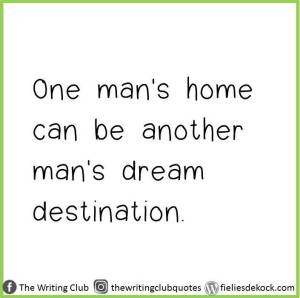
Explore your own surroundings. Visit that ‘boring’ battle field again that you had to visit on a school field trip. Go to that monument, read up on the beginnings of your town or city, because chances are that you are living near a place that someone else dreams about visiting. Go today. Pay it a visit. Take a picture (or a selfie if you can’t convince anyone to go with you on your ‘adventure’) and put it on your social media feed. And know that your feet have walked where other feet had fought or made history or had new beginnings. Because even though we sometimes don’t realise it: One man’s home  can be just another man’s dream destination.

20161009_131230-001

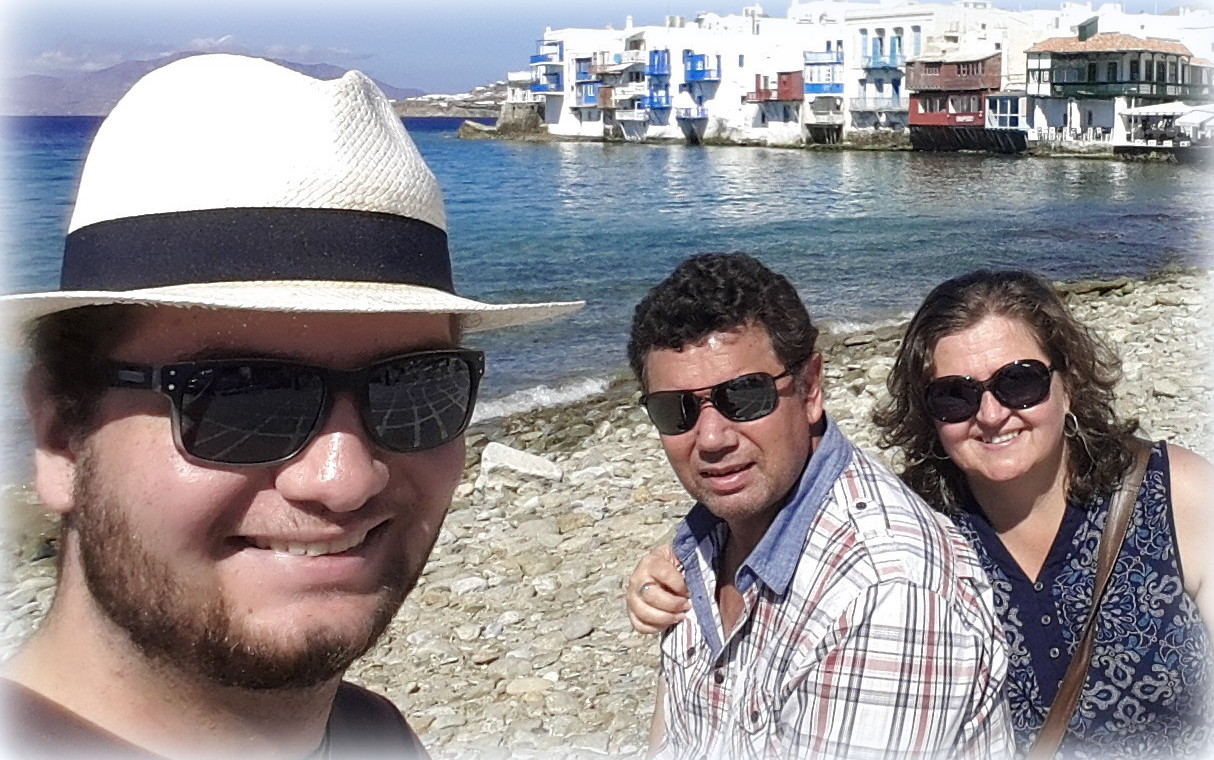
Our family at one of those ‘boring’ well-travelled places – The beautiful island of Mykonos in Greece.

© 2016  – I, Fielies (also Riëtte) De Kock is trying hard to be an awesomest wife and greatest lover, finest mom and to write something all at the same time. I share my current living space in Cairo, Egypt with my husband, young-adult son, the building’s two cats and the space in my head with way too many ideas and multitudes of story characters to function normally.

On Having too Many Ideas and the Pure Evils of Multitasking

arrow_on_target_47720

Just keep reading. The advice part comes at the middle of the article…

Struggling to Focus

I really struggle to focus when it comes to my writing. To focus – not to concentrate. I can sit and do the same thing for hours. Unless I’m on my phone. Then I have the intention span of a two year-old and I can forget what picture I want to open only half a second after I’ve made the decision. I don’t have a search for the reason for my problem, because I know what the cause is. Ideas. I have too many of them. While I am busy researching links for  my Writing Club Facebook page, I think of a new short story that I want to write and then I think of a great idea for my next blog entry and while still busy with that I’m struggling with the plot problem of my decade-old novel.

Multitasking towards Scatter Brain Syndrome

Every weekend I think of what to do the next week and plan it in my head, but come Sunday (when the work week starts where we currently live) I sleep too late, spend too much time on my phone checking Facebook, play Words with Friends or find something interesting that I have to do Bible study on. So by 10:30 I realise that our bedroom needs tiding, the building cats want food, our son wants to sound his view points on his latest university essay with me and while I’m listening to him, my mind wanders to have yet another few writing ideas on another few projects.

Am I too scatter-brained or do I have too many ideas? I can’t always determine, but I know that whichever it is – or maybe it’s both – it makes me unproductive. Having ideas as a (would-be) writer can only be good, can it not? I rarely have had problems with writer’s block in my life. That must be a good thing, mustn’t it?  Having lots of ideas is good. But it doesn’t help if any of those ideas ever get finished. Oh, I have finished manuscripts in my cyber Dropbox drawer. It’s not if I can’t finish anything. I can sit down and work on a long project to finish it. It’s just that I can’t finish everything that I want to, because I don’t know what to work on and what to leave.

I do something and then I leave it and then I do something else and then I leave it when a new idea pops into my head. I know I have this problem. And I have tried to overcome it many times. I am currently in one of those phases. I have decided to finish my Writing Club business idea. I have started well. Then I got sick. And now, a week later, I am writing a blog while still editing a short story whilst I should be busy with that instead.

The problem I find with my writing – as also in other areas of life – is that I try to multitask, in spite of being a hater of multitasking. Because I multitask in life too. I start tiding the bedroom, and when putting away some stuff in the bathroom, I see that the toilet need urgent cleaning and when I go to the kitchenette to fetch the cleaning products, I wash the morning coffee mugs and then remembered that my son didn’t have breakfast yet and when I take his breakfast to the TV room where we normally have it together, we watch the breaking news and I quickly do some research on some of the facts the reporter gave and then I see some interesting article that I have to share to my Writing Club Facebook page and while on the computer I see that there are some messages from my family group on WhatsApp Web and then I get involved in a who-looked-more-like-whom baby pictures debate and when it cools down I see more interesting articles on writing and read a few, and get new ideas for blogging and then my husband called to hear if I have started doing research for our trip and then I get into the mood to finish my short story and I write for an hour. And when I finally come to my senses again, the bedroom is still untidy, the toilet is still not cleaned, the coffee mugs are dirty again after having breakfast though, the breakfast plates had to be cleaned, there is new breaking news on TV, the family had decided that the baby looks like herself, my Facebook page have more notifications, my short story is still not finished, I haven’t done the research for our upcoming trip and I realise that I haven’t thought about what we’ll have for dinner. Then I leave everything I’ve been busy with and rush to the kitchen…

That’s my life. It’s not perfect. I frustrate myself. Days and weeks and months and even years fly by and I’m not getting done what I want to get done. In a few years’ time I will probably look back and ask my husband and son: “What have I done with my time?!” And they will probably remind me to read this blog entry to answer myself.

Having many ideas is a good thing. For creative people it is a wonderful thing. But if you can’t channel those ideas into some productiveness, they will always be just… ideas. Ideas means nothing if they sit in your head. They have to be acted upon – just like dreams. Ideas also have a tendency to get ‘stolen’. If you don’t do something with an idea, someone else, who is more focussed will and before you know it, another opportunity will be lost.

A Few Tips

Multitasking must be killed. We must live in the moment and concentrate on the task at hand – one at a time. Here are a few ways to try to do it. Let’s try it!

Focus

With the Olympics on, I couldn’t help to recognise again the athletes’ commitment to their respective codes. The archer’s focus on the target is a good example of how we as writers or other artists or people of any other career should learn to focus on one thing at a time. The archer can only hit one target with one shot. If his focus is on anything other than only his target, he surely will miss. Focussing on one writing piece at a time will eventually means that one project will be finished. And if that one is finished a next one will get finished and a next and a next.

Do Something Productive with those too Many Ideas – Make a List

Write down all the writing projects ideas you have in your head. By getting them out of your head and onto paper, you can start focussing on getting them done. Keep this list close and update it as you get new ideas.

Then Make a ‘To Do’ list

Now make a ‘To Do’ list. Decide what it is you want to achieve with your writing. Be very, very honest with yourself and focus on your strong points. Identify the projects that will be the most probably to get published and/or bring in some money. Prioritise you list. Then start and finish the first priority project on your list.

Don’t Move on Before a Task isn’t Finished

Don’t move to number two on your list unless number one is finished. In the case of number one being writing your novel, you can do blogging or other smaller projects in between, but always finish the allotted daily writing time for your priority project first, before going on to doing the smaller ones.

Plan your day – Have a Routine

You know the saying, ‘Fail to plan, plan to fail.’

If that archer didn’t practice for hours every day, he wouldn’t have made his country’s Olympic team and he wouldn’t have been able to win the gold medal. If he failed to aim at his target, he would have failed to hit it. If you want to go on holiday in Greece, you need to plan to take leave, buy plane tickets and book accommodation. Otherwise you will remain where you are. If you don’t plan anything, you won’t get anything done. It is as simple as that.

‘Go to work’

My husband gets up at the same time every morning, showers, clothes himself, takes his bag and goes to work. And he remains there for eight hours of every five week days – working. For that he is rewarded with a salary at the end of every month. Input equals output.

Some writers have a day job and write for an hour or so every evening and some more over weekends. Well-known writers had got published for the first time this way – by writing only for a short time every day. Every day.

Some writers have the privilege of staying home and have more time than others to write. If you are one of those and still struggle to fill at least a few hours every day writing, you have to become more creative with managing your time and the way you work.

  • Identify your favourite writing place in your house/garden.
  • Decide on what part of the day your writing hours will be.
  • When the time arrives, literally pack your writing tools (laptop, notebooks etc.) in a bag and walk out of the house, through the garden (if you have one), back into the house and to your working place.
  • If possible, leave your phone ‘at home’ or switch to silent.
  • Stay at your working space for the time you have allocated.
  • If you have a whole study or office as working space, close the door after you have finished and open it again at the beginning of your writing period. This way you know that you can shut down and have time to do things with your family without feeling guilty, because you have already done your writing for the day.
  • Be jealous about your writing hours. Allow no disturbances, other than real Don’t make unnecessary appointments for those hours and say no to appointments that can be made for another time.

These tips may seem like common sense and they actually are, but we certainly tend to lose our common sense when we get distracted. Keeping to a regular routine and staying disciplined helps to divide between your living and working spaces and may help you to get into the right mind for doing more productive work.

Keep a writing log

I’ve started doing  this years ago, stopped and started again. I make a simple monthly spreadsheet and write down what writing related work I do every day, including reading. (I also keep a separate yearly reading list.) My columns include, Writing, Editing, Reading, Blogs and Other (like time spent updating my Facebook Writing Club page or journal writing). I blot out days that we travel and on which it isn’t possible to write, although some travels can offer wonderful writing time.

Keeping a writing log shows you how many hours per day you effectively spend on your writing projects and it serves as a motivational tool to better your productivity from month to month. It also helps with planning your writing schedule, because you can see how much time you need to spend on certain projects.

Take Stock Every Week, Month and Year

At the end of every week, month and year, evaluate your writing effort. Check your ‘To Do’ list and see what you have achieved. Go through your monthly writing logs and see where you can improve your productivity. Make changes and stay focussed – one task at a time.

Keep a Personal Journal

If you don’t keep a journal I have a question for you: Why on earth not?! Apart from being a therapeutic tool to write down your emotions, problems goals, dreams and feelings, your journal can be a treasure chest of ideas. Many of my journal entries have become blog entries. It also serves as a reminder of the dreams and goals you have and is a place to blow off some steam – as you are the only one who reads it.

You don’t have to write in your journal every day or even every week. Write when you want to, but keep writing, even if there are two-month gaps.

On days that you really can’t get other writing done (for whatever reason) – just journal. At least it will help you to stay in routine and not get rusty. I write in both languages I speak, depending on the reason, subject or mood I am in.

Learn more about journal writing at https://fieliesdekock.com/2014/03/17/article-on-writing-journal-writing/ 

Go forward one letter, word, sentence, paragraph, chapter, book at a time!

(OK, the bedroom is not going to tidy itself. Off I go…)


© 2016 – I, Fielies (Riëtte) De Kock tries hard to be a Proverbs 31-woman – excellentest wife, finest mom, greatest lover and successful ‘wordpreneur’ all at the same time. I share my current living space in Cairo, Egypt, with my husband, young-adult son, the building’s ginger cat, her friend and two kittens (so far) – and the space in my head with way too many ideas and multitudes of story characters to function as a normal human being.

Book Review :Me Before You – Jojo Moyes

httpsupload.wikimedia.orgwikipediaenthumbffdMe_Before_You_%28film%29.jpg220px-Me_Before_You_%28film%29

What it is about

Lou had just lost her job in a little restaurant, which she loved, and apply to become caretaker to a Will, an adventurer, who became a quadriplegic and had lost all interest in life after an accident which led to him living in an apartment at his unhappily married parents’ house. The movie of the book started showing in July 2016.

What I thought about it

It is a fairly good read, especially because it is a yet unexplored theme in fiction. Jojo Moyes writing is not recipe-like and filled with British wit, in spite of handling a difficult subject. (This reminds me a little bit of Cecelia Ahern’s style if you are, like me, a fan of her writing.)

After finishing the book I felt cheated though, because while Lou’s struggle with the enormity of Will’s decision was addressed, his moral/spiritual deeper struggle was not explored at all, therefore I found the book spiritually poor (as in the opposite of rich). Even people with no religious believes at all must have at least a few conflicting emotions and/or doubts with regard to such an important life decision as the one that Will had made.

Although the whole story was told from Lou’s point of view, the writer took the risk and trouble to switch from hers’ to giving the other characters at least a chapter each – a writing style that can cause chaos and would have worked better, had Will gotten his’ turn too. Yet the writer chose to ‘ignore’ his real thoughts and feelings in an almost robot-like manner. I found it more than a bit odd. If she tried to make a point through not doing it, I didn’t get it.

I still recommend the book because not much had been written about the subject in chick lit or any other fiction so far, but I think the writer really missed a great opportunity to give the reader insight into the immense struggle between life and death that must have been going on in Will’s mind. I will still watch the movie if I get the opportunity and I look forward to read ‘After You’ to see what happened to all the characters after this phase in their fictional lives. Lou is a likable character and it will be interesting to see what Moyes decided to do with her.

My rating of this book is a 4/5 because I like the humour and writing style.

Me Before You is available in most book shops as well as on the Internet as an ebook.


© 2016  – Fielies (Riëtte) De Kock

Those Big Small Things in between Facebook Status Updates

20150606_114239

More Egypt Chronicles

Life is speeding so fast that it can overtake us very easily, leaving us clinging onto whatever we can to survive. And when we are in survival mode, we tend to focus on just that – survival. Sometimes we need to get off the runaway train, stay on the ground and just enjoy the moments of experiences added together that is called ‘life’. So many of us live for our “one day” – that day or days near or farther in the future when all our dreams will be realised into the utopian existences we spend all our free time imagining.

But sometimes we need real life to give us a slap through the face or shower us with the proverbial bucket of ice water to slow us down from our busyness or even to bring us to a halt in order for us to stop and be alive within the actual moment we find ourselves in.

It can happen through the shock of sudden death, the scare of illness, being faced with dangerous situations or just recuperating from something less serious – but as disruptive.

Shock or trauma or failure can sometimes be good for us. It can help us clean our systems, re-organise our priorities and re-evaluate the impossible goals we set for ourselves into obtainable ones and making us pause for a while. Very few things in life can be so good to us than coming to a complete standstill. And I really mean to stop doing what you’re doing and to live in the moment, with no looking forward to the tomorrow that may never be born.e always dreamt of living abroad for a period of time. Due to circumstances that dream got lost for a while, but after some time it found its way back into becoming a possibility and our lives were frozen in their tracks. Everything we did or didn’t do, planned or didn’t plan and decided had to be weighed first against the probability of going away for a few years. It changes one’s whole focus, lookout and pretty much everything you do.

The realisation of a dream can be a horribly, scary affair and takes courage to pursue. (Read my previous blog on this at https://fieliesdekock.com/2015/11/10/the-process-of-realising-a-dream-can-be-a-nightmare/)

We only heard six months later that we were going to live abroad. In Egypt. I cried for a day and then my previous positive-self reappeared and I made a pro’s and con’s list and, surprise-surprise, the pro’s list convinced me – not that it was the longest! (How is it that when your prayers are being answered and you get what you ask for that you get confused?) But the crying subsided and the excitement and frightfulness kicked in. We had a lot to do – easier stuff and more difficult stuff. All the easier stuff had to do with the ‘whats’ in our lives. The more difficult ones had to do with the ‘whos’. My mother lived with us for 17 years and she had to be relocated. And we had to find houses for our four dogs. It wasn’t easy.

Fast forward…

…to living in Cairo, Egypt, for two years.

It takes time to settle into a new environment. And it took me one year an nine months to get so used to the new place to fall into a little bit of a rut – in spite of (or maybe because of) busyness.

Precisely one year and nine months after arriving here, I fell into a not-so-slightly ‘down’. (Don’t worry – it was caused by stupid pains, and although they remained, the depression flew out of the window after a few doctor’s visits. ((And I realised that my ‘depressions’ are always health related.)) And it is a fact that everything seems worse if you are far away from ‘home.’)

Now that the background history is told, I will get to the point. Since that day, three years and three months ago when we first heard that we may be moving, I have learnt to live in the moment. Because of the uncertainty of our situation, we stopped buying unnecessary things, didn’t make decisions with long-term consequences and just started taking every day as it came.

Due to the fact that we came to live in a country where the security situation can be volatile, our circumstances can change at any time and our stay can end unplanned and abruptly. So, I decided to keep living here the way we lived back home for those uncertain fifteen months before we left – in the moment. And I already decided to keep doing that when we get back home one day. But, as I am writing this – even that isn’t a certainty, because that is a tomorrow that is still to come. I pray though that it will happen for us all.

But back again (!) to the reason for this writing. During all these experiences the last few years, I have learnt to enjoy the ‘little’ things in life. Don’t get me wrong. With our current, temporary lifestyle come lots of privileges, which we enjoy and appreciate enormously! I mean, without this experience, my dream to see at least something of Europe would probably always have stayed only in the dream phase. We have cruised the Nile and we are scheduled to go again soon. We have snorkelled in the Red Sea (and fell in love with it)! On a French mountain I have played in the snow for the first time in my life! I attended my first (second, third and shortly my fourth) ball! I have stood in a chamber of Tutankamun in The Valley of the Kings outside Luxor containing the petite mummy of king Tut. Etcetera. Etcetera. Etcetera. These are memories I will cherish for as long as my mind allow me.

But as it is in life – privileges don’t come free or cheap. And in between these very wonderful experiences are those that don’t reach Facebook status. And they take up way more time than those very wonderful ones. They are the ones that can make or break us. The in-between times when the heat, dust, cultural differences, strange religion, terrible traffic, the thin, sick, hungry street dogs, the stray cats, the tummy bugs, the illiteracy (mine!), the overwhelming crowdedness, the ‘ununderstandable’ customs, the poverty, the dirtiness, the interestingness, the bland food, the overripe tomatoes and all the things you miss from home, make you wonder how on earth did you make it so far and how on earth will you make the rest of the time?

I remember back home when we had some challenges, we would go for a walk in the afternoons and with my hand in my husband’s and with our son and our dogs tagging along, I felt like the richest person alive! And this, I personally believe, is where the secret of happiness lies: to find blessings and joy and thankfulness in even the littlest things in mundane life.

I have listed just a few of these things that make me happy. Some of them are not so little at all.

  • Reading Bible and praying whenever I want to, because the Living God of the Bible is always everywhere.
  • Mild weather.
  • Walking to the shops.
  • Walking to the shops on my own legs.
  • Walking to the shops on my own legs in mild weather.
  • Having good Egyptian people in our lives.
  • Eating the last piece of biltong someone thoughtfully brought when visiting.
  • Sitting (in the still mild weather) in our garden, listening to the birds chirping without the competition of the air conditioner sounds (because the weather is still mild and the aircons are still off).
  • Aircons in summer!!!
  • Drinking rooibos tea with my husband and son on a Saturday morning outside in the garden (when the weather is mild) or in the TV room or swimming pool (in summer, when the weather is not so mild).
  • Sleeping through the night without fear of violent house-breaks.
  • Waking up in the morning. (What a privilege!)
  • Having an Afrikaans (my native language) speaking buurvrou (neighbour) in the building across ours!
  • Having even more friends from home nearby and being able to lunch with some of them every week!
  • Feeding at least two of the many hungry cats in this huge city.
  • Watching ‘our’ two cats doing all their cat-things in our garden on top of the parking garage.
  • Taking pictures. Lots and lots and lots of them.
  • Being thankful for every ‘big’ or ‘little’ thing that works out.
  • Being safe after there had been uncertainties.
  • Aircons droning out the muezzin calls.
  • Power coming back on after cuts. (These days they aren’t as frequent and as long as in during the first year. Something to be thankful for – especially in summer!)
  • Experiencing everything with my husband and son!
  • Kissing my husband good night.
  • Kissing my son good night. (That’s probably not something he would like people to read on the Internet ((but he likes it – I can tell)).)
  • Seeing my husband happy because he can watch South African rugby and cricket matches on the satellite TV channels.
  • Paging through the teabags at my Japanese friend’s dinner to find a rooibos tea bag!
  • Having lots of friends from around the world to hang out with, visit new places with and to learn from.
  • Being able to buy the medicine I need and don’t get from home.
  • Being healthy (I hope).
  • Coming home to a haven of safety and tranquility.
  • Having a good landlady.
  • …the list can go on…

These are just a few things and when writing them down, I realise that they are not so little. They are pretty big and important. They are the glue that holds life together. To be in awe when seeing the Eiffel Tower for the first time or feeling small against the largest of the Giza pyramids is splendid, but one can survive life without it. Of course travelling enriches our lives and I am a big supporter thereof (even if it is just exploring outside of you immediate comfort zone) and I wouldn’t have wanted to miss out on these experiences! But it really is the ‘small’ things that we can’t live without, which makes the mundane extraordinary – which is the difference between letting life get away from you and living in the moment. It is the ‘small’ things in life which brings sustainable happiness.

© 2016 – I, Fielies (Riëtte) De Kock is trying hard to be an awesomest wife and greatest lover, finest mom and to write something all at the same time. I share my current living space in Cairo, Egypt with my husband, young-adult son, the building’s two cats and the space in my head with way too many ideas and multitudes of story characters to function as a normal human being.