
On Success – So you Failed with your First (and Second and Third) Business Effort…

shutterstock

We always tend to read ‘success’ stories when we want to be inspired or learn about being successful. Success stories inspire us, they sound good and we can definitely learn from them. But these stories can also leave us overwhelmed and hopeless when we try our hand at a new business just to fail after a few weeks or months or even years. Many people only try once and when something doesn’t work, they think of themselves as unsuccessful or as failures. When we fail at something we very easily tend tell ourselves that we would never be another Richard Branson or a Bill Gates. We are right. We never will be.

There is another way of looking at our failures. We are all different from another and therefore we do things differently, we have different interests and passions and talents. Being different from anyone else also means something wonderful – every one of us is a unique person. Being a unique person means that each person has a different purpose than the next and that we sometimes fail at things because we aren’t in a business that fits our interests, talents, personalities, passions, characteristics and purposes. Or we may be in the right business, but we don’t have the right ‘tools’ to manage a successful business. In these instances we must forget the failure, dream from anew, plan from afresh, learn from mistakes, learn new skills and try again.

It is encouraging to know that the Bransons & Co. of this world didn’t all succeed at their first try. Some of the most successful business people today and in the past had to try quite a few times before they had any success. Here are few failures to inspire you to be more determined to succeed in whatever your passion is.

chahal dot com

  • Henry Ford went broke five times before the Ford Motor Company became a success.
  • After being turned down for a job at Toyota, Soichiro Honda, started making scooters and eventually started his own company.
  • He invented a rice cooker that burnt the rice and he lost everything, but that didn’t put Akio Morita off and today he is the founder of the multi-billion strong company, Sony.
  • Traf-O-Data was the first flop of Harvard university drop-outs, Bill Gates and Paul Allen. We all know what happened when they started Microsoft. Maybe the name was to blame…
  • Colonel Harland David Sanders of Kentucky Fried Chicken (KFC) fame’s chicken recipe was rejected by 1009 restaurants before someone had the vision to buy it.
  • Walt Disney was fired from his newspaper job because, “he lacked imagination and had no good ideas.” He ended up bankrupt but believed in his ‘no good ideas’. Today Disney’s company is billions worth and still going (and growing) strong.

Not only people in business failed before succeeding in life. Not all scientists, inventors, politicians, great leaders, actors, artist, musicians and writers and sportsmen had it easy either.

  • It was thought that Albert Einstein was mentally handicapped, seeing that he only started speaking at four and learning to read at seven. (What is so bad about that? In our country children learn to read at age six/seven. Maybe there is still a chance for us to become geniuses!) He got expelled from one school and was refused entry by another. Not bad for a genius Nobel Prize winner in physics, is it? Remember that one of his greatest quotes was “Imagination is more important than knowledge…”
  • Another scientist-dude first ‘failed’ at school and then ran the family farm into the ground before becoming a math-genius. His name was Isaac Newton. Maybe this was one of those cases of doing something while having other talents.
  • Thomas Edison was told by teachers that he was “too stupid to learn anything.” He was also fired from several jobs. We all know by now that we can be thankful to Thomas for not believing his teachers and bosses and that he just pushed forward and tried and tried and tried more than a thousand times to invent the light bulb. In the end he just said that he had found more than a thousand ways not to do it before he found out how to do it! Now, that’s what I call ATTITUDE! Thanks, Mr. Edison for adding a little light to our lives. J
  • And then there were bicycle makers Orville and Wilbur Wright who didn’t give up in spite of depression, family illnesses and lots of broken prototypes, before they fulfil every man’s dream to fly.
  • Although he failed Grade 6 and was defeated in many, many political elections, Winston Churchill just kept going and became the British prime minister at the age of 62 and lead Britain through WWII. He just had to wait for the Creator of History’s perfect timing for him to make his difference in the world.
  • A young man called Abraham Lincoln went to the war as a captain, was demoted and returned home as a private! He went on to start quite a few failed businesses, but Abe hung in and eventually became one of the U.S.A.’s greatest presidents (and an enormous statue). It just shows you again that you must find your niche to succeed in life.
  • Oprah Winfrey was allegedly abused as a child and fired from her job at a television station because she was “unfit for TV”. I’m sure you know who she is now and what she did for the past 20 odd years. Yes, she became a successful television (!) host and one of the most powerful people in the world – even influencing law making in die U.S.A. today.
  • Jerry Seinfeld, actor and stand-up comedian (and the voice of Adam in Bee Movie) was booed off the stage on his first job because he froze, but he went back on stage, tried again and audiences haven’t stopped laughing since.
  • He was told that he didn’t have what it takes to become a star, but Harrison Ford went on and did just that. Who else could have played Han Solo of Indiana Jones but him?
  • Vincent Van Goch died in poverty, selling only one painting in his life. Today his more than 800 paintings bring in hundreds of millions of dollars. I personally don’t understand the fuss over some of the paintings, but nevertheless…
  • Theodor Seuss Giesel or Dr. Seuss, as we know him wasn’t an overnight success either. His first book, To Think That I Saw It on Mulberry Street, was rejected by 27 publishers.
  • The University of Southern California School of Theater, Film and Television rejected Steven Spielberg three times before he joined another film school from where he dropped out before finishing his studies to become a director. He eventually went back after 35 years and completed his BA-degree in 2002! How’s that for perseverance? And he didn’t even have to do that because he was already successful in what he did!
  • Although Wolfgang Amadeus Mozart was one of the best music composers ever, he died with very little to his name due to depression, restlessness and ‘unfavour’ from
  • Ludwig Von Beethoven was told that he couldn’t compose music, but he went on to compose some of the most beautiful music ever written. If you don’t know Ode to Joy, get a copy and listen to it. On top of all, he did all it being deaf! How cool is that?
  • Elvis Presley was told by an agent “You ain’t goin’ nowhere, son. You ought to go back to drivin’ a truck.” We know now that he didn’t listen to that no-good agent.
  • “I have missed more than 9,000 shots in my career. I have lost almost 300 games. On 26 occasions I have been entrusted to take the game winning shot, and I missed. I have failed over and over and over again in my life. And that is why I succeed.” A quote from Michael Jordan, probably the most famous basketball player ever, who was cut from his high school team…

For more failure stories, visit http://www.onlinecollege.org/2010/02/16/50-famously-successful-people-who-failed-at-first/ and http://www.onlinecollege.org/2010/05/17/50-iconic-writers-who-were-repeatedly-rejected/

Just think about it for a moment; If these people just gave up after the first try we could have been without KFC today! Or some of the greatest animation movies, planes, trains, some of the best music, electricity, the telephone, some very good cars and we would never have been able to enjoy some great books or the talents of some very good athletes. OK, that’s only partially true, because someone else would probably have invented the light bulb, the aeroplane and animated movies, but it could have taken a lot more time. And we wouldn’t have known who Thomas Edison, Mozart or Spielberg was.

affordablequalitywritingdotcom

So what do we learn from these people’s failures?

  • If you don’t keep trying, someone else will and ‘steal’ your idea. It really isn’t nice to see someone else do something that you wanted to do, but didn’t do just because you didn’t have the guts to try or because you gave up.
  • Don’t listen to people telling you that “it can’t be done” or that “you’re not good enough” or “you will never make it” or “you are too stupid” or anything like that, just because they can’t imagine what you can. Winston Churchill and Steven Spielberg didn’t believe people like that. Why should you?
  • Learn to know yourself. Think about life. Know what you like and what you are good at. If you fail at something you’re not good at, try something that you are good at and which matches your personality and passions in life.
  • Don’t try to be someone else or do something that others are doing or follow other people blindly. You were made a unique person, with something unique to give to this world. Don’t aspire to other people’s dreams.
  • And last but not least – in spite of what the great and mighty Oprah says: Not every person “can do what they put their minds to”. Of course a person with serious intellectual and learning disabilities won’t be able to become a rocket scientist or a 250 kg girl won’t be able to become an underwear model. So, parents stop telling your children that! Stop setting impossible goals for yourself and/or your children, or trying to fulfil your own unfulfilled dreams through them, because that is the surest way to failure.

Maybe you are ‘just’ someone who started a small business to support you and your family for the rest of your life. That is a very good and noble thing. But just maybe you have something else to give.

By persevering, Bill Gates gave the world something that almost everyone has to use every day. He change the way of how much work could be done by one person in a day! He also changed the way how work is done.

Oh, and back to Mr. Branson. He dropped out of school to start a magazine. Through the years he built up eight billion-dollar businesses in eight different sectors (read an interview with him at http://www.touchahead.com/blog/entrepreneur-leader-richard-branson/). He introduced fun into business. Today he inspires, explores and writes books about business. Did I mention that he is dyslexic? (As some of the smartest people in the world were/are.)

Just maybe you have something like that in you too. If you think you have, never stop dreaming and never stop trying. And never listen to people trying to stop you from trying.

And that’s pretty much what I have to say about learning from another people’s failures. I’ll end from a quote from Winston Churchill himself:

Never, never, in nothing great or small, large or petty, never give in – except to convictions of honour and good sense. Never yield to force; never yield to the apparently overwhelming might of the enemy. (This is the original version of the popular ‘Never, never, never give up’ quote, by the way.)


Fielies De Kock is also a wife and mom and hope to become a more successful writer of novels in the very near future. She currently resides in Cairo, Egypt, with her family, where they are trying to survive a new language and culture, while missing their family, friends and four dogs and where they are slowly and unwillingly warming up towards the building’s official ginger cat, known as The Cat.

Fielies is also known as Riëtte De Kock. Her first children’s book, Yeovangya, is available as an ebook at http://www.amazon.com/Yeovangya-ebook/dp/B008CP2RQ0
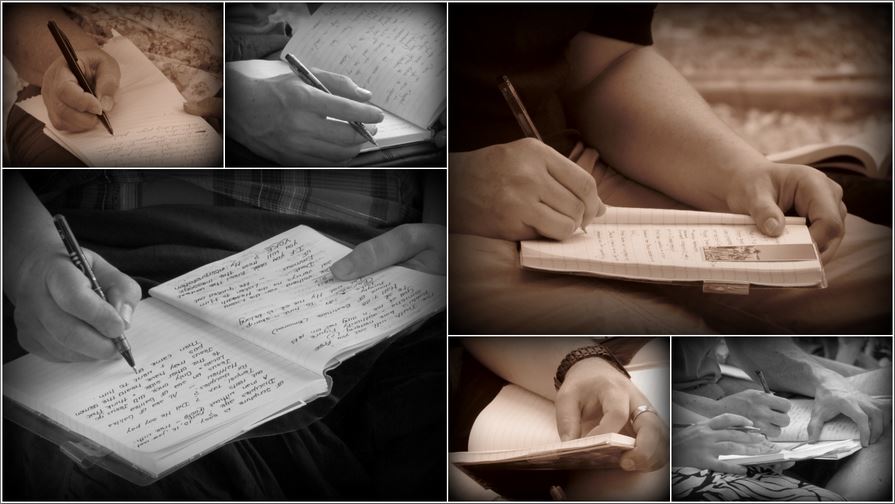
 

Article on Writing: Journal Writing

Capture1

I never travel without my diary. One must always have something sensational to read on the train.Oscar Wilde

(Read the previous blog – Thinking about Life – entry before this one at https://fieliesdekock.com/2014/03/17/article-on-writing-thinking-about-life/.)

People keep journal for different reasons and therefore there are various kinds of journals, such as spiritual journals, therapeutic journals, ideas journal, memoires, personal memories, research journals, journals keeping track of illnesses, art journals, travel journals, thank you journals, etc.

Why do People keep Journals?

The function of journaling is to keep record of information (or statistics/thoughts/memories etc.) regularly for later use.

The difference between journals and diaries (according to the website http://42explore.com/journl.htm) is:

A journal is a continued series of writings made by a person in response to their life experiences and events. Diaries contain a description of daily events. A journal may include those descriptions, but it also contains reflections on what took place and expresses emotions and understandings about them. It doesn’t matter what you call your writing, either a diary or journal, as long as you see the distinction between these two ways of writing.

Different journals have different styles. In some journals, like that of a researcher, a therapist, or a traveller, the writer must be meticulous about recording facts accurately to write academic papers, truthful articles or medical reports later on. In other journals used to record memories or spiritual growth feelings, emotions and thoughts play a more important role.

Examples of Journals

One can almost record anything in a journal and although there are more types of journals, we will look at only a few.

Spiritual Journals. Prayer requests (and answers) and notes on one’s personal spiritual growth, conversations with our Father in heaven and life lessons learned, are the basic aspects recorded in these journals.

Therapeutic Journals. Psychologists and patients can both keep record during therapy. Therapists will write entries about their patients’ progress and treatment, while patients will write down their emotions and thoughts and also about their physical wellbeing and/or symptoms.

Ideas Journals. It is a good idea if you are/want to be an artist, inventor or a designer to keep a journal where you can dot down your ideas. Painters or song writers find this extremely helpful. In today’s busy life, we tend to forget easily, but when you use a journal, all those wonderful ideas you have won’t go to waste if it is penned down immediately. These days, digital devices such as cell phones, laptops, iPads and tablets have memo pads, voice notes and apps available which come in handy to quickly type or record a thought for later use.

Memoires. Many people, especially famous ones, want to write their memoires or autobiographies in the future. Keeping a journal helps one to preserve important memories. (Keep in mind that there is a difference between autobiographies and memoires.)

Research Journals. Scientists, archaeologists, journalists, statisticians, mathematicians etc. normally keep journals wherein they record their research and findings for later use.

Progress Journals. Teachers, scientists, project managers etc. use journals when monitoring the progress of projects.

Medical Journals. People who are seriously ill use journals to keep track of symptoms, treatment, reaction to medicine, etc. Doctors do the same when monitoring illnesses or researching new treatments.

Art Journals. Artists use journals to plan paintings, write down ideas for art pieces etc. It helps them to plan projects which they cannot work on right away.

Travel Journals. Journaling helps travel writers (or just for-fun travellers) to write down important notes while travelling, on detail such as routes, costs, contact numbers, addresses, web site addresses, names of people and places etc. They can also use their journal to keep track of pictures taken.

‘Thank You’ Journal. Some people like keeping a journal of the things they are thankful for. It is a wonderful way to learn to write regularly and it also helps a writer to always be on the lookout for something to write about and a good way of learning to be thankful for what you have.

Dream Journal. Some people record their dreams in their journals just after they have woken up. Some dreams have meaning and it helps people to write down their dreams before they forget them.

‘Diary’ Journals. It is a journal containing daily events, thoughts, feelings, dreams and sometimes, even secrets and is normally the first step in journal writing people start at a young age.

Tips on Journal Writing

  • Make your own rules. If you want to write every day, it is up to you. If you only want to write in your journal twice a week or whenever you feel like it, that’s okay too. You can write long, thoughtful pieces at a time or only two sentences. You can write, draw, design, glue pictures in it or do whatever you like. You are a unique person and only you know what you want to preserve in your journal.
  • Always keep your journal and a pen/pencil/phone/tablet near – in your backpack, schoolbag etc. so that you can write down an idea when it pops into your head. If you don’t write it down, you will probably forget it. Otherwise know how your cell phone’s memo pad and voice recorder works.
  • Write the date at the beginning (or end) of all your entries. This will help you especially if you need to write factual pieces or even your memoires later on.
  • Don’t stop if you haven’t written for a few weeks. Just keep on where you left off. Remember, you make your own rules! I have moved from writing in a notebook to keeping a journal on my computer and I don’t write every day, but I keep writing. My current digital journal is almost eight years old and include my thoughts, struggles, experiences, travel log and even world events, because they also influence our lives.
  • Don’t try to impress anyone in your journal. It is a personal thing and it is about your personal growth. You don’t have to try to perform when writing in your journal. Be honest with yourself and write from your heart. Write about all your fears, emotions and your losses in life, as well as about the things that make you happy and the dreams you have for the future.
  • If you keep a spiritual journal, provide space where you can later come back and write down answers to prayer, i.e. write on the one side of your journal and keep the other open.
  • As already mentioned, you can also keep your journal on your PC/laptop/iPad/tablet/smart phone. Just make sure that you make back-ups regularly (preferably in the cloud, rather than on a disc you can lose or that can break) and keep an extra notebook to take with you wherever your computer can’t go with you.
  • You don’t have to let anyone read your personal journal.

You don’t have to limit yourself by having a separate journal for every different aspect of your life. You can use only one book to record all the different facets of your life. I have two journals – one for my personal thoughts etc. as mentioned above and another that I use as a notebook for writing poems, jotting down story ideas, planning dinners and recording admin. That way I only grab one book when leaving the house and I don’t need a trailer to transport all my journals every time I go somewhere.

I also have a WhatsApp group with myself (with my phone and tablet names) where I write when I have no other way. That way I can transfer my thought electronically to my journal when I get home without having to type it again.

Did you Know?

  • Journals had been used to record history. Many famous as well as unknown people had kept journals, recording important historical events and so preserved history that otherwise would have been lost.
  • Some journals had been published as books (like Anne Frank’s).
  • Secrets in people’s diaries or journals had led to crimes being solved, lives being saved, conspiracies brought to light and it lead people in love to each other after years of being apart…

Famous People who Kept Journals

  • Louis Tregardt, (yes, that’s how he wrote his surname in his diary) Voortrekker leader. He recorded how the Voortekkers trekked and the battles they fought.
  • Anne Frank was a girl who lost her life in WWII. She called her diary ‘Kitty’ and had various ones. Only ‘Kitty’ diary was later found and published by her father.
  • The famous author of Alice in Wonderland, Lewis Carroll (alias Charles Lutwidge Dodgson) kept quite a few diaries of which some had disappeared.
  • The English novelist, Virginia Woolf, was another keen keeper of journals.
  • Most U.S.A. presidents kept journals, including George Washington, John Quincy Adams and Thomas Jefferson. However, one unique diary belonged to Harry S. Truman, who wrote in his diary constantly, recording notes on and even his feelings about every appointment he had during each day!
  • Even fictional people like the TV character, teen doctor Doogie Howser, wrote two sentences in his diary (on computer) each day. So did the movie characters, Bridget Jones, Mia Thermopolis (The Princess Diaries) and Indiana Jones, who recorded treasure maps and notes about important artefacts in his.
  • Song writers are keen on journaling. They write down songs that sprung into their heads at strange times of day (or night). One of them is Jessica Simpson.

Who knows, maybe one day, I will add your name in an updated version of this blog…

Creative Writing Exercise

Write a 10-minute journal entry in your current journal or in a note book if you don’t have a journal yet. Write from your heart. You can write about something you did or about something that you feel sad about or something that makes you very happy or something that you are thankful for or all of the above! Or write down your love story, or write about your dreams, places you want to visit etc.

Some Last Notes

Remember to write the date with every entry.

Try to make at least two journal entries per week from now on. Schedule a special appointment with yourself on a Saturday/Sunday afternoon and one week morning/night.

Happy journalling!


(Read the previous blog – Thinking about Life – entry before this one at https://fieliesdekock.com/2014/03/17/article-on-writing-thinking-about-life/.)


©2007 Riëtte de Kock   


Article on Writing: Thinking about Life

 ???????????????????????????????

*  This blog entry is introductory to next one about journal writing. Read it at https://fieliesdekock.com/2014/03/17/article-on-writing-journal-writing/

To be a good writer, one must have a ‘writer’s voice’. To have a ‘writer’s voice’ it is important to have opinions about lots of things in life. To have opinions one must spend a great deal of time thinking about various subjects and issues.

We are Spirit within a Body

A human being is not only a piece of meat filled with bones and blood and water. Man consists of body, mind and spirit and soul. We are complicated beings. We must understand that we don’t just have a body to look after, but also a spirit/soul/mind. Not only needs our body to be fed with food, but our spirits also need food. Most people are religious and believe in some or other god. I for instance, believe in the Living God of the Bible. So for me to become a whole human being, I need more that only food for my body. I need to learn of and communicate with God in order to feed my soul/ spirit. We are spiritual beings in fleshly bodies.

Making Sense out of Life

Sometimes things happen that don’t make any sense to us and true to our human nature, we want to make sense of it. Sometimes we talk to a trusted friend about it and sometimes we keep it to ourselves. It happens to every person at some stage. It is good to talk to someone about our problems and worries and concerns. But sometimes there isn’t anyone to talk to. Or we don’t want to talk to anyone about certain things. What to do then?

Dreams and Goals

Apart from experiencing things and having fears and problems, we all have dreams and goals in life too. Those dreams and goals will not just happen without us doing something to make it happen. Therefore it is good to think about the things we want from life and write it down – because when we write things down, they start to become real in our minds.

If you don’t think about life and what it is that you want to do, then you will probably end up doing whatever comes along and not what you are supposed to do with your life.

We all have different dreams, talents and passions. Unfortunately, there are many people today who don’t know what their life’s dream is, because they never take the time to think about life and to learn to know themselves. Don’t let that happen to you.

It is therefore important that we learn to know ourselves – our dreams, talents, passions, short falls and behavioural patterns. Just as a sportsman have to practice every day to become fit and to master every bit of skill there is to master in his sport, so we have to ‘practice’ every day to become the best we can be.

Only you can be you, so be the best you you can be.

(Yes, I know it sounds cheesy and I don’t know if someone else had said it before.)

How do we go about Becoming the Best we can be?

By thinking – thinking about ourselves, our behaviour, the way we handle things and the way we don’t. By thinking about things that are important to us, things we don’t like or things that we do like. By thinking about what we want to do for others and for ourselves. And by thinking about our points of view on different issues we hear about on the news, such as global warming, abortion, human rights, world politics etc.

Make Time to Think

These days we seem to be too busy to think. We have school or work, sports, chess practice, piano or violin lessons, extra maths classes and then we still have to watch TV and DVDs, listen to music, go to the movies, keep up with our Facebook and Twitter friends and do homework. It’s exhausting!

We don’t have time to become quiet and listen to ourselves. That way we get used to other people thinking for us and making decisions on our behalves. Teenagers wear what Hannah Montana wears and listen to Justin Bieber because they are told to listen to him.

Children make their parents buy them toys they can’t afford, because the TV ads say that everyone must have them. But do all girls really like to look like Hannah or like to listen to Justin or do children really need those expensive toys?

Most children today don’t know the answer to these questions. They just do as they are told because they don’t know what they really like, because they don’t think for themselves.

The same applies to adults.

Introduce Yourself to Yourself

I want you to make a stand and change all that today. I want to encourage you to start thinking for yourselves.

Make time every day to spend thinking. It can be early in the morning (if you are an early bird) or in evening before going to bed. Or somewhere in between. Go to your room and switch off everything so that you can hear the quietness. (And leave your cell phone in another room.) Or go outside and sit or lie on the grass or sit on the porch. (And leave your cell phone inside.) Just be quiet and allow your thoughts to flow naturally. Eventually you will start thinking about the things that are important to you. Keep a notebook or your journal close and write done things that you don’t want to forget.

A Few Exercises to get you Started

  • Make a list of the people you love most.
  • Make a list of the people you don’t like hanging out with.
  • Make a list of the things you like doing most.
  • Make a list of the things you really don’t like doing.
  • Make a list of your favourite subjects at school/favourite tasks at work.
  • Make a list of your least favourite school subjects/least favourite tasks at work.
  • Make a list of five things you want to do in life (like climbing Mount Everest or run the Comrades Marathon, writing a book etc.)
  • Make a list of ten places in the world you want to visit.
  • Make a list of your five best character traits.
  • Make a list of your five less attractive character traits.
  • Make a list of five things you think you should become better at.
  • Write down five nice things about every person in your immediate family. (Yes, everyone.)
  • Write down five jobs you think you should like to do/ had done.
  • Write down five things you like about your best friend.
  • Write down five things that you would want your friends and family to say about you.

Creative Writing Exercise

By doing a few of these exercises you will be ready for the following blog entry on journal writing. Read it at https://fieliesdekock.com/2014/03/17/article-on-writing-journal-writing/

  • Take a 20-minute thinking session on your bed or outside in the garden. Take a notebook with you.
  • Do at least two exercises on the list above in your writing club journal.

For more writing related articles, follow The Writing Club / Die Skryfklub on Facebook at https://www.facebook.com/thewritingclubdieskryfklub/?ref=bookmarks


©2007 Riëtte de Kock    

Things I Learned from Waiting and being ‘Homeless’

download

A little more than a year ago, an opportunity to work and live abroad for a few years, came our way. We embraced it and since then we have been on a journey of waiting. I know. A journey needs motion, you would argue. Well, life’s journeys sometimes take place a very, very, very, very, very slow pace. Probably because some of us learn so very, very, very slowly. Or maybe God just have other plans. Anyway, we waited to hear if the opportunity was real. We waited for my husband’s appointment to be signed. And now we wait for an accreditation process to come through so that we can leave.

It doesn’t sound very daunting, but between the above mentioned activities demanded – and is still demanding –  a l-o-t of patience from our side. There was the wait to hear if, then the wait to hear where, then the wait to hear if again and now the wait to hear when. Again.

I always knew that I was a little bit impatient, but I never, never, never, ever thought that I needed such an intensive course in Patience. I think we (read ‘I’) made it through 101 and 102 and 103 and even the honours degree, but I’m telling you that the Master’s is another story.

It is January now again and the thumb suck date to leave was at the end of November. We prayed and we planned and we worked and we planned and prayed more. It is very difficult to plan ‘in the air’ – without having a target date. One of our colleagues were eventually sent out middle December and two more are in the process. So, it seems that there is movement.

We did what we could, working with the end of November/December scenario. Our house was sold miraculously (really, but that’s another story for another day) quick and we moved out at the end of November, but there was still no determined leaving date. So, we took an unplanned, but well deserved holiday to see our family in the Cape and enjoy the sea. It was marvellous, although the uncertainty hovered in the back of our minds the whole time. It was more than okay though, because we were on holiday and met with wonderful friends we haven’t seen in years, and we were not pressed for time or by something else.

We knew that when we return, we didn’t have a home to come back to, so we would have to rely on the goodness and mercy of friends and family for a while. We just hoped that the accreditation letter will arrive soon, so that we could have a date, say our good-byes and don’t have to rely on friends’ and family’s kindness much longer.

Our journey celebrated its first birthday a week ago and we are still here. Without a leaving date. Without accreditation. Without a house. We’re just waiting.

This is not the easiest life journey I had been on, but it definitely isn’t the worst either. As a matter of fact, when it starts one day, it promises to be quite an adventure which our little family of three were/are very excited about.  The long wait had dampened our excitement a bit. But in spite of feeling unsure and uncertain of the future and in spite of the waiting and the wondering and the thinking and the over-thinking and the what-if’s, I – and we as a family – had learned a lot and enjoyed this time a lot.

We learned that we live with too much clutter around us. We sold a refrigerator. We threw away a lot of stuff. We gave away more. We learned that it’s okay to give or throw away things, but that it’s the hardest thing on earth to say good-bye to loved ones – be they people or pets. We had to say good-bye to our little Labrador family which was one of the hardest things I ever had to do. I still can’t think about them, without my heart breaking through the tear walls in my eyes. We still have to give away our little Maltese poodle to family (thankfully), but we’re going to keep him until the end.

We learned that nothing is really certain. Even when we live uneventful, routine-filled lives, things can change in the wink of an eye. We learned that not having any debt is great. We learned that it feels wonderful to not have so many, many responsibilities. But, with everything taking so long, our son had to start school again.

We learned that to live in the moment is something that has to be practiced. It doesn’t come by itself. We are so used to dreaming dreams and living for the future that we often forget to use the only time we have – now. We don’t even always have today. All we really have is now. I am very thankful for this lesson, but I am also very scared that I will unlearn it as soon as this journey is over and we fall back into routine.

We also learned that family and friends are more important than things and that we are very thankful for every night that loving family or friends spared two or three beds for us. We know that it isn’t always easy to have house guests, what to say ‘homeless’ guests!

On the road we learned a lot of practical stuff too, like:

  • We miss our own beds!!! (We had some good ones to sleep on though.)
  • I can’t believe I say that, but I miss a washing machine and have come to appreciate every opportunity to wash clothes! And laundromats are wonderful places.
  • I also appreciate a tumble drier so that we don’t have to go for the out-of-the-laundry bag look all the time.
  • I always loved and appreciated being alone with my husband and son, but now it’s even more special.
  • I love reading a book on our tablet. I love reading a real paper book.
  • A cupboard to put your clothes in is a wonderful luxury!
  • To be able to retreat and lie down whenever you want to is a great privilege.
  • You need a residential address to do anything and everything in this country!
  • To have somewhere to pack out your toiletries means you have a home.
  • An easy reachable place for a toilet paper holder isn’t always the first thing on an architect’s mind when planning a bathroom/toilet.

And so the waiting continues. Maybe I need to learn still more before God can let me loose in this world…

 Quotes-about-waiting

© 2014 Riëtte de Kock

I am trying hard to be a Proverbs 31-woman – excellent wife, finest mom, greatest lover and successful entrepreneur and freelance writer all at the same time! I share a living space in Pretoria, South Africa with my husband, son, mother, four dogs and sometimes the neighbours’ cats – and my head with way too many ideas and multitudes of story characters.

Visit my website at www.thewritingclub.co.za and buy my children’s ebook, Yeovangya, on Amazon Kindle athttp://www.amazon.co.uk/Yeovangya-ebook/dp/B008CP2RQ0

My Afrikaans blog is available on my website – or just click on this link: http://www.thewritingclub.co.za/writingclub/index.php?option=com_lyftenbloggie&view=lyftenbloggie&category=bloggies&Itemid=66

My Favourite Days

img_6537

A few days ago we went for a drive on a seaside road while on holiday in the Western Cape.
“These are my favourite days,” our son, Michael, said.
I asked why and his explanation made sense. I actually realised that he put into words how I always felt. It was the day after Christmas and the frenzy was over.

Michael’s argument was that people get quite crazy during the weeks before Christmas and on the day after they calm down and just chill until new year’s eve at least. I realised that he was right, because between 2 January and 25 December each year the world is a crazy place.

In our country, school starts again early or mid-January, depending on which province you live in and those who are lucky enough to have had leave from work, has to go back to their jobs. And the stress starts building and get more and people start dreaming about that end-of-the year holiday again. And when the holiday comes, families fall prey to the frenzy of buying gifts they can’t afford, because they are following a man-made tradition (yea, actually Jesus had never been the “reason for the season” and Christ had never been “in Christmas”. Go Bible it – or Google it if you don’t believe the Bible…)

Anyway, suddenly, when the Christmas wrappings are in the bin and the food is eaten and the family feuds had reached their climax, it is the morning after – 26 December. The day on which the world (according to our country’s rhythm at least) calms down for just a little while. It seems that for the next six days people start relaxing – really relaxing. They care less about little unimportant differences (except in my family, it seems), they enjoy life a bit more deliberately, they look around to (literally) smell the roses,  they actually see the little children’s footprints lining the beach, they watch the seagull fighting the South Easter, they recline on a couch to read a book or watch the cricket or a movie and they sit on benches and stare at the large, living ocean, dreaming new dreams, making new plans and resolutions. Or, if they don’t have leave from work and are doing the ‘garden route’ (as we call staying at home and doing work around the house in South Africa), they take the time to braai (barbeque) on a week evening or they sit on their camping chairs in the drive-way or on the stoep and watch the neighbours spending their days of calm. But whatever people here do, they take things easier. They enjoy just being.

It  may just be the best time of year to finally negotiate ‘world peace’, I actually thought for a moment. But that was until I turned on the TV news, only to see the fighting in Syria continuing, bombs exploding in Iraq, differences dividing the Sudans again, etc. Oh well, maybe in a world without people it would have been possible.

c 2013 Riëtte De Kock

Learn on a Low Budget

writing-notes

While it might be beyond your physical abilities (read lack of finances) to get a higher education, you can still improve your knowledge and skills levels by means of self education. Here are few pointers for learning without having to spend money you don’t have.

Responsibility and Self-discipline. There are two aspects that go hand-in-hand when wanting to get ahead in life. Only you can take responsibility for yourself and your education. If you want to get somewhere in life and want to have success – whatever your definition of success is – you will need to have self-discipline.

Do the Hard Time. Without passing Grade 12 well, your chances of advancing in any career is very limited.

Bursaries. Companies and tertiary institutions give bursaries to good students, students from less privileged backgrounds, students who stood out in leadership positions, students excelling in sports or students being involved in uplifting community projects. Find out if you qualify for one of these.

Work while Studying. If bursaries don’t come your way, try getting in with a company where you will have the opportunity of working and studying simultaneously, while they are paying for your studies while you ‘work back’ for them. If that’s not possible, get work anyway and try to pay your way through it. Most tertiary institutions allow you to take only one or two subjects per year, which will make it cheaper to afford.

Interviews. A way of learning a lot about the market place is to apply for jobs so that you can be invited for interviews. This way you will learn what it is employers are looking for in prospects, while you practice your interview skills and stay up to date of the job market in general.

General Knowledge. Employers like people with a wide general knowledge, the ability to think for themselves and the capability to work independently. So, be creative and take initiative in your current job.

Take a ‘Gap’ Year. Do a year of community service, some kind of religion-driven service or ‘growth’ course or travel the world and work wherever you go – to pay for it. This way you do something useful and learn a bit about a lot and get life experience. You might also divide your year in periods and experience different jobs to learn as much as you can about what you like or dislike. This will help you to find your own strong and weak points, which might lead you to the job you want to do for the rest of your life.

Teach Yourself. Read books, read magazines and e-zines (electronic magazines) and do Internet research about everything you are interested in.

Visit Shows and Expo’s. Visit shows and expo’s and learn about different jobs and subjects, take brochures and follow up the web addresses and contact information. Talk to the experts at the exhibitions and learn as much as you can while there.

Learn from Other People. Learn everything you can by asking people questions about their jobs and industries. Be sensitive though, not to be nosy and beware of asking improper questions.

Other Tips for Learning

–  Know yourself.

–  Find your purpose.

–  Envision your dreams.

–  When you lose a dream, get a new one.

–  Get a mentor.

–  Learn from your own and other people’s failures. Most ‘successful’ people had quite a few failures before they became successful.

–  Never give up.

–  And never ever stop learning.

© 2013 Riëtte de Kock

I am trying hard to be a Proverbs 31-woman – excellent wife, finest mom, greatest lover and successful entrepreneur and freelance writer all at the same time! I share a living space in Pretoria, South Africa with my husband, son, mother, four dogs and sometimes the neighbours’ cats – and my head with way too many ideas and multitudes of story characters.

Visit my website at www.thewritingclub.co.za and buy my children’s ebook, Yeovangya, on Amazon Kindle athttp://www.amazon.co.uk/Yeovangya-ebook/dp/B008CP2RQ0

My Afrikaans blog is available on my website – or just click on this link: http://www.thewritingclub.co.za/writingclub/index.php?option=com_lyftenbloggie&view=lyftenbloggie&category=bloggies&Itemid=66