The Woman who made me Fall in Love with Afrikaans Words only to Realise that she was Actually Writing in English and was an American

Helen

I remember my pre-school growing up years in two phases – a phase where we lived on two farms, although I actually only remember the second farm. Of the first I only have two memories – one where I received my soft toy monkey and namesake, Fielies, as a Christmas gift around my third birthday (yes, I actually remember getting the present and opening it) and the other where my sister, twelve years older than me, ignored my mother’s instructions and gave me Coke-Cola in a baby bottle, even though I wasn’t supposed to having Coke or be drinking bottle anymore.

Of the second farm I have many happy memories, much of them involving my brother, father and grandfather.

The second phase was living in the neighbouring town. Here my memories contain mostly our house, my brother who was nine years older than me and in high school in the next town during the week – and my grandfather’s shop.

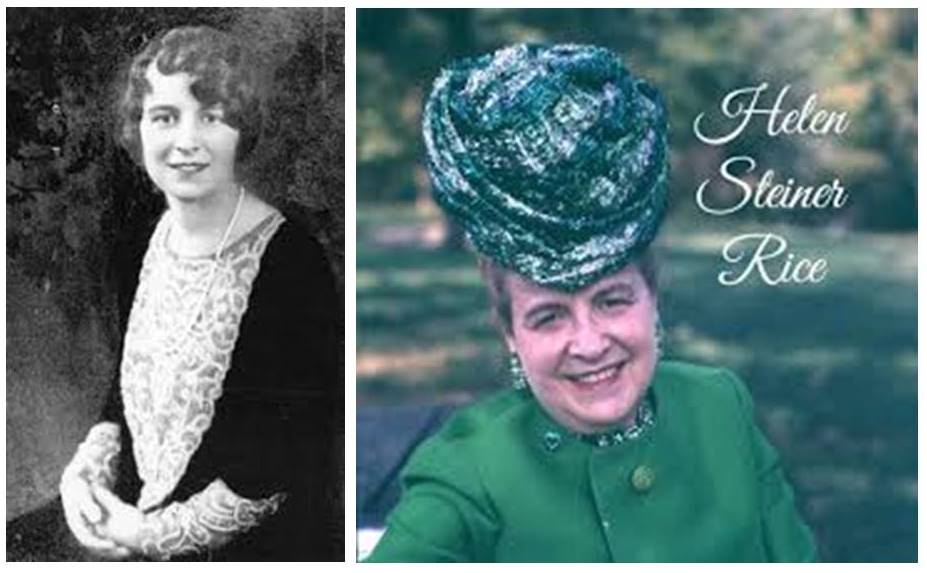
My grandfather sold stationary, fireworks and also gifts and gift cards in his shop. My grandfather and grandmother taught me to read and write numbers and I helped them put handwritten prices on the products in the shop. This made me feel very smart. But what didn’t make me feel smart was that although I could write numbers, I couldn’t read letters. The gift card display cupboard filled with Helen Steiner Rice cards made me realised that. The cards were different than the other cards in the sense that they didn’t only have words inside the cards, but also on the outsides.

I was fascinated by these little symbols that, when put together with other sets of letter combinations, formed words. I was even more amazed by the fact that so many different words could be formed by using those letters. And with that, if you know how, one could make sentences using all kinds of different words. And these sentences became the keys to creating other worlds. Worlds full of stories.

To overcome my frustration I sometimes asked my grandmother or grandfather to read me some of the cards instead of a storybook. I didn’t understand much, because the words confronted emotions and life experience I could yet identify with. But what I did get, was the wonderful rhythm of the rhyme that made those words sound as beautiful as a symphony in my ears. I could just listen and listen. As soon as I learned to read in school, I used Helen’s cards to practice my reading.

Then one day a new order from the big city arrived which got mixed up somewhere and the shop got someone else’s order and to my shock and wonder I found out that Helen was speaking English too! I could now practice my English reading too. It paid its dividends, because my English spelling became very good and my vocabulary grew beyond my second language reading book’s arsenal. I won’t comment on my speaking ability though because in our town no one spoke English. There were Afrikaans, Tswana, Portuguese and Lebanese people living there, but somehow no one spoke English!

Only many years later I learned to my surprise that Helen Steiner Rice (I thought the name was a bit foreign) wasn’t a nice Afrikaans speaking boere antie (Afrikaner/farmer aunty), but actually a very nice American woman who started writing greeting cards when she took over a greeting card company and she realised the need for cards with feel good messages.

Although Helen was dubbed ‘Ambassador of Sunshine’ at the Gibson Art Company in Cincinnati, she didn’t only know the sunny side of life. Her father died when she was young and instead of pursuing her dreams, she helped her family survive. She married a young business man who lost everything in the 1929 New York stock market crash and was left widowed at age 32 after he took his own life due to depression related illness. But she became a successful business woman and ran the greeting card company for forty years, while keep writing her beautiful poems and unknowingly taught a little Afrikaans girl how to read, first in Afrikaans and then in English. And then to write. First in Afrikaans and then in English.

Thank you, Mrs. Helen Steiner Rice, for unlocking the world of words for me.

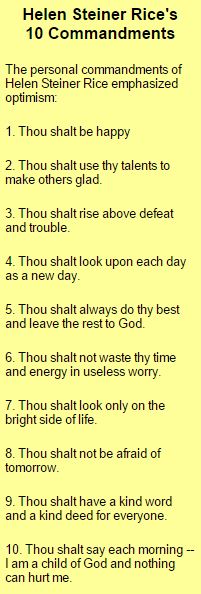
HSR 10 Commandments

PS: You can read the story of Helen Steiner Rice here.

PPS: I found out today that either Google doesn’t know everything or that I don’t know how to get the information I need out of Google. I tried to find out who was responsible for the translation of Helen’s poems into Afrikaans, but I couldn’t. I also tried to find out into how many languages her work is translated into. I’m still searching. If you have more information on this, please comment.

images

© 2016  – I, Fielies (Riëtte) De Kock tries hard to be a Proverbs 31-woman – excellentest wife, finest mom, greatest lover and successful ‘wordpreneur’ all at the same time. I share my current living space in Cairo, Egypt with my husband, young-adult son, the building’s ginger cat – and the space in my head with way too many ideas and multitudes of story characters to function as a normal human being.

Ideas for Clearing your Head and get Ready for a Good Writing Year

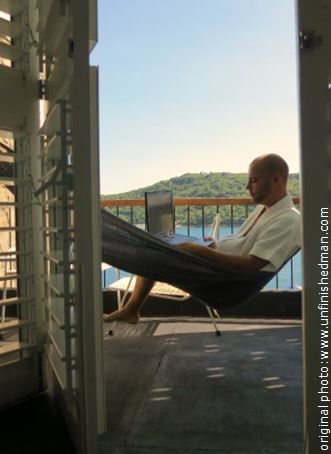
1 unfinishedmancom

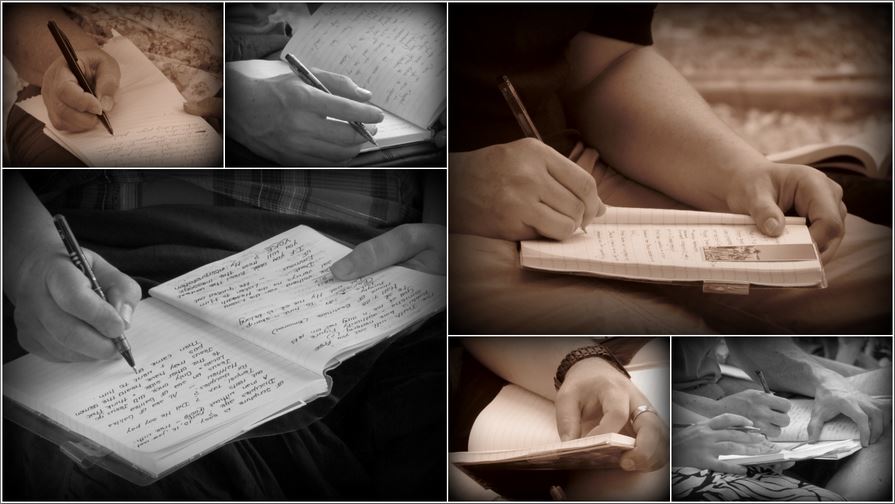
At the end of a year and before the next begins, it is a good idea to spend some time ‘taking stock’ of our lives. During the next few days, get your journal or a notebook, go and sit in a quiet place and contemplate. Then make two lists.

List 1

List the following in your ‘To think about’ list:

  • Difficult choices you had to make;
  • Changes that occurred in your private and working life;
  • Mistakes you made;
  • Names of people you have to ask forgiveness for or to forgive. (Then forgive them.)
  • Bad things that happened to you or around you;
  • Problems you have that is still unsolved;
  • Good surprises;
  • Good things that happened to you or around you; and
  • Things you are thankful for.

Take Time to Think in Between

Take some time to think these things over. If you have gone through an exercise like this last year, go through your lists and mark the things that you wanted to do, but didn’t.

List 2 

Make another ‘To do’ list about the following:

  • Things that you really wanted to do during the last year, but didn’t;
  • Things you want to change – personal and workwise;
  • A few things on your ‘bucket list’ you want to do the coming year;
  • Things you want to do for someone else; and
  • Solutions to solve those unsolved problems from your first list.

Get into Some Creative Action

  • Now that your head is (hopefully) clearer, turn the page of your journal or notebook and write down as many story ideas you can think of if you are a fiction writer.
  • If you are a non-fiction writer, jot down ideas for articles, booklets etc.
  • From then on, take one idea per day from your last list and free write about it.
  • After free writing, tackle one thing on your ‘to do’ list and write down what you are going to do about it. Write down small goals and keep to it. Revisit this list weekly to see how you progress and make adjustments if needed.
  • After you have done this, take time to sit somewhere quiet to think and relax.
  • Spend some time with your loved ones.
  • Make a habit of these four steps by repeating it at least weekly.

Enjoy your time of rest.


© 2014

I, Fielies (Riëtte) De Kock tries hard to be a Proverbs 31-woman – excellentest wife, finest mom, greatest lover and successful ‘wordpreneur’ all at the same time. I temporarily share my living space in Cairo, Egypt with my husband, almost-university-student son, the building’s ginger cat – and the space in my head with way too many ideas and multitudes of story characters to live as a normal functioning human being.


Writing Towards a Dream

claire-cooper-claire-laurens1

I have slowly started to spend time writing again. Now that Michael had finished school I am supposed to have more time, although the functions accompanying Deon’s job here in Egypt distracts me from writing as ‘full time’ as I want to. But, I appreciate and cherish every moment I can use to write. I am working to finish my novel, Change of Heart. It’s at 81000+ words now which makes about 356 typed pages. Not bad, but there’s quite a bit of writing to do still.

I am also reading a book Why Authors Fail by Derek Doepker. (Available from Kindle ebooks at Amazon http://www.amazon.com/Why-Authors-Fail-Mistakes-Self-Published-ebook/dp/B00L9GM1RO) I can tick off almost all 17 of the mistakes he discusses. It is tough to realise that I have so many flaws as a writer and worst is that I knew all these things before I read the book. It is as if he just summarised all my shortcomings in book form. So, aside from writing, I would have to work hard to fix those mistakes and inadequacies. But in the meantime, I have more important things to do. Like writing.

One of the questions asked by Mr. Doepker is why is becoming a successful author important to me?I thought that I should do the exercise and write down my reasons. It will also serve as motivation. So, here’s my reasons:

1. I don’t have a choice. I write because I have to – because I love writing. I have stories and ‘people’ living in my head which have to get out. Some I hope are good. Some are horribly sentimental and will never be written. They would always have to linger oh, so sweetly in the matter between my ears. My poor brain! Writing energises me. When I write, I exercise and I cook and get compliments from my family for the nice food they get. It makes us all feel good.
2. I want not only to write and publish a book – I want to write and publish books. I have written a few books and quite a few longish short stories already – it is the publishing part which lack seriously in the picture of my dream job. I want to be good enough a writer to have at least more than ten books published. For that I need to write more regularly. More and regularly. And I need to muster the courage from somewhere to get the first one published.
3. I want to be a successful author because I think I write good enough stories to receive at least some income from it. This will make me feel useful. Not that I’m not. I am a mom, but the boy is all grown up now and I want to ‘redefine’ myself as a wordpreneur who actually sells my words.
4. By being a successful author I will thank God for giving me the talent to write.
5. I want my husband and son to be proud of me. I know they are already, but I want their pride being expanded to the gifts given to me.
6. I want to get my writing published, because it depresses me when I read or watch programs about other people doing what they are good at and succeed and I have still ‘done nothing’ about my dream. I want to live my dream of being a paid writer.
7. I want my children’s story, Yeovangya, made into an animated movie, because every time I see a new animation movie it frustrates me that my movie is not yet out there – and it take. So. Very. Long. To. Make. Yeovangya is available as a Kindle ebook at Amazon at http://www.amazon.co.uk/Yeovangya-Riette-De-Kock-ebook/dp/B008CP2RQ0. (See, Mr. Doepker, I’m marketing. I’m working on at least one of my weaknesses.)
8. If I don’t at least get one book published, I will feel very disappointed – maybe even a bit like a failure.
9. I must at least try. If I don’t make it, then I know I wasn’t good enough. There will be closure in that. But if I don’t try, I will always feel regret and dissatisfaction. And there’s nothing worse than living a “What if..?” life.
10. If I don’t make it as a successful author of formally published books, I can always keep on publishing ebooks and hope my family and friends love me enough to buy my electronic scribblings for forty Rand or so…

What I have to do now is to do something about the shortcomings listed in Mr. Doepker’s book. And then do my best at succeeding. WOW, this is a very close-to-home confession. Now my big dream is out there for the world (or the few loyal family and friends at least who actually read my blog) to see and hold me accountable.

Eish!

I, Fielies (Riëtte) De Kock tries hard to be a Proverbs 31-woman – excellentest wife, finest mom, greatest lover and successful ‘wordpreneur’ all at the same time. I temporarily share my living space in Cairo, Egypt with my husband, almost-university-student son, the building’s ginger cat – and the space in my head with way too many ideas and multitudes of story characters to live as a normal functioning human being.

Article on Writing: Journal Writing

Capture1

I never travel without my diary. One must always have something sensational to read on the train.Oscar Wilde

(Read the previous blog – Thinking about Life – entry before this one at https://fieliesdekock.com/2014/03/17/article-on-writing-thinking-about-life/.)

People keep journal for different reasons and therefore there are various kinds of journals, such as spiritual journals, therapeutic journals, ideas journal, memoires, personal memories, research journals, journals keeping track of illnesses, art journals, travel journals, thank you journals, etc.

Why do People keep Journals?

The function of journaling is to keep record of information (or statistics/thoughts/memories etc.) regularly for later use.

The difference between journals and diaries (according to the website http://42explore.com/journl.htm) is:

A journal is a continued series of writings made by a person in response to their life experiences and events. Diaries contain a description of daily events. A journal may include those descriptions, but it also contains reflections on what took place and expresses emotions and understandings about them. It doesn’t matter what you call your writing, either a diary or journal, as long as you see the distinction between these two ways of writing.

Different journals have different styles. In some journals, like that of a researcher, a therapist, or a traveller, the writer must be meticulous about recording facts accurately to write academic papers, truthful articles or medical reports later on. In other journals used to record memories or spiritual growth feelings, emotions and thoughts play a more important role.

Examples of Journals

One can almost record anything in a journal and although there are more types of journals, we will look at only a few.

Spiritual Journals. Prayer requests (and answers) and notes on one’s personal spiritual growth, conversations with our Father in heaven and life lessons learned, are the basic aspects recorded in these journals.

Therapeutic Journals. Psychologists and patients can both keep record during therapy. Therapists will write entries about their patients’ progress and treatment, while patients will write down their emotions and thoughts and also about their physical wellbeing and/or symptoms.

Ideas Journals. It is a good idea if you are/want to be an artist, inventor or a designer to keep a journal where you can dot down your ideas. Painters or song writers find this extremely helpful. In today’s busy life, we tend to forget easily, but when you use a journal, all those wonderful ideas you have won’t go to waste if it is penned down immediately. These days, digital devices such as cell phones, laptops, iPads and tablets have memo pads, voice notes and apps available which come in handy to quickly type or record a thought for later use.

Memoires. Many people, especially famous ones, want to write their memoires or autobiographies in the future. Keeping a journal helps one to preserve important memories. (Keep in mind that there is a difference between autobiographies and memoires.)

Research Journals. Scientists, archaeologists, journalists, statisticians, mathematicians etc. normally keep journals wherein they record their research and findings for later use.

Progress Journals. Teachers, scientists, project managers etc. use journals when monitoring the progress of projects.

Medical Journals. People who are seriously ill use journals to keep track of symptoms, treatment, reaction to medicine, etc. Doctors do the same when monitoring illnesses or researching new treatments.

Art Journals. Artists use journals to plan paintings, write down ideas for art pieces etc. It helps them to plan projects which they cannot work on right away.

Travel Journals. Journaling helps travel writers (or just for-fun travellers) to write down important notes while travelling, on detail such as routes, costs, contact numbers, addresses, web site addresses, names of people and places etc. They can also use their journal to keep track of pictures taken.

‘Thank You’ Journal. Some people like keeping a journal of the things they are thankful for. It is a wonderful way to learn to write regularly and it also helps a writer to always be on the lookout for something to write about and a good way of learning to be thankful for what you have.

Dream Journal. Some people record their dreams in their journals just after they have woken up. Some dreams have meaning and it helps people to write down their dreams before they forget them.

‘Diary’ Journals. It is a journal containing daily events, thoughts, feelings, dreams and sometimes, even secrets and is normally the first step in journal writing people start at a young age.

Tips on Journal Writing

  • Make your own rules. If you want to write every day, it is up to you. If you only want to write in your journal twice a week or whenever you feel like it, that’s okay too. You can write long, thoughtful pieces at a time or only two sentences. You can write, draw, design, glue pictures in it or do whatever you like. You are a unique person and only you know what you want to preserve in your journal.
  • Always keep your journal and a pen/pencil/phone/tablet near – in your backpack, schoolbag etc. so that you can write down an idea when it pops into your head. If you don’t write it down, you will probably forget it. Otherwise know how your cell phone’s memo pad and voice recorder works.
  • Write the date at the beginning (or end) of all your entries. This will help you especially if you need to write factual pieces or even your memoires later on.
  • Don’t stop if you haven’t written for a few weeks. Just keep on where you left off. Remember, you make your own rules! I have moved from writing in a notebook to keeping a journal on my computer and I don’t write every day, but I keep writing. My current digital journal is almost eight years old and include my thoughts, struggles, experiences, travel log and even world events, because they also influence our lives.
  • Don’t try to impress anyone in your journal. It is a personal thing and it is about your personal growth. You don’t have to try to perform when writing in your journal. Be honest with yourself and write from your heart. Write about all your fears, emotions and your losses in life, as well as about the things that make you happy and the dreams you have for the future.
  • If you keep a spiritual journal, provide space where you can later come back and write down answers to prayer, i.e. write on the one side of your journal and keep the other open.
  • As already mentioned, you can also keep your journal on your PC/laptop/iPad/tablet/smart phone. Just make sure that you make back-ups regularly (preferably in the cloud, rather than on a disc you can lose or that can break) and keep an extra notebook to take with you wherever your computer can’t go with you.
  • You don’t have to let anyone read your personal journal.

You don’t have to limit yourself by having a separate journal for every different aspect of your life. You can use only one book to record all the different facets of your life. I have two journals – one for my personal thoughts etc. as mentioned above and another that I use as a notebook for writing poems, jotting down story ideas, planning dinners and recording admin. That way I only grab one book when leaving the house and I don’t need a trailer to transport all my journals every time I go somewhere.

I also have a WhatsApp group with myself (with my phone and tablet names) where I write when I have no other way. That way I can transfer my thought electronically to my journal when I get home without having to type it again.

Did you Know?

  • Journals had been used to record history. Many famous as well as unknown people had kept journals, recording important historical events and so preserved history that otherwise would have been lost.
  • Some journals had been published as books (like Anne Frank’s).
  • Secrets in people’s diaries or journals had led to crimes being solved, lives being saved, conspiracies brought to light and it lead people in love to each other after years of being apart…

Famous People who Kept Journals

  • Louis Tregardt, (yes, that’s how he wrote his surname in his diary) Voortrekker leader. He recorded how the Voortekkers trekked and the battles they fought.
  • Anne Frank was a girl who lost her life in WWII. She called her diary ‘Kitty’ and had various ones. Only ‘Kitty’ diary was later found and published by her father.
  • The famous author of Alice in Wonderland, Lewis Carroll (alias Charles Lutwidge Dodgson) kept quite a few diaries of which some had disappeared.
  • The English novelist, Virginia Woolf, was another keen keeper of journals.
  • Most U.S.A. presidents kept journals, including George Washington, John Quincy Adams and Thomas Jefferson. However, one unique diary belonged to Harry S. Truman, who wrote in his diary constantly, recording notes on and even his feelings about every appointment he had during each day!
  • Even fictional people like the TV character, teen doctor Doogie Howser, wrote two sentences in his diary (on computer) each day. So did the movie characters, Bridget Jones, Mia Thermopolis (The Princess Diaries) and Indiana Jones, who recorded treasure maps and notes about important artefacts in his.
  • Song writers are keen on journaling. They write down songs that sprung into their heads at strange times of day (or night). One of them is Jessica Simpson.

Who knows, maybe one day, I will add your name in an updated version of this blog…

Creative Writing Exercise

Write a 10-minute journal entry in your current journal or in a note book if you don’t have a journal yet. Write from your heart. You can write about something you did or about something that you feel sad about or something that makes you very happy or something that you are thankful for or all of the above! Or write down your love story, or write about your dreams, places you want to visit etc.

Some Last Notes

Remember to write the date with every entry.

Try to make at least two journal entries per week from now on. Schedule a special appointment with yourself on a Saturday/Sunday afternoon and one week morning/night.

Happy journalling!


(Read the previous blog – Thinking about Life – entry before this one at https://fieliesdekock.com/2014/03/17/article-on-writing-thinking-about-life/.)


©2007 Riëtte de Kock   

 

Article on Writing: Thinking about Life

 ???????????????????????????????

*  This blog entry is introductory to next one about journal writing. Read it at https://fieliesdekock.com/2014/03/17/article-on-writing-journal-writing/

To be a good writer, one must have a ‘writer’s voice’. To have a ‘writer’s voice’ it is important to have opinions about lots of things in life. To have opinions one must spend a great deal of time thinking about various subjects and issues.

We are Spirit within a Body

A human being is not only a piece of meat filled with bones and blood and water. Man consists of body, mind and spirit and soul. We are complicated beings. We must understand that we don’t just have a body to look after, but also a spirit/soul/mind. Not only needs our body to be fed with food, but our spirits also need food. Most people are religious and believe in some or other god. I for instance, believe in the Living God of the Bible. So for me to become a whole human being, I need more that only food for my body. I need to learn of and communicate with God in order to feed my soul/ spirit. We are spiritual beings in fleshly bodies.

Making Sense out of Life

Sometimes things happen that don’t make any sense to us and true to our human nature, we want to make sense of it. Sometimes we talk to a trusted friend about it and sometimes we keep it to ourselves. It happens to every person at some stage. It is good to talk to someone about our problems and worries and concerns. But sometimes there isn’t anyone to talk to. Or we don’t want to talk to anyone about certain things. What to do then?

Dreams and Goals

Apart from experiencing things and having fears and problems, we all have dreams and goals in life too. Those dreams and goals will not just happen without us doing something to make it happen. Therefore it is good to think about the things we want from life and write it down – because when we write things down, they start to become real in our minds.

If you don’t think about life and what it is that you want to do, then you will probably end up doing whatever comes along and not what you are supposed to do with your life.

We all have different dreams, talents and passions. Unfortunately, there are many people today who don’t know what their life’s dream is, because they never take the time to think about life and to learn to know themselves. Don’t let that happen to you.

It is therefore important that we learn to know ourselves – our dreams, talents, passions, short falls and behavioural patterns. Just as a sportsman have to practice every day to become fit and to master every bit of skill there is to master in his sport, so we have to ‘practice’ every day to become the best we can be.

Only you can be you, so be the best you you can be.

(Yes, I know it sounds cheesy and I don’t know if someone else had said it before.)

How do we go about Becoming the Best we can be?

By thinking – thinking about ourselves, our behaviour, the way we handle things and the way we don’t. By thinking about things that are important to us, things we don’t like or things that we do like. By thinking about what we want to do for others and for ourselves. And by thinking about our points of view on different issues we hear about on the news, such as global warming, abortion, human rights, world politics etc.

Make Time to Think

These days we seem to be too busy to think. We have school or work, sports, chess practice, piano or violin lessons, extra maths classes and then we still have to watch TV and DVDs, listen to music, go to the movies, keep up with our Facebook and Twitter friends and do homework. It’s exhausting!

We don’t have time to become quiet and listen to ourselves. That way we get used to other people thinking for us and making decisions on our behalves. Teenagers wear what Hannah Montana wears and listen to Justin Bieber because they are told to listen to him.

Children make their parents buy them toys they can’t afford, because the TV ads say that everyone must have them. But do all girls really like to look like Hannah or like to listen to Justin or do children really need those expensive toys?

Most children today don’t know the answer to these questions. They just do as they are told because they don’t know what they really like, because they don’t think for themselves.

The same applies to adults.

Introduce Yourself to Yourself

I want you to make a stand and change all that today. I want to encourage you to start thinking for yourselves.

Make time every day to spend thinking. It can be early in the morning (if you are an early bird) or in evening before going to bed. Or somewhere in between. Go to your room and switch off everything so that you can hear the quietness. (And leave your cell phone in another room.) Or go outside and sit or lie on the grass or sit on the porch. (And leave your cell phone inside.) Just be quiet and allow your thoughts to flow naturally. Eventually you will start thinking about the things that are important to you. Keep a notebook or your journal close and write done things that you don’t want to forget.

A Few Exercises to get you Started

  • Make a list of the people you love most.
  • Make a list of the people you don’t like hanging out with.
  • Make a list of the things you like doing most.
  • Make a list of the things you really don’t like doing.
  • Make a list of your favourite subjects at school/favourite tasks at work.
  • Make a list of your least favourite school subjects/least favourite tasks at work.
  • Make a list of five things you want to do in life (like climbing Mount Everest or run the Comrades Marathon, writing a book etc.)
  • Make a list of ten places in the world you want to visit.
  • Make a list of your five best character traits.
  • Make a list of your five less attractive character traits.
  • Make a list of five things you think you should become better at.
  • Write down five nice things about every person in your immediate family. (Yes, everyone.)
  • Write down five jobs you think you should like to do/ had done.
  • Write down five things you like about your best friend.
  • Write down five things that you would want your friends and family to say about you.

Creative Writing Exercise

By doing a few of these exercises you will be ready for the following blog entry on journal writing. Read it at https://fieliesdekock.com/2014/03/17/article-on-writing-journal-writing/

  • Take a 20-minute thinking session on your bed or outside in the garden. Take a notebook with you.
  • Do at least two exercises on the list above in your writing club journal.

For more writing related articles, follow The Writing Club / Die Skryfklub on Facebook at https://www.facebook.com/thewritingclubdieskryfklub/?ref=bookmarks


©2007 Riëtte de Kock    

Teach Your Child to Read

IMG_2537

I’ve travelled the world twice over,

Met the famous; saints and sinners,

Poets and artists, kings and queens,

Old stars and hopeful beginners,

I’ve been where no-one’s been before,

Learned secrets from writers and cooks

All with one library ticket

To the wonderful world of books.

Janice James

Writing is one of the most important things we learn to do. With writing goes reading. If we can’t read, we won’t be able to write – not even signing our own names. We won’t be able to read labels on food packages or give our children the right dosages of medicine when they are sick. We won’t be able to read cautions to prevent ourselves and our families from danger. We won’t be able to learn or have the privilege to read all the wonderful stories that other people write – or write our own. This is the reality of many, many people in South Africa and the world today. We lived abroad in an Arab country for a while and not knowing their alphabet and their language for most of our stay, our family were experiencing ‘illiteracy’ first-hand and it wasn’t easy.

According to www.100people.org 14 out of every 100 people in the world can’t read which means more than 150 000 out of every million people on earth! That’s way too much. Closer to home, it is estimated that 50% of the matriculants failing their Grade 12 exams, could have passed if they were better readers. That is a shocking statistic. Given these facts, it is obviously important to learn to read and to read well.

Here are a few pointers to help you as a parent to get your child reading.

  • Set the example for your children. Be a reader yourself and tell them about the awesome and interesting things you have read about. That will result in curiosity and encourage your child to read too.
  • Read for him from the time he is a baby. Use your voice to speak like the different characters, show him the pictures – act out the scenes if possible. He will probably laugh at you and he will start associating reading with fun.
  • Since you know your child best, read stories to him and let him read stories that he is interested in. Don’t read a boy a ‘boring’ love story if he would prefer an adventure.
  • Start reading a well-known story and let your child pitch in to create an alternative ending. It will be great fun and develop his creativity.
  • If you are believers, start reading the Bible aloud together after dinner – even if it once a week. They might find it difficult at first, because of the older language and the not-up-to-date sentence construction, but the spelling is correct and the words are everlasting – literally. Start by letting them read the Genesis stories first and also books like Ruth and Esther, before moving onto the ‘heavier’ stuff. (And be ready to answer a lot of questions.) Reading aloud in the safe family environment will build their courage for public reading and speaking.
  • When your young child outgrows children’s books, start with tween (10-12 years old) literature. Those series we read as children are popular again at this stage – Saartjie, Trompie, The Hardy Boys, The Secret Seven etc. (Trompie and Saartjie had been re-written into more modern Afrikaans, so that it is more digestible for our modern children – although my son still found it hard to identify with the Trompie setting and characters.)
  • Cartoons and comics are wonderful reading tools. They are normally colourful and funny, short and – boys especially – love them. They help to get a child from not reading at all to getting them interested in reading. It also written concisely – which will help the child with his own writing.
  • Help your child read their first longer book by taking turns to read aloud. You can start half a chapter and he can read the second half. Start out by reading only one chapter in the evening in bed. That way it is easier to read a longer book and they won’t feel overwhelmed by the many pages awaiting them. It is wonderful to reach the end of a month or two months or even three and see that satisfied little face when he realised that he read a whole book!
  • If your older child still doesn’t want to read books, buy magazines or subscribe to a specific magazine that he or she would be interested in. Magazines as a rule are very well edited; therefore your child will learn correct spelling and sentence construction without even realising it. The more they read, the easier they will remember the words and the better there spelling and the sentence construction will become – without you even nagging or trying too hard! There are various teen magazines available these days – just scan the content before you give it to your child. So, take your child to the nearest news agency and choose some magazines for them to read. Alternatively subscribe to an digital version.
  • Remember that boys love non-fiction, so encourage them to read books and magazine articles with facts if they don’t like long books of fiction.
  • Internet surfing would also help them to at least read something. Just keep in mind that factual content can be incorrect on websites and that there are lots of spelling and language mistakes on the web. But, if it gets your child reading, why not? And he will even learn something. Let them research NASA and National Geographic pages or let them look up information on careers and hobbies. CAUTION: Make sure your child surfs safely and that his screen time is supervised!
  • Join the library and regularly take out books for the whole family. It is a cheap and good way to develop a reading routine within the whole household. Make an outing of the trip to the ‘bib’ and give your children time to sit there and page through the books and magazines before taking out their books for the next two weeks. Libraries also have great holiday programs and encourage reading through various other initiatives. Encourage book talks around the dinner table.

Remember, our children are different from us. They live in a different world than we grew up in. There is an overwhelming amount of entertainment competing for their attention. They live partially virtual lives. Each child differs from the next and they are all unique individuals. They learn differently from us and they each learn at their own pace. Appreciate, respect and embrace those differences. And have patience. In time, they will get there.

Happy reading!

© 2010 Fielies De Kock (Edited 2019)

Awesomest wife. Finest mom. Hopefullest writer. Foreverest dreamer. Living in a coastal village in the Overberg, South Africa, with a husband and two dogs in a small heritage house and a job-seeking son in the garden cottage. Anyone out there interested in paying a new graduate a salary?

The Write Way

Image

Business owners sometimes spend so much time finding ways to increase their profit that they forget that it is not the only aspect ensuring a successful business. Often when reading through advertisements or brochures of SME’s and even large, well-known companies one finds the quality of writing notably lacking.

Companies spend lots of money and other resources on marketing and branding, but not enough is done to ensure that promotion activities are not undermined by the inability to communicate effectively. With a little bit of effort a business owner can change this.

Spell checking

Teach all employees to activate and use spell checkers on their computers. Ensure that ‘English South Africa’ is chosen as the default spell checker for everyday use. Use ‘English U.K.’ or ‘English U.S.’ for documents sent to the U.K. and U.S.A. respectively or the language choice for any other languages used.

E-mail etiquette

Apart from encouraging employees to avoid sending and receiving personal e-mail at work, introduce the following guidelines for efficient and professional communication via the Internet:

·         Include a signature below every outgoing e-mail, consisting of the staff member’s name, contact details (telephone, cell phone and fax numbers, e-mail, web page and Skype addresses) and the company logo and slogan.

·         When employees are on leave or away on business and can’t access their e-mail, activate the ‘out of office’-reply.

·         Write in full, well-structured sentences.

·         Spell check all messages before sending.

·         Use a professional, formal writing style for all external communication.

·         Use the ‘Bcc’ function in the address box to keep clients’ e-mail addresses confidential and secure from companies or individuals who steal and sell address lists and also to prevent unwanted incoming e-mail to clutter the company server.

·         Use the ‘read (or received) receipt’ function to keep saved records of sent e-mails.

Websites

Apart from being updated regularly, all content for uploading on the company’s website must be checked for spelling errors, statements and advertising that can cause legal action against the owner. Make sure that quotes are the original words of the person quoted and that all other information given is factual. Check the accuracy of the contact details every time when the website is uploaded. Test every button and every link on the page before uploading.

SMS Messages

Use full sentences and proper spelling in all SMS communication.

Terminology and Names

Compile a list of distinctive terminology used in the company or sector of business, standardise it and make it available to all employees. Include clients’ and companies’ names and abbreviations of companies and organisations and update the list when needed.

Presentations

Spend money on presentation designing courses for employees who need to make use of presentations regularly. Encourage users to spell check all presentations.

Start a Company Newsletter

Promote the esprit de corps in the company by sending out a monthly newsletter, encouraging employees to contribute. The newsletter can be used to:

·         Convey company policy;

·         Communicate new developments and research in the field of business;

·         Publish company news and successes;

·         Run competitions between departments or individuals and challenge employees’  Creativity regarding problem solving; and

·         Announce the implementation of new work procedures.

The company newsletter will also improve contributing employees’ writing skills and give the staff some pride. Set apart a section for not work related issues such as book and movie reviews, announcements, advertisements etc.

Encourage Employees to Read

Employees can improve their skills by reading books and articles on work related subjects. Reading will also develop their writing skills and ability to spell accurately, which will have a positive reflection on the company.

Proof-reading and Editing

Improve the company’s image by investing in professional writing, editing, translation and proof-reading services to ensure immaculate external communication. When the company can afford it, an in-house department can be dedicated for this purpose, which will save money on the long run.

Crash Courses for New Staff

Initiate new personal with a one-day workshop by introducing them to the company’s writing style, rules and regulations.

Stay updated

The rules of language change as writing inventions and technological developments change worldwide, introducing new words in English and other languages on a regular basis. Workshops to update employees on language terminology and tips regarding writing skills can be conveyed via e-mails and/or the monthly newsletter.

Desktop Help

With today’s advanced technology it is easy to install dictionaries, thesauruses, currency converters and other helpful aids on every computer desktop. This will aid staff in checking spelling, the meaning for difficult words, currency abbreviations etc.

With a bit of company effort, training and the technology available, no person on any step of the proverbial corporate ladder has any excuses anymore for not writing properly.

© 2007 Riëtte De Kock

I am trying hard to be a Proverbs 31-woman – excellent wife, finest mom, greatest lover and successful entrepreneur and freelance writer all at the same time! I share a living space in Pretoria, South Africa with my husband, son, mother, four dogs and sometimes the neighbours’ cats – and my head with way too many ideas and multitudes of story characters.

Visit my website at www.thewritingclub.co.za and buy my children’s ebook, Yeovangya, on Amazon Kindle at http://www.amazon.co.uk/Yeovangya-ebook/dp/B008CP2RQ0

My Afrikaans blog is available on my website – or just click on this link: http://www.thewritingclub.co.za/writingclub/index.php?option=com_lyftenbloggie&view=lyftenbloggie&category=bloggies&Itemid=66

This article may be used only in free publications and with both the copyright and the author’s bio included.